menu
menu

More is on the board meeting agenda than ever before. According to Diligent's What Directors Think 2025 report, 78% of directors cite growth strategies as a pressing agenda topic, followed by M&A opportunities (47%), CEO succession (43%) and financial conditions (43%). Digital transformation, like AI risks and opportunities, now ranks among the top 10 agenda priorities for public company boards.
A board meeting agenda template serves as the board chair's essential tool for managing this complexity. It prioritizes discussion items, allocates time appropriately and helps keep meetings on track.
Without a clear agenda structure, meetings can easily run over time or veer away from strategic priorities that drive business outcomes. To ensure meetings stay on course, this comprehensive guide covers:
A board meeting agenda template is a standardized document that outlines the structure, topics and time allocations for board meetings. It serves as both a planning tool for meeting organizers and a roadmap for directors, ensuring everyone knows what to expect and can prepare accordingly.
The template typically includes standing items like call to order, approval of previous minutes and committee reports, alongside specific discussion topics and action items unique to each meeting. Effective templates balance routine governance requirements with space for strategic discussions that address the organization's most pressing challenges.
Agendas do more than organize meetings; they demonstrate governance maturity to stakeholders. Well-structured agendas signal to investors, regulators and board members that the organization takes oversight seriously.
A clear agenda also creates accountability. When discussion topics are documented in advance and time allocations are specified, it becomes easier to evaluate whether meetings accomplish their intended purpose. Directors can prepare meaningful contributions rather than responding reactively to information presented in the moment.
The board chair is ultimately responsible for setting the agenda for the board meeting. However, they don’t develop the new agenda in a vacuum.
The board chair and the secretary consult with management about any follow-ups from the previous meeting and any new or emerging items for discussion. The board secretary also usually requests the rest of the board for any items they’d like the chair to consider adding to the agenda, along with their reasons for the request.After consulting with the board chair, the secretary adds new items to the unfinished items from the previous agenda. All items on the agenda should fall into one of two categories: information or action. Information items are self-explanatory. They are intended to provide information to the board. Examples of information items are financial reports, executive summaries, committee reports, audit reports, and anything else informative.
The board chair uses a board agenda template to structure the meeting. The chair may set some time limits for action items that may require much discussion before the discussion ensues. For example, the chair may allow 10 minutes for fact gathering, 15 minutes for discussion and 10 minutes to reach a consensus for decision-making. The vote on the item is complete, and the chair is ready to move on to the next item.
The board chair has the challenge of estimating how much time each agenda item will take. This step helps the board chair keep the meeting time within a reasonable limit and manage discussions that veer off track or get out of control.
The first topic at the onset of the meeting should be reviewing and modifying the agenda as needed. New or late-breaking developments can require a change to the agenda, so the board chair will want to ask the board if they accept the agenda as written or if they need any additional items.
Discover how AI transforms board preparation and decision-making for organizations of all sizes.

The best format for a meeting agenda depends on the meeting’s purpose and audience. A strategic planning meeting will require a slightly different agenda than the annual general meeting. However, most agendas will have core sections in common. These include:
The secretary is responsible for distributing a copy of the final agenda to all pertinent parties before the meeting. The board chair must also review the final agenda and consider how much time to allocate to each portion.
Now that you know all the tips and tricks for developing a productive agenda, here’s a board meeting agenda template for what it looks like on paper: The Standard Consulting Company, Inc. 123 Main St. Anytown, USA
Date:
Time:
Location:
Call to order
1. Facilitator: [Board chair name]
2. Confirm quorum is present
Welcome and introductions
1. Brief introductions of new members or guests
Approval of agenda
1. Review and approve the meeting agenda
Approval of minutes
1. Review and approve the previous meeting’s minutes
2. Reference: [Attach or link minutes]
Reports
1. CEO report
2. Finance report
3. Committee reports
Discussion items
1. Topic 1: [Insert brief description]
a. Presenter: [Insert name]
b. Resource: [Attach or link documents]
2. Topic 2: [Insert brief description]
a. Presenter: [Insert name]
b. Resource: [Attach or link documents]
3. Topic 3: [Insert brief description]
a. Presenter: [Insert name]
b. Resource: [Attach or link documents]
Action items
1. Item 1: [Motion to approve…]
a. Presenter: [Name]
b. Supporting materials: [Attach or link documents]
2. Item 2: [Motion to approve…]
a. Presenter: [Name]
b. Supporting materials: [Attach or link documents]
Key discussions
1. [Topic for long-term organizational planning or critical issue discussion.]
New business
1. Open floor for board members to bring up new topics or proposals.
Recap and next steps
1. Summarize decisions
2. Assign action items and responsibilities
Adjournment
1. Confirm next meeting date: [Insert date/time]
Attachments
1. Previous meeting minutes
2. Financial reports
3. Supporting documents
Note: This is a template that board chairs can easily modify at any juncture. A quarterly board agenda may look different. It should reflect quarterly operations, quarterly financials and other quarterly operational reports to aid the board in its fiduciary duties.
The Standard Consulting Company, Inc. 123 Main St. Anytown, USA
Date:
Time:
Location:
Call to order
1. Facilitator: [Board chair name]
2. Confirm quorum is present
Welcome and opening remarks
1. Board chair welcomes members and reviews meeting objectives
Approval of agenda
1. Review and approve the meeting agenda
Approval of minutes
1. Review and approve the previous meeting’s minutes
2. Reference: [Attach or link minutes]
Executive summary
1. CEO provides high-level updates on key developments, challenges and opportunities
Financial review
1. Topic 1: Quarterly financial performance
a. Presenter: [Insert name]
b. Resource: [Attach or link documents]
2. Topic 2: Key trends and projections
a. Presenter: [Insert name]
b. Resource: [Attach or link documents]
Committee reports
1. [Committee name]: Updates, progress, any motions for appeal
a. Presenter: [Name]
b. Supporting materials: [Attach or link documents]
2. [Committee name]: Updates, progress, any motions for appeal
a. Presenter: [Name]
b. Supporting materials: [Attach or link documents]
Strategic discussions
1. [Topic for long-term organizational planning or critical issue discussion.]
Key action items and/or resolutions
1. [Item 1: Description of action item or motion]
2. [Item 2: Description of action item or motion]
New business
1. Opportunity for board members to raise new issues or ideas.
Next quarter preview
1. Summarize decisions
2. Preview upcoming priorities, events or deadlines
Adjournment
1. Confirm next meeting date: [Insert date/time]
Attachments
1. Previous meeting minutes
2. Financial reports
The Standard Consulting Company, Inc. 123 Main St. Anytown, USA
Date:
Time:
Location:
Call to order
1. Facilitator: [Board chair name]
2. Confirm quorum is present
Welcome and opening remarks
1. Board chair welcomes members and reviews meeting objectives
Approval of agenda
1. Review and approve the meeting agenda
Approval of minutes
1. Review and approve the previous meeting’s minutes
2. Reference: [Attach or link minutes]
Year-in-review
1. CEO report
2. Committee highlights
3. Financial performance
a. Annual financial report
b. Presenter: [CFO name]
c. Supporting materials: [Attach or link financial statements or audits]
Strategic plan update
1. Review progress on strategic goals
2. Discuss areas for growth or adjustment
3. Supporting materials: [Attach or link to strategic plan updates or assessments]
Governance and board business
1. Election of officers and new members
a. Review nominations and conduct voting
2. Board assessments
a. Review board performance year-over-year
3. Policy updates and amendments
a. Review and discuss changes to bylaws, policies and procedures
Annual goals and priorities
1. Outline the year’s organizational objectives
2. Discuss focus areas and initiatives
Recognition and appreciation
1. Recognize the contributions of outgoing board members and staff
2. Celebrate organizational achievements
New business
1. Opportunity for board members to raise new issues or ideas.
Adjournment
1. Confirm next meeting date: [Insert date/time]
Attachments
1. Previous annual meeting minutes
2. Financial reports and audit results
3. Strategic plan updates
4. Committee reports
5. Proposed bylaws or policy changes
6. Calendar for upcoming board meetings
The Standard Consulting Company, Inc. 123 Main St. Anytown, USA
Date:
Time:
Location:
Call to order
1. Facilitator: [Board chair name]
2. Confirm quorum is present
Welcome and meeting objectives
1. Board chair sets the tone for the meeting
2. Objectives:
a. Reflect on past performance
b. Identify key priorities
c. Set goals for the organization’s future
Review of current strategic plan and progress
1. CEO update
2. Committee/department updates
3. Supporting materials: [Attach or link previous strategic plan and progress report]
Environmental scan
1. Landscape analysis
2. Stakeholder input
3. Reference: [Attach reports or data summaries]
SWOT analysis
1. Group session to assess:
a. Strengths
b. Weaknesses
c. Opportunities
d. Threats
Strategic priorities discussion
1. Guiding questions:
a. What are our top priorities for the next three to five years?
b. How can we align resources with these priorities?
c. What metrics could we use to measure success?
2. Supporting materials: [Attach draft priorities for discussion]
Goal setting
1. Goal 1: [Define specific, measurable goal]
2. Goal 2: [Define specific, measurable goal]
3. Goal 3: [Define specific, measurable goal]
Action items
1. Discuss timelines, responsibilities and resources to achieve strategic goals
2. Identify potential risks and mitigation strategies
Adjournment
1. Confirm next meeting date: [Insert date/time]
Attachments
1. Previous strategic plan and progress report
2. Stakeholder feedback summary
3. SWOT analysis summary
4. Draft strategic priorities
5. Proposed timeline for full strategic plan development
Monthly, quarterly and annual board meetings each require distinct agendas, as do strategic planning meetings, committee meetings and more. For organizations managing multiple boards or complex governance structures, this administrative burden compounds rapidly.
Purpose-built governance platforms eliminate this manual work, transforming hours of administrative effort into minutes of focused preparation.
Diligent Boards, part of the Diligent One Platform, includes an integrated agenda builder to create agendas faster and more effectively. The platform provides the following:
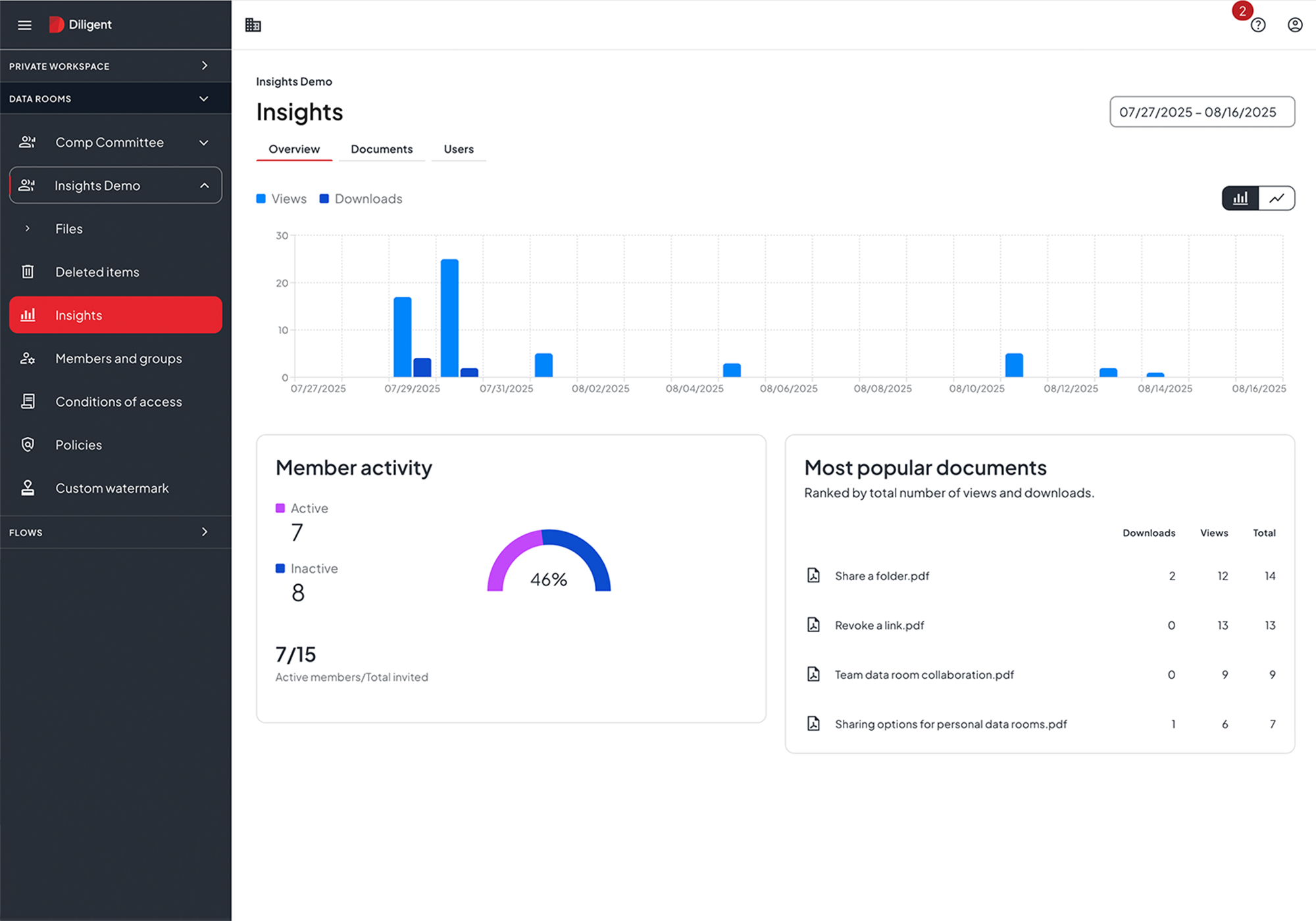
SmartPrep enhances director preparation by analyzing board materials to generate targeted discussion questions and insights for individual directors. Rather than directors spending valuable time searching through extensive documentation, AI surfaces key issues and potential implications, enabling more focused meeting discussions.
This matters because the average board pack has grown to 226 pages, according to the Chartered Governance Institute. More than half of board members describe finding key messages in their materials as "like finding a needle in a haystack." AI-powered preparation tools solve this challenge by highlighting what matters most.
After meetings conclude, Diligent's Smart Risk Scanner capabilities provide protection by automatically reviewing meeting materials and decisions for potential legal, regulatory and reputational concerns. This AI-powered analysis identifies sensitive content, compliance gaps and governance issues that could create liability.
Action Tracker converts meeting notes into trackable action items automatically, creating accountability and ensuring follow-through on board commitments. Automated action item tracking and secure board messaging ensure that board decisions are implemented effectively.
Whether you're preparing for a quarterly financial review or a full-day strategic planning session, the right agenda structure determines whether your board meeting drives decisions or just fills time. Purpose-built governance technology takes the administrative burden off your plate so you can focus on the discussions that actually move your organization forward.
Your next board meeting deserves a better agenda. Request a demo to learn how Diligent Boards helps organizations build better board meeting agendas in a fraction of the time.
Best practice is to distribute the agenda and supporting materials at least seven days before the meeting. This gives directors adequate time to review materials, prepare questions and identify concerns they want to raise.
For complex topics like M&A proposals or major capital expenditures, consider distributing materials even earlier.
Information items provide updates that directors need to be aware of but don't require a decision — financial reports, committee updates and executive summaries fall into this category. Action items require a formal board decision, typically through a motion and a vote.
Clearly labeling items helps directors understand what's expected during each portion of the meeting.
Set realistic time allocations for each agenda item and stick to them. Use a consent agenda for routine matters that don't require discussion. Consider using a "parking lot" for off-topic issues that arise, acknowledge them and commit to addressing them at a future meeting.
Ending each meeting with a brief evaluation helps identify patterns and improve future planning.
Your next board meeting deserves a better agenda. Schedule a demo to see Diligent Boards in action.