

In this article

Corporate governance reporting requirements are intensifying. SEC cybersecurity rules now require U.S.-listed companies to disclose material cyber incidents within four business days of determining the incident is material. California's climate disclosure laws take effect in 2026. And globally, frameworks like the EU's Corporate Sustainability Reporting Directive are expanding what boards must report.
These pressures come as directors face a strategic pivot. According to the Diligent Institute's What Directors Think 2025 report, 41% of directors now cite strategy as their top oversight challenge — surpassing cybersecurity for the first time in years. This shift reflects a broader reality: corporate governance reporting is no longer a backward-looking compliance exercise. It's a strategic function that shapes how boards communicate risk oversight, demonstrate accountability and build stakeholder confidence.
To help you navigate current requirements and emerging standards, this guide explains:
A corporate governance report is an ethically driven disclosure that reflects how corporations monitor their actions, policies, practices and decisions, as well as the effect of those actions on stakeholders. These reports provide shareholders with visibility into how the corporation conducts business, specifically the corporation's structure, governance model, activities and performance.
Corporate governance reports typically include information about governance procedures, regulatory compliance, company and board performance, board composition and how effectively the company follows good governance practices. They serve multiple functions:
Per the Diligent Institute's What Directors Think 2025 report, 76% of directors are prioritizing growth opportunities — a sharp turnaround from recent years focused on cost-cutting. This strategic shift makes governance reporting even more critical, as boards must demonstrate both opportunity pursuit and appropriate risk oversight to stakeholders.
In most large organizations, governance and compliance reporting falls under the direction of the chief compliance officer (CCO). The CCO is responsible for establishing company-wide standards and implementing procedures to ensure that governance and compliance programs effectively identify, prevent, detect and correct noncompliance issues with applicable laws, regulations, industry standards or company policies.
In practice, however, corporate governance reports are often coordinated by the corporate secretary or governance team, working closely with the CCO, finance, risk and ESG teams. Members of the compliance department and the corporate secretary may recruit or consult with subject matter experts to complete particular sections and often gather data from across the organization through polling and questionnaires.
In smaller organizations or those without a compliance officer, the responsibility may fall on a member of the legal department or another qualified employee. When choosing a manager to lead a compliance reporting team, find someone with expertise in the particular business operation under review and the regulations or mandates involved.
This manager may need temporary relief from typical duties, as compliance reporting can require significant time and effort.
This checklist highlights key insights to help organizations meet stakeholder expectations amid rising demands for transparency, accountability, and cybersecurity.

Corporate governance and compliance reporting (like ESG reporting) can have various audiences, depending on the particular focus of the report and whether or not the report is internal or outward-facing.
The details of compliance and corporate governance reporting might also concern a select department whose work with new regulations informs their business dealings or future plans. Finally, the organization may use the lessons gleaned from a compliance report to educate the wider workforce on the importance and necessity of following standard procedures and policies.
Corporate governance implements a collection of processes, policies, structures and relationships to control and direct corporations and hold them to account.
It includes the practices and procedures that corporations rely on to make sound decisions in corporate affairs, delineating the roles and responsibilities of many different individuals, including
Discover the benefits of an integrated GRC framework for effective corporate governance reporting. Access expert insights now.

Corporate governance divides into six broad categories that influence reporting and how boards disclose their activities:
Governments and regulators worldwide learn from each other how to improve corporate governance practices. The following provides an overview of significant laws and regulations that have shaped governance reporting over time.
1. The Cadbury Report (United Kingdom, 1992) was one of the first significant events in corporate governance reform. The report recommended establishing corporate boards and accounting systems to reduce potential corporate risks and failures.
2. The Sarbanes-Oxley Act (SOX) (United States, 2002) is a federal law establishing new auditing and financial regulations for companies. The law helps protect shareholders, employees and the public from accounting errors and fraud surrounding financial practices. SOX primarily pertains to financial reporting and business practices at publicly traded companies, although some provisions apply to all organizations. The Securities and Exchange Commission (SEC) enforces SOX provisions and penalties for noncompliance.
3. The Dodd-Frank Wall Street Reform and Consumer Protection Act (United States, 2010) made the government responsible for regulating corporate transparency and accountability in the financial industry. The Act created the Financial Stability Oversight Council (FSOC) to address persistent issues affecting the financial market, incorporated whistleblowing provisions with financial rewards and established the Consumer Financial Protection Bureau.
4. The Securities and Exchange Board of India (SEBI) amendments require stricter disclosures and protections for investors' rights, including provisions for equitable treatment of minority and foreign shareholders, shareholder approval for related party transactions, whistleblower policies, increased pay package disclosures and requirements for at least one female director on every board.
5. The UK Corporate Governance Code (first introduced in 2018 with ongoing updates) sets out governance policies and procedures that apply to all premium-listed companies in the UK. It includes governance frameworks for board leadership, composition, succession and more. The Financial Reporting Council (FRC) conducts ongoing reviews that increasingly focus on the quality and specificity of disclosures, not just formal compliance with the Code.
6. ESG and sustainability frameworks represent the newest wave of governance reporting requirements. Global standards like the ISSB sustainability standards and jurisdiction-specific rules around climate and sustainability disclosure are expanding what boards must report. These frameworks emphasize board oversight of ESG factors, risk management and internal controls as part of governance disclosures.
Governance reports offer detailed accounts of an organization's progress on particular compliance initiatives or, taken collectively, can provide a broad summary of your company's compliance efforts.
Also called the annual corporate report, a corporate governance report includes a statement of corporate governance procedures and compliance, information on board composition, statements on the company's performance, and information about compliance and conformance with best practices for good corporate governance.
The corporate report should include a statement of disclosure of the company's governance procedures and compliance. It should also disclose the principles and codes that guide the company's procedures.
Disclosure statements usually detail the distribution of powers between the board chair and the CEO. Best practices in today's marketplace discourage the same individual from serving as CEO and board chair.
The average size of corporate boards is 9.2 directors. The ideal size of a corporate board is seven to 11 members. Best practices for good corporate governance recommend that boards strive for a mix of board directors in competencies, age, gender, profession, independence and diversity.
There should also be a mix of executive and independent directors, with the majority being independent directors. Corporate governance reporting should disclose the regularity and frequency of board meetings.
The corporate governance report should contain a section that lists the powers, functions, roles and responsibilities of board directors. The report includes information about committees, sub-committees, and any delegated powers and duties. This section of the report should consist of conformance and transformative functions.
Shareholders may be particularly interested in reading information about board directors in the corporate governance report. Such information may include the company's procedures for appointing directors, board development, succession planning and remuneration by shareholding members.
Disclosures often describe the corporation's mechanisms for monitoring the board's performance, as well as the performance of individual board directors. It also includes information about related party transactions, conflicts of interest and how the board handled them.
A section of the annual report details the overall organizational plan and how it relates to business plans and budgets, operational and performance measures and a description of risk management and internal control procedures.
These reports provide evidence of accountability and transparency and support generally accepted accounting and auditing standards. Sections on accounting also specifically disclose the company's relationship with internal and external auditors.
Disclosure statements also cover such issues as communications with shareholders and stakeholders, legal compliance, and codes of conduct for the board, CEO, management and staff.
Statements usually detail the nature of the business and its future prospects. Shareholders are interested in knowing the company's outlook for growth, sustainability and innovation and how the corporation plans to factor future market trends into its strategic planning.
Corporate governance reports should be updated at least annually. But boards shouldn't limit reviews to only once per year. A thorough corporate governance report is the product of effective day-to-day practices that are continuously reviewed and disclosed.
"Board members frequently receive surface-level data, such as the number of whistleblowing reports, with little context," says Pav Gill, CEO of Confide. "Always dig deeper. For instance, three reports in a quarter may sound like a low figure, but if all those reports involve the same individual, that's a red flag worth investigating."
To produce effective governance reports, boards should adopt these best practices:
"Transparency shouldn't just be a word so you can check a box," says Dr. R.J. Gravel, Deputy Superintendent at Glenbrook High School District 225. "Transparency should lead to better decisions."
Corporate governance reporting identifies areas where companies meet compliance initiatives and areas requiring more work. With this knowledge, business leaders make more effective decisions about resource allocation, risk management and strategic planning.
In addition, thorough compliance reports offer two key benefits:
"The board fundamentally has to trust management," says Inna Barmash, Chief Legal Officer and Corporate Secretary at Amplify. "Trust starts with communication. Communication is successful when it's proactive, when it anticipates and addresses board members' concerns, and speaks to their experience from other boards and their operational experience."
For organizations managing governance reporting across multiple entities and jurisdictions, manual processes create inherent risk. Spreadsheet-based tracking, email-driven data collection and document-based reporting leave gaps that compromise accuracy — often discovered only during audits or regulatory examinations.
Purpose-built governance platforms like Diligent eliminate this fragmentation, transforming reactive compliance reporting into proactive governance excellence.
The Diligent One Platform unifies governance, risk and compliance functions into a single connected infrastructure — reducing the silos that allow reporting gaps to go undetected. Within the platform, multiple solutions directly address the challenges that undermine governance reporting quality:
Diligent Entities serves as the system of record for corporate governance data, providing AI-enhanced entity management that transforms reporting from a manual burden into a strategic function.
"Diligent is the legal reference tool of our group: exhaustive, up-to-date and reliable," says Anja Wittke, Senior Legal Counsel at Safran, which manages several hundred subsidiaries worldwide. "We can generate tailored reports on our entities — and those reports are simple to produce."
Diligent Boards streamlines board governance workflows and ensures the accuracy of materials that feed into governance reporting:
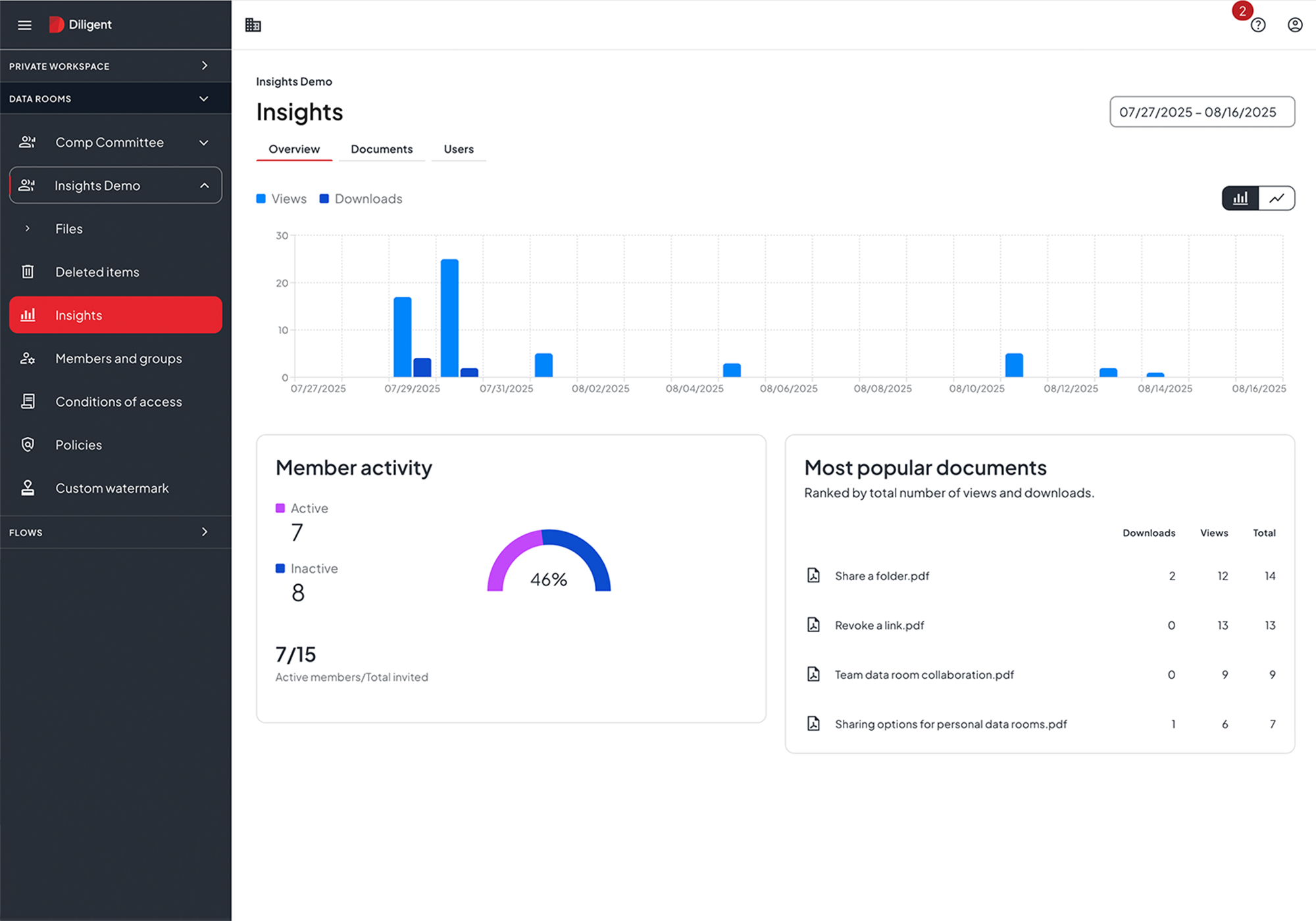
These AI capabilities ensure that the board deliberations and decisions documented in governance reports reflect thorough oversight and informed decision-making — exactly what regulators and stakeholders scrutinize.
Whether you're producing annual governance reports, responding to regulatory examinations or demonstrating compliance to investors, integrated governance technology provides the accuracy and efficiency that manual processes cannot match.
Schedule a demo to see how Diligent helps organizations transform governance reporting from a compliance burden into a strategic advantage.
Organizations should update corporate governance reports at least annually, typically in conjunction with the annual report cycle. However, effective governance reporting isn't a once-a-year exercise.
Boards should conduct ongoing monitoring and update reports whenever material changes occur — such as significant leadership transitions, regulatory changes, major acquisitions or governance structure modifications. Internal reports may be updated quarterly or even monthly for board and committee review.
Internal governance reports target board members, executives and select stakeholders. They tend to be more detailed and may include sensitive performance data, internal audit findings and strategic planning information.
External governance reports are designed for regulators, shareholders and the public. They follow prescribed formats based on applicable regulations (such as SOX, UK Corporate Governance Code or SEC requirements) and focus on demonstrating compliance and accountability.
Technology transforms governance reporting in several ways:
Tools like Diligent Entities demonstrate how organizations can reduce reporting time by 70% while improving accuracy and completeness.
Ready to simplify your governance reporting? Request a demo to see how Diligent centralizes entity data, automates compliance workflows and generates AI-powered reports.




