
In this article

When organizations make decisions like board structure, composition, independence and processes, what they're talking about is board governance. Just as corporate governance guides the entire business, board governance creates guardrails around board conduct to ensure it's effective and ethical and fulfills their fiduciary duties.
Board governance should fit the organization and evolve with the board. It should refine how the board pursues the organization's objectives. Effective board governance depends on clear roles, workable structures, director independence, board committees and consistent processes for decisions, risk oversight and reporting.
Board governance definition: Board governance is the set of policies, systems and structures that define how a board operates, makes decisions and fulfils its fiduciary responsibilities to the organisation and its stakeholders. Because the board then sets the organizational priorities, board governance becomes the foundation of the entire corporation's governance structure.
Board governance applies directly to the board and is critical to the entire organization. How the board is governed trickles down to the governance structures that dictate how the enterprise will achieve its objectives, comply with relevant regulations and more.
For boards, governance includes:
The above then informs corporate governance practices like:
Board governance is important because it's the foundation for an organization's success. A corporation's direction and financial management both depend on how the board governs itself.
Good governance paves the way for:
As important as board governance is, there is no one right structure. There are many different frameworks, each of which lends different strengths to the board's responsibilities.
An organization may combine elements from any of the following to create a governance model that meets the organization's needs. These include:
Even after defining board structure, there are several different elements boards must consider to effectively guide their activities. For example, how diverse will the board be? How will the board support planning?
These are the elements essential to board governance:
1. Board committees: Most boards will utilize committees. Each committee can focus on a single issue, like audit or governance. This expands the board's capacity because committees can operate in parallel with the board, rather than every board director having to address every issue the corporation faces.
2. Board diversity: How diverse will the board be, and what benchmarks does the board need to hit? Diverse backgrounds and perspectives improve board performance, so taking this seriously can meaningfully improve board governance.
3. Board composition: Board effectiveness depends on highly qualified, skilled and diverse directors. Governance will define which industries and expertise should be represented among the directors.
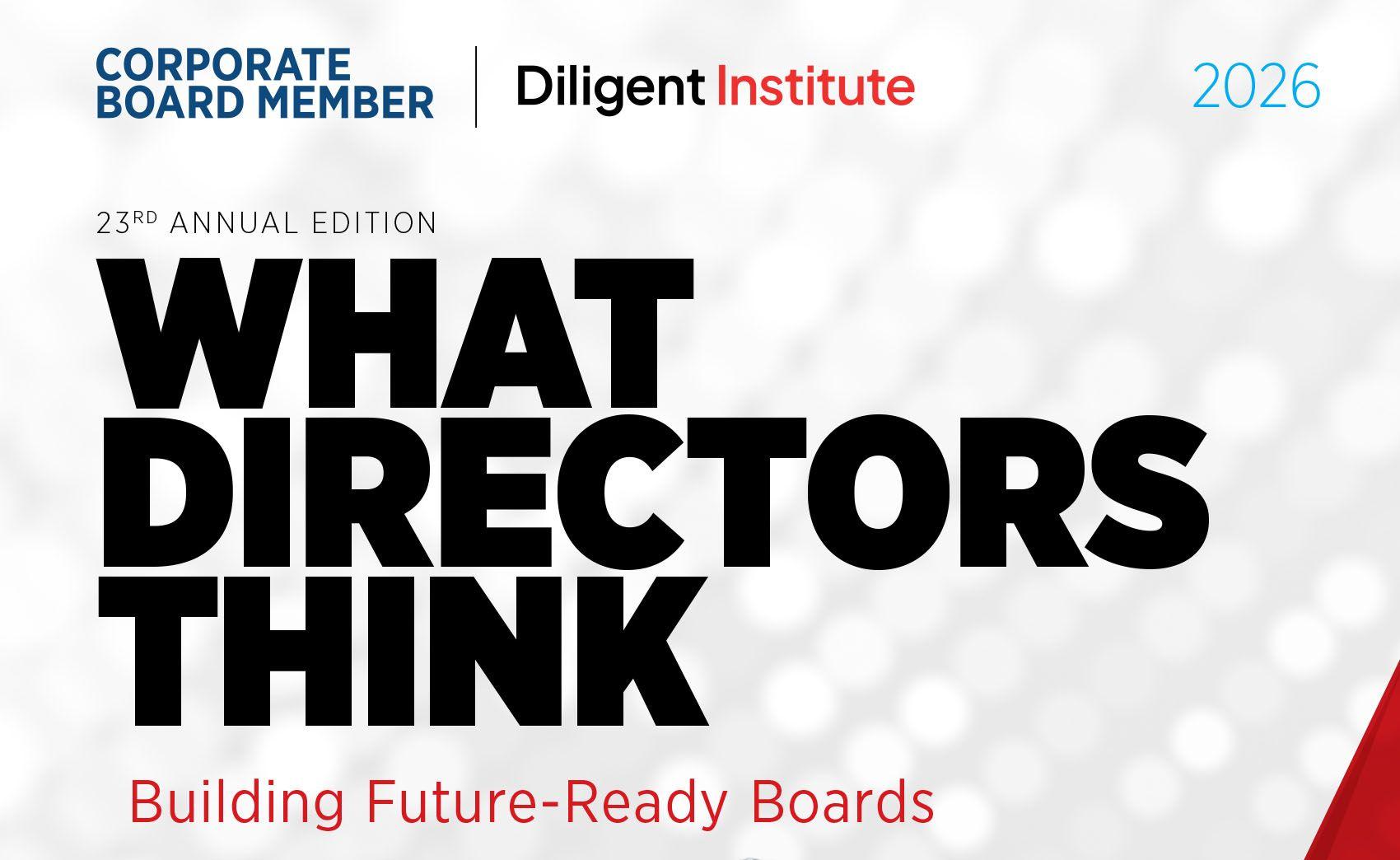
According to What Directors Think 2026 by Diligent Institute and Corporate Board Member, only 8% of boards report strong AI expertise, while 28% of directors cite AI expertise as a director recruitment priority. Boards can use that gap to revisit the expertise they expect directors to bring and to prioritize AI literacy when they evaluate composition or recruit new directors.
4. Board independence: When directors are independent, they're less likely to fall victim to conflicts of interest. Part of board governance is determining whether directors will also be employees — as in a working board, or if they'll be external to the company.
5. Board evaluation: The board may underperform, or individual directors may fail to meet expectations. A regular evaluation can identify weaknesses and opportunities for improvement to keep all directors performing their best.
Implementing board governance isn't always easy. It helps the board in the long run. In the short term, it can feel like a nuisance by challenging bad habits or inefficiencies the board has adopted. As you execute your board governance structure, expect to hit roadblocks like:
1. Resistance to change: Corporate boards have existed for generations. As such, there are many inefficient practices entrenched in board norms, like interlocking directorates. Your new board governance model may challenge those practices, and you could face resistance. This can make it difficult to truly embed new best practices.
2. Lack of clarity on roles and responsibilities: As governance evolves, directors may be unsure of their roles or responsibilities. Be clear with each director to reduce confusion and maintain accountability.
3. Balancing the board: Diversity is critical to boards, but it's also something many organizations have been slow to adopt. Getting the right balance of industries, backgrounds and skills remains a challenge.
4. Limited stakeholder engagement: Though board governance applies directly to the board, it does require engagement with employees, investors and the community. Failing to get that input can lead to decisions that don't consider the broader impacts on the organization.
5. Short-term thinking: Governance is a long-term effort, but the change can lead to short-term thinking that harms the board's effectiveness. Boards should equally weigh short-term performance and long-term impacts like sustainability and risk.
On its own, board governance gives corporations a critical structure to aid their path forward. Best practices put those governance principles into action, setting the board up to steer the corporation toward success.
Some important best practices include:
Learn more about board governance best practices here.
A map and compass are effective, tried and true navigation tools. However, the map on your phone is faster, simpler and takes the guesswork out of getting from point A to point B. For board governance, that tool is software.
Board governance comes down to the directors who serve. It is also a complex web of processes, policies and procedures that can be easy to lose track of. Giving each element of board governance its due is also a delicate balancing act.
According to the GC Risk Index 2026 by Diligent Institute, only 19% of legal leaders say their organization's GRC systems are fully integrated. Boards should ask whether governance, risk and compliance data can be reviewed in one place, or whether management is manually stitching together reports from disconnected systems.
Board governance software supports communication, collaboration and centralized insights about the organization. Diligent Boards is purpose-built for this, with a full suite of AI capabilities, collectively called GovernAI, that address every stage of the board meeting lifecycle:
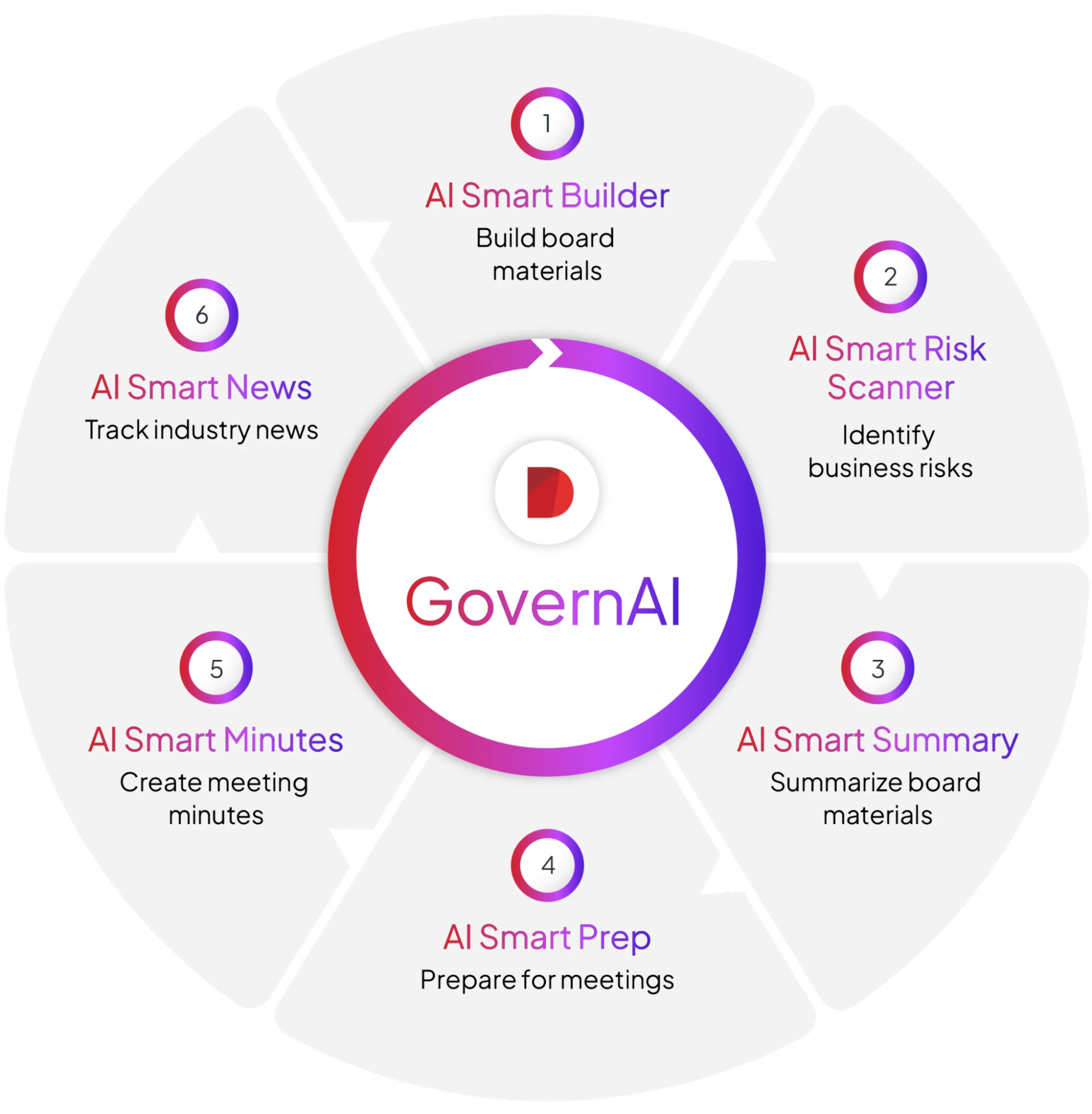
Smart Builder automatically synthesizes raw materials into polished board books, removing hours of manual compilation from the governance team's workload.
AI Smart Summary distills lengthy board materials into concise, actionable takeaways so directors can focus review time on what matters most.
AI Smart Prep generates pointed discussion questions with source citations for each agenda item, so directors arrive at meetings prepared for substantive dialogue rather than high-level overviews.
AI Smart Risk Scanner reviews board materials before distribution to flag risky language and legal red flags — a particularly valuable step before materials reach independent directors or external stakeholders.
AI Smart Minutes converts meeting transcripts into structured draft minutes, reducing the time the corporate secretary spends on post-meeting administration.
AI Smart News delivers real-time industry and peer intelligence directly to directors' dashboards, keeping the board informed on fast-moving developments between meetings.
Assore Holdings, a mining company operating across international markets, moved board preparation from days to minutes after implementing Diligent Boards and GovernAI. Directors are now more engaged and better prepared, asking deeper questions in meetings.
Learn more about Diligent Boards and how it can improve your board governance.
Board governance covers how the board itself operates, its composition, structure and decision-making processes. Corporate governance is the broader system directing the entire organization, including strategy, compliance and risk. Board governance is a subset of corporate governance: how the board governs itself shapes how the organization is governed.
The three most common board governance models are the inside board (directors drawn from company leadership), the outside board (independent external directors) and the advisory board (experts who counsel without fiduciary authority). Most organizations blend elements of all three based on their size, sector and ownership structure.
A board of directors sets organizational strategy, oversees executive leadership, manages risk and ensures regulatory compliance. Key duties of a board of directors include approving major decisions, monitoring financial performance, selecting the chief executive officer and maintaining ethical standards. Committees, audit, compensation and governance, carry out much of this work between full board meetings.
AI can improve board governance by reducing manual preparation effort while raising the bar on the quality of information directors receive.
Diligent's AI governance suite, GovernAI, offers a range of capabilities to support better board governance. For example:
A board governance framework is the structured set of policies, roles and processes defining how a board fulfills its oversight responsibilities. It covers composition standards, committee structures, decision-making authorities and director evaluation. A strong framework gives directors clarity on accountability and ensures consistent board operations over time.
Ready to put AI to work in your boardroom? Diligent Boards — the AI-powered board management software trusted by 75% of the Fortune 500 — automates meeting prep, sharpens decision-making and gives directors everything they need to lead with clarity. See how it can transform your board governance.