
In this article

Understanding the distinction between stakeholder vs shareholder has become essential for companies preparing for public markets. While the terms are sometimes used interchangeably, they represent fundamentally different relationships to the organization, each with distinct rights, expectations and oversight requirements.
For growth-stage companies preparing for an IPO or major transactions, this distinction carries practical implications.
Institutional investors now evaluate how boards balance financial returns with broader stakeholder considerations. According to the What Directors Think 2025 report by Diligent Institute, Corporate Board Member and FTI Consulting, two-thirds of board members actively monitor metrics they believe matter to shareholders. This includes total shareholder return, executive pay alignment and return on invested capital.
At the same time, regulatory frameworks worldwide are expanding accountability beyond shareholders to include employees, communities and supply chains. Boards that understand these dynamics position themselves for successful transactions and long-term value creation.
This article explains stakeholder vs shareholder governance, covering:
The core difference is straightforward: shareholders own equity in the company, while stakeholders encompass anyone affected by corporate actions. This distinction shapes everything from fiduciary duties to reporting requirements.
A shareholder holds ownership shares in a company's stock. This ownership grants specific legal rights: voting on major corporate decisions, receiving dividends when declared and participating in residual value if the company is sold or liquidated.
Shareholders have a direct financial stake — their returns depend on share price appreciation and dividend payments.
Shareholders fall into two primary categories.
Stakeholders include any individual, group or entity affected by a company's operations and decisions. This broader category encompasses employees, customers, suppliers, communities, regulators and, importantly, shareholders themselves. Shareholders are stakeholders, but not all stakeholders are shareholders.
Unlike shareholders, most stakeholders don't hold formal ownership rights. Their influence operates through different mechanisms: employees through labor markets, customers through purchasing decisions, regulators through enforcement authority and communities through social license to operate.
For companies preparing for IPO or acquisition, the governance model shapes how investors evaluate transaction readiness. According to Diligent Institute's Transaction Readiness Report, only 4% of organizations have fully integrated governance, risk and compliance (GRC) systems, while 60% remain siloed or only partially integrated.
This fragmentation creates problems during due diligence. Investors now evaluate not just financial performance, but how companies manage stakeholder relationships and ESG commitments. Additionally, institutional investors integrate ESG factors into proxy voting decisions. Companies that cannot demonstrate systematic stakeholder oversight face potential valuation discounts or delayed transactions.
Understanding the board of directors' responsibilities to shareholders provides important context for navigating these dynamics.
"One of the clearest gaps I notice is between governance and finance systems," says Jack McCullough, Founder and President of the CFO Leadership Council. "Organizations that close this gap gain speed, credibility and control in transactions — advantages that often determine whether a deal creates value or not."
The shareholder and stakeholder models represent different philosophies about corporate purpose — and each carries distinct implications for board governance.
Under shareholder primacy, directors' primary obligation is to maximize value for equity owners. Board decisions center on share price appreciation, dividend policy and capital allocation that generate returns. This model dominated U.S. corporate governance for decades and remains influential.
Critics argue this approach can encourage short-term thinking at the expense of long-term sustainability. On the other hand, supporters counter that clear accountability to shareholders provides discipline and prevents management entrenchment.
The stakeholder model expands board accountability beyond shareholders to include employees, customers, communities and the environment. This approach gained momentum following the 2019 Business Roundtable statement, in which over 180 CEOs redefined corporate purpose to serve all stakeholders.
Implementation has been uneven. While many leaders publicly support stakeholder capitalism, governance practices often lag stated commitments. Boards operating under this model must balance competing interests, such as employee welfare, environmental impact and community relations, alongside financial performance.
"In our capital markets, we've historically been very driven by shareholder, rather than stakeholder, interests, and meeting short term earnings guidance and driving executives to make decisions that aren't necessarily in the long term interest in the company. You need to assess your current culture, define your purpose, move toward a stakeholder view, and think outside the box, then start building a bridge to transform your culture. It's very difficult to do," says Cynthia Cooper, WorldCom Whistleblower.
Regulations worldwide are making stakeholder accountability mandatory rather than voluntary. Companies preparing for transactions must understand which compliance frameworks apply.
The EU leads with the Corporate Sustainability Due Diligence Directive (CSDDD), requiring companies to monitor human rights and environmental risks throughout supply chains. Additionally, the Corporate Sustainability Reporting Directive (CSRD) mandates disclosure of both financial impacts and social/environmental effects.
In the United States, SEC climate disclosure rules require public companies to report climate-related risks and governance activities, though implementation faces ongoing litigation. California has also enacted its own climate disclosure requirements for large companies operating in the state.
For pre-IPO companies, these overlapping frameworks create complexity. Building stakeholder governance infrastructure before going public is significantly easier than retrofitting processes under regulatory scrutiny.
Discover how integrated GRC closes the gap between governance and finance systems that 60% of organizations still face.

Boards don't need to choose between shareholder returns and stakeholder considerations. Effective governance addresses both through systematic processes:
This integration is not just theoretical. According to the Director Confidence Index (March 2026) by Diligent Institute and Corporate Board Member, 73% of directors say their board is confident it is equipped to oversee the risks ahead, and one-third have requested enhanced risk data from management. Boards that build systematic stakeholder oversight are among those reporting the highest confidence levels.
Managing multi-stakeholder governance creates complexity that manual processes cannot address at scale. AI-powered platforms help boards synthesize diverse inputs, monitor compliance across frameworks and deliver decision-ready insights.
Diligent's unified governance platform addresses the integration gaps that slow transactions. Rather than managing stakeholder data in siloed spreadsheets, boards access consolidated views of shareholder sentiment, ESG performance and risk exposure — the visibility that investors evaluate during due diligence.
Diligent Market Intelligence provides real-time insights into shareholder activism, proxy voting patterns and ESG expectations. Pre-IPO companies use these tools to understand institutional investor priorities before entering public markets — identifying governance gaps while there's still time to address them.
Diligent Boards extends this visibility into the boardroom itself. AI capabilities reduce preparation time by 80% while synthesizing stakeholder-relevant information from multiple sources. Smart Builder creates comprehensive board materials that integrate ESG metrics, risk dashboards and stakeholder updates, eliminating manual compilation and version control issues.
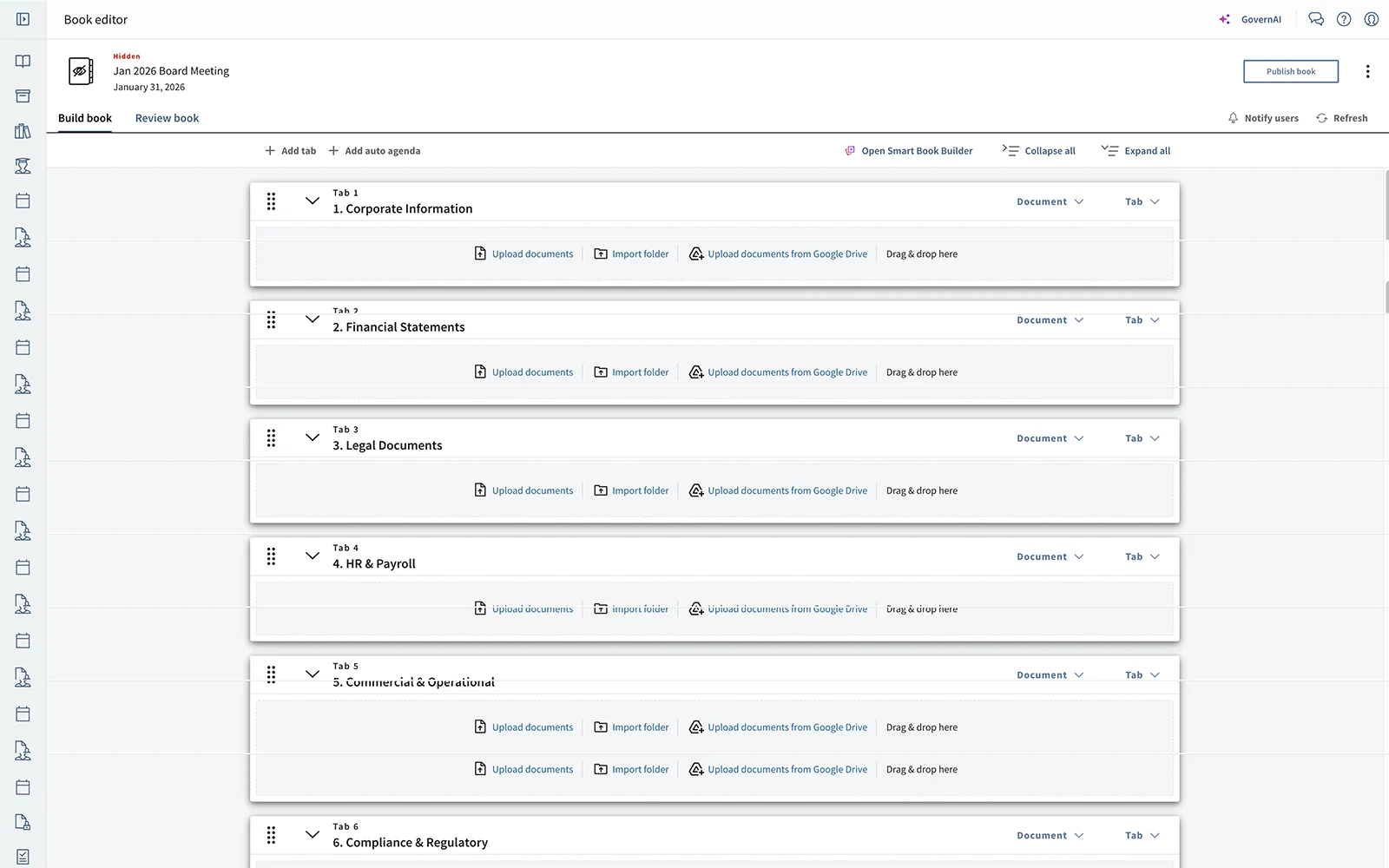
Directors arrive at meetings with the context they need to balance shareholder returns against broader stakeholder considerations, rather than spending meeting time getting up to speed.
Together, these tools create the governance infrastructure that sophisticated investors expect. Boards that build systematic oversight processes — supported by technology that scales — position themselves for successful transactions and sustainable growth.
For growth-stage companies, the time to build this infrastructure is before it's tested. The companies that understand stakeholder and shareholder dynamics — and build governance to address both — will be best positioned for whatever market conditions emerge.
See how Diligent can help your organization build governance that scales. Request a demo to get started.
No. Shareholders are a specific subset of stakeholders who own equity in the company. Stakeholders include any party affected by corporate actions — employees, customers, suppliers, communities and shareholders. All shareholders are stakeholders, but not all stakeholders hold ownership rights.
Directors owe shareholders fiduciary duties of care, loyalty and good faith. Legal obligations to other stakeholders vary by jurisdiction. In the U.S., directors generally may consider stakeholder interests but owe primary duties to shareholders.
Additionally, EU regulations like CSDDD create explicit duties regarding supply chain human rights and environmental impact.
Institutional investors assess whether companies have systematic processes for stakeholder oversight, including board committee structures, ESG reporting frameworks, risk management integration and stakeholder engagement protocols.
Companies with fragmented governance systems face extended due diligence timelines and potential valuation discounts.
This framing creates a false dichotomy. Successful pre-IPO companies build governance infrastructure that addresses both. Institutional investors increasingly view ESG and stakeholder considerations as material risk factors, making stakeholder governance a prerequisite for attracting public-market capital, not a distraction from shareholder value.
Pre-IPO companies need integrated systems for board management, risk oversight, compliance tracking and ESG reporting. Committee charters should specify oversight responsibilities for material stakeholder issues. Also, reporting frameworks should present stakeholder metrics alongside financial performance.
Building this infrastructure before going public is significantly less costly than retrofitting under regulatory scrutiny.
Shareholder primacy holds that a corporation's primary purpose is maximizing value for equity owners. Board decisions under this model prioritize share price, dividends and capital returns. Stakeholder theory expands corporate purpose to include employees, customers, communities and the environment alongside shareholders.
Most contemporary governance operates along a spectrum between these models, with regulatory frameworks like the EU's CSDDD increasingly mandating stakeholder accountability regardless of a company's stated philosophy.
Ready to build transaction-ready governance? Schedule a demo to see how Diligent's unified platform streamlines stakeholder and shareholder oversight.