
This article originally appeared in our October 22nd edition of the Diligent Minute Newsletter. For more insights like these, delivered straight to your inbox, subscribe here.
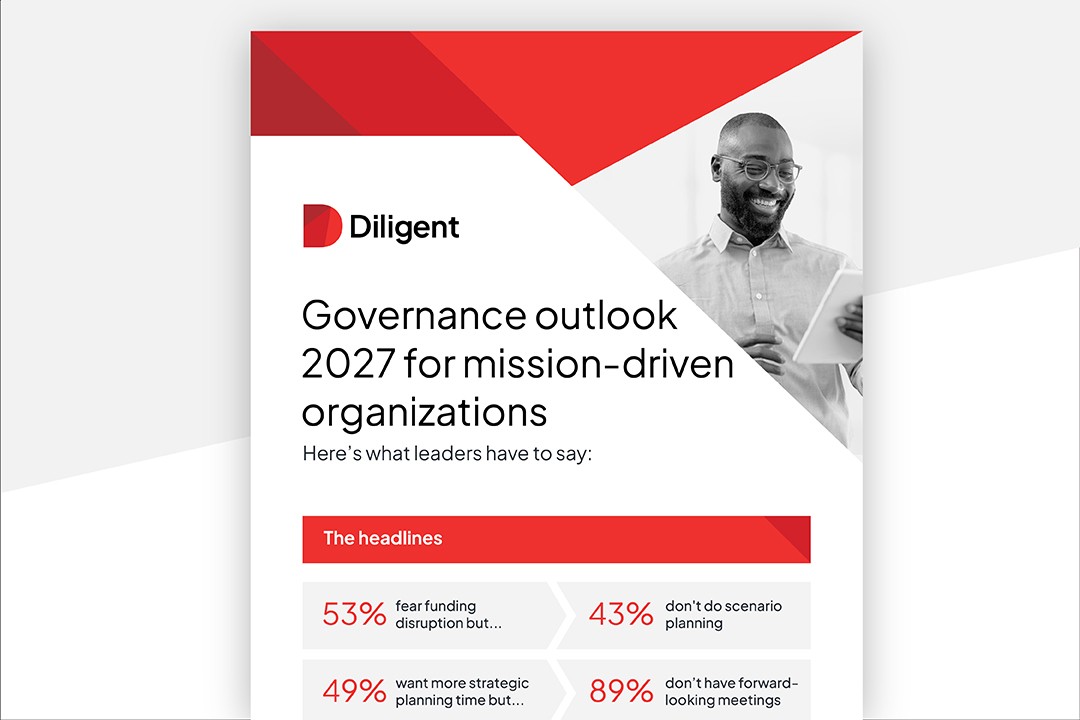
Many corporate directors also serve on nonprofit and public-sector boards, prompting us to ask: How do shared pressures play out across those roles? Our inaugural Governance Outlook 2027 for Mission-Driven Organizations explores that question through responses from 230 stakeholders globally, including board members, executive directors and board secretaries. For corporate readers, it offers a fresh lens on their own board practices and those they bring to other boards.
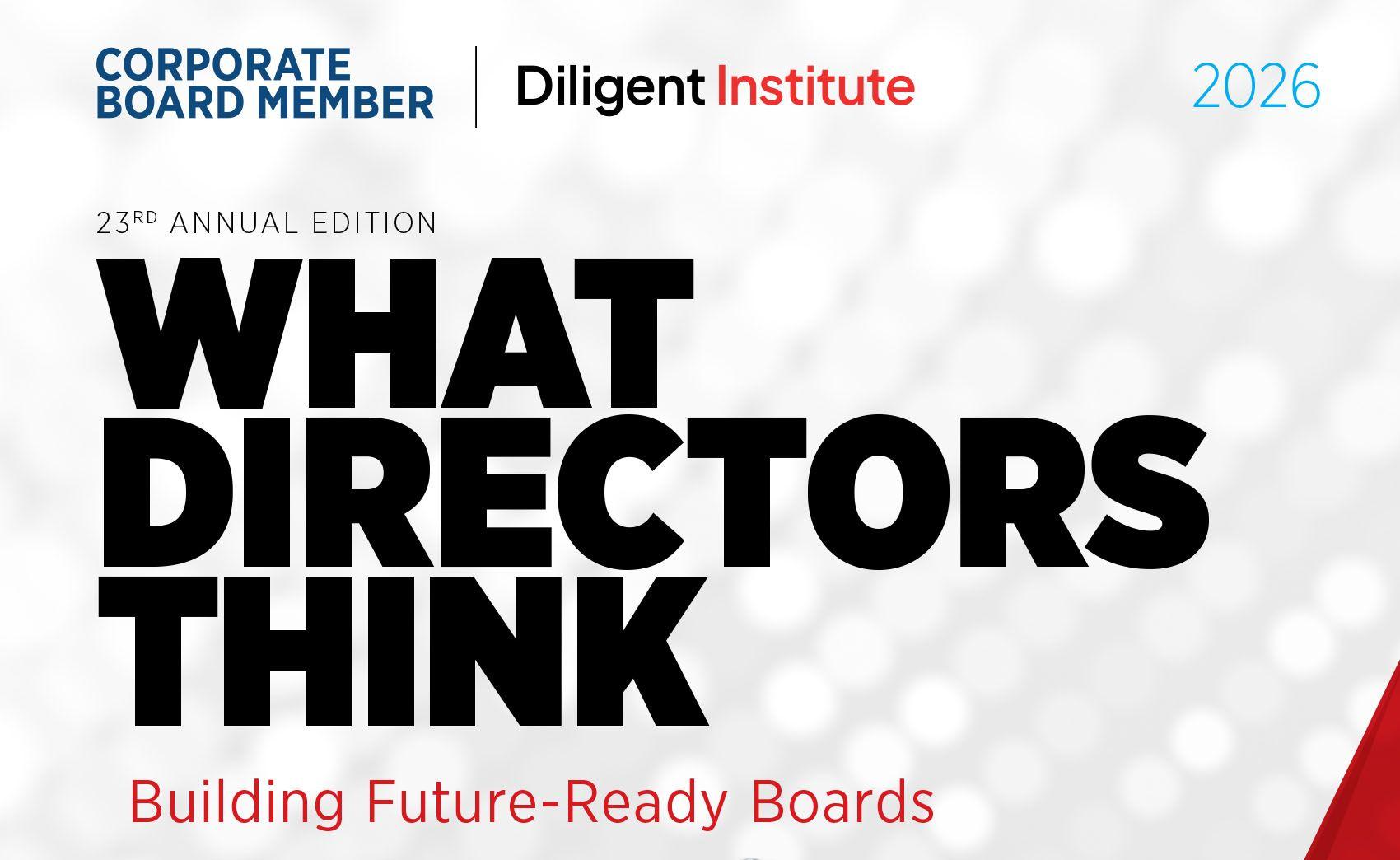
Economic pressure is the clearest point of connection. Fifty-three percent of mission-driven respondents identify an economic or funding downturn as a major organizational risk. In What Directors Think 2026, conducted in partnership with Corporate Board Member, 55% of public-company directors cite a sharp U.S. economic downturn as a major risk.
The shared concern is notable, but its implications differ. Mission-driven boards put financial conditions and grants first on the agenda (41%) and describe budget allocation and fiscal management as their hardest oversight challenge (45%). Corporate boards, meanwhile, are weighing growth: 40% prioritize M&A and strategic partnerships, while 38% prioritize deploying AI and the same share pursue new products or markets.
For directors serving in both settings, that contrast matters: mission-driven boards must protect service and community impact while sustaining financial resilience. Service innovation ranks third on their board agendas (31%), alongside strategic planning (34%). For corporate directors, strategic planning is also prominent (47% say it belongs on the agenda), but it sits alongside competition for growth and investment.
Both surveys highlight the importance of foresight and scenario planning. Forty-three percent of mission-driven respondents say their boards do no scenario planning; another 29% say management handles it with limited board involvement. Meanwhile, 84% of corporate directors report that their boards have changed their approach to scenario planning over the past five years, often by expanding the scope of scenarios or spending more time on them. Yet corporate boards still face a visibility challenge: 53% say they do not often receive real-time data between meetings. Neither group can assume yesterday’s information is enough for tomorrow’s decisions.
Both audiences are asking for better boardroom conversations. Only 11% of mission-driven respondents describe their meetings as mostly forward-looking, similar to the public-company audience, and 49% want more time for strategic planning; 31% want fewer presentations and more discussion. In What Directors Think, 58% of directors want fewer presentations and more time for strategy. The message is consistent: Move routine reporting out of board meetings and make more space for debate, choices and preparation.
As one respondent put it, “Governance and risk management should be more proactive, independent, and forward-looking, especially as the organization becomes more global and complex. The board should provide constructive oversight, challenge management appropriately, and help strengthen risk visibility, succession planning, compliance, and operational resilience.”
AI reveals another shared challenge: Turning interest into disciplined use. Among mission-driven respondents, 30% identify technology and AI modernization as an investment priority, and 25% put AI and digital risks on the board agenda, yet 52% say their board does not use AI in oversight or strategic decision-making. Corporate directors report broader use: 66% say they use AI for board work such as meeting preparation. But only 22% report having AI governance processes to guide that use. Adoption is not the same thing as readiness.
The research points to some practical opportunities for improvement:
Different groups, different questions, but familiar challenges. The practical lesson is clear: Good governance is not simply more information or longer agendas. It is the discipline to connect risk with strategy, test assumptions, use technology responsibly and protect the capacity to fulfill a mission. Start with your next agenda: Does it create room to test assumptions, weigh trade-offs and plan ahead?
GovernAI: Secure AI for boards, directors and governance teams

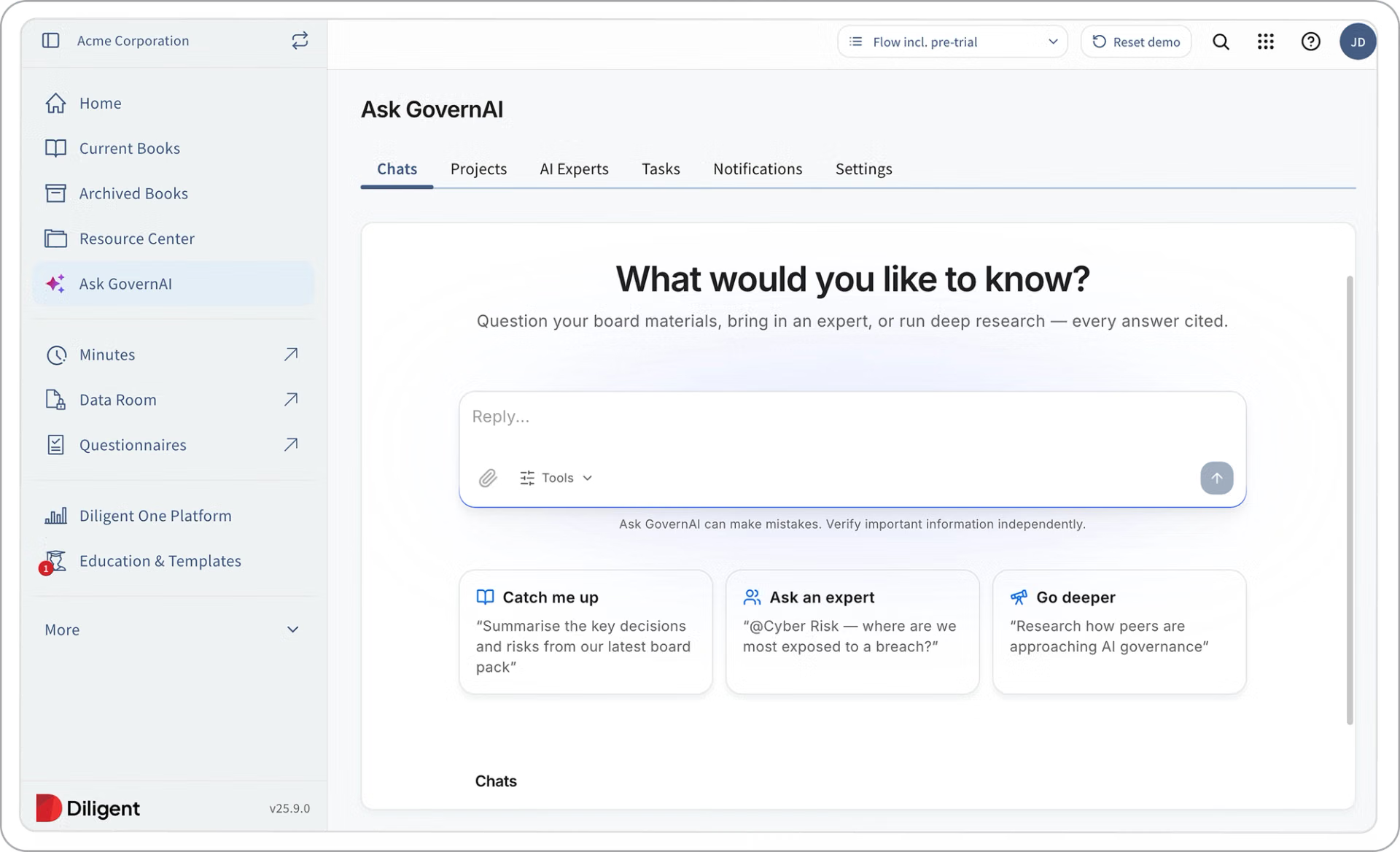
Recent research shows directors are already turning to AI for board work, often without formal governance in place. This blog introduces the next generation of GovernAI, helping directors get secure, cited answers, expert perspective and boardroom context from their own materials, all within Diligent Boards.