
Complete the questionnaire. Commission the penetration test. Receive the certificate. Six months later, a vendor you assessed eighteen months ago is the entry point for a breach.
In 2027, that approach will be even harder to sustain. Regulators have shifted from checking boxes to demanding evidence of continuous, active oversight. Leadership is under pressure to demonstrate resilience, not recite compliance status. The frameworks are multiplying faster than the teams expected to implement them.
Three numbers from the Verdantix Global Corporate CISO Survey 2026 frame where the CISO function is heading:
The same Verdantix survey puts a further number on the mandate shift: 75% of CISOs rate threat complexity as their most or very urgent challenge. The numbers point to a role under pressure to become more continuous, strategic and resilient, without relying on ever-growing teams or budgets. Six trends will shape how CISOs respond in 2027.
In 2025, the story was experimentation, from pilots in threat detection, alert triage to vulnerability scanning, with ROI that was largely anecdotal.
Gartner forecasted $2.7 trillion in global AI spend for 2026, a 49.5% year-on-year increase. What we have seen is that AI investment has arrived faster than the frameworks to govern it, and most security functions are feeling that gap. A Gartner survey of 1,600 CISOs reinforces this. Enabling and protecting AI ranked as the top CISO priority for the first time in 2026, up from outside the top five a year earlier. Teams deploying AI deliberately, with defined use cases and integrated workflows, are reporting real efficiency gains. Teams that bolted a tool onto existing processes mostly aren't.
In 2027, the question shifts from "Are we using AI?" to "Is it reducing risk, or just reducing the appearance of risk?" The CISOs seeing the clearest returns treat AI as infrastructure, applied systematically across the highest-volume, lowest-judgment work in the function, rather than as a point solution added to a fragmented stack.
The takeaway:
Only 30% of boards describe their relationship with the CISO as strong and collaborative, according to the 2026 Board-CISO Benchmark from IANS and Artico Search with 53% of directors saying CISO reporting on evolving threats needs to improve.
"Cyber appears in crisis plans but not in the risk register. The gap is a framing problem, not a board engagement problem."
Shifting from threat volumes to business exposure helps security leaders secure faster decisions. That translation is becoming more important as their role expands from technical gatekeeper to strategic resilience enabler. Yet much of the language used in cyber risk reporting still doesn’t land well in the boardroom.
Threat vectors, CVE counts and patch compliance rates aren't decision-ready information. Boards need to understand what a risk means for business continuity and shareholder value, not what it means for the security stack. Pulse Security AI's CISO-Board Communication Gap report shows that only 12.5% of security leaders are confident their board truly understands the program after a presentation, and 71% spend more than 10 hours preparing each board reporting cycle.
The takeaway:
82% of CISOs rate third-party risk as most or very material to their threat exposure. A 2026 Panorays survey of 200 CISOs goes further with 85% saying they don't have full visibility across their supply chain, and 71% saying traditional questionnaires fall short of capturing real risk. Most programs scope on vendor criticality: How important is this vendor to business operations? But criticality and access aren't the same thing. A low-criticality vendor with privileged system access is a significant risk that a criticality-based model systematically underweights.
The problem is that most programs measure business dependence, not security exposure. As a result, they focus scrutiny on the vendors that keep operations running while potentially overlooking the vendors most capable of creating cyber risk.
The takeaway:
"For one vendor risk assessment, it's like a 40-hour job."
So said a CISO at a Gartner SRM roundtable, capturing perfectly the vendor assessment problem. The issue isn't just time. A 40-hour point-in-time assessment produces a result that's already out of date by the time it's finished. Vendor risk changes continuously. A certificate of compliance issued in January says nothing about the vendor's posture in July. In fact, it’s out of date the next day.
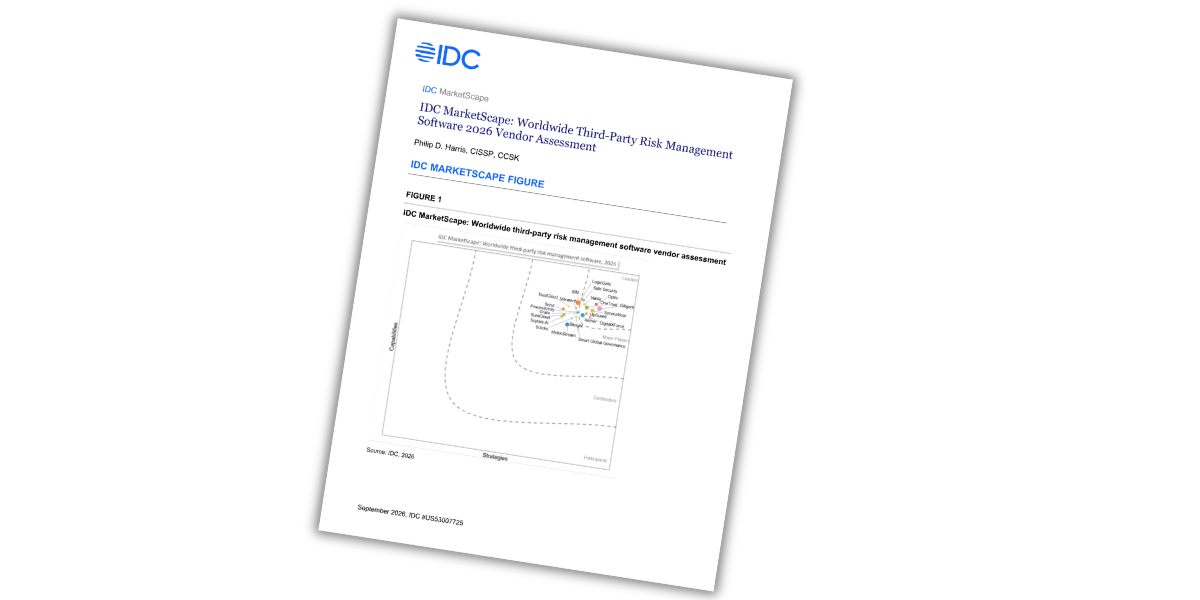
The IBM Cost of a Data Breach Report 2025 found third-party breaches cost an average of $4.91 million, 11% above the global mean. IDC's research on continuous vendor risk management makes the case for moving from periodic assessment to continuous monitoring. Real-time signals on vendor posture, automated screening and AI-assisted triage can flag changes as they happen rather than at the next scheduled review. So you can act in real time.
The takeaway:
As cyber regulations continue to expand across regions and industries, many organizations are responding by building compliance programs rather than resilience programs. The numbers reflect that shift: 78% of CISOs say regulatory pressure is the dominant driver of cyber spend, while only 25% are leading with resilience as the strategic goal.
"Most organizations default to compliance because the audit trail is clearer, not because it reduces risk."
Regulators demand compliance evidence, boards ask for compliance status and the program shapes itself around what gets measured.
The problem is that compliance and resilience aren't the same thing. In the US, SEC cyber disclosure rules are in force and state-level AI legislation is advancing in Colorado, Illinois and beyond. In Europe, DORA is live for financial services, NIS2 has extended cybersecurity obligations across a wider range of sectors and the EU AI Act's tiered requirements are landing in waves. Across APAC, MAS TRM and APRA CPS 230 are tightening IT and cyber risk obligations for organizations with regional footprints.
The KPMG 2026 Global TPRM Survey shows that only 18% of organizations have TPRM fully integrated with enterprise risk management, and just 22% rate AI in TPRM as very effective. Treating each framework as a separate compliance track produces parallel programs competing for the same resources, generating documentation that doesn't tell you whether the organization is more resilient. The shift is toward integrated risk programs that collect evidence once, apply it across multiple requirements and give leaders a clearer view of their actual exposure.
The takeaway:
Only 45% of CISOs were able to add headcount in 2025, down from 67% three years earlier, and 89% describe their teams as stretched thin or understaffed. Fortinet's 2025 Cybersecurity Skills Gap report adds another challenge: 63% of organizations expanded security teams only after an attack. Reactive hiring into a tight market, after the breach has already happened, is not a sustainable response to growing cyber risk.
"Demand for security oversight is growing faster than security teams can realistically grow."
Every new regulation, critical supplier, cloud service and AI initiative creates additional reviews, assessments, monitoring requirements and reporting obligations. Most of that work still depends on skilled practitioners, yet the volume continues to increase while budgets and headcount remain constrained
The CISOs making the most progress are changing the operating model rather than simply trying to hire more people. They're using automation and AI to absorb high-volume work such as alert triage, evidence collection, vendor assessments and questionnaire reviews, allowing security specialists to focus on risk decisions, investigations and strategic oversight. In 2027, competitive advantage is about making the best use of the expertise you already have.
The takeaway:
Cybersecurity teams are being asked to do more with the same headcount, the same budgets and a faster-moving threat environment. The CISOs getting ahead of 2027 have stopped treating compliance and resilience as separate programs, built vendor risk into a continuous process and made board communication a discipline rather than a quarterly scramble. That's the program worth building now.
With an 8-for-8 record as a Leader across every major GRC analyst evaluation, including Forrester, Gartner, IDC, Verdantix and Chartis, Diligent is the platform security teams trust to keep pace with what 2027 demands. For CISOs, that means cyber risk, compliance and vendor oversight in one platform, moving at the speed of the threat landscape rather than the speed of the compliance calendar: