
After ending 2025 on an optimistic note, public company board members tempered their outlook during the first quarter of 2026.
Directors’ assessment of current business conditions fell 7 percent, from 6.0 (out of 10) in December to 5.6 in early March, according to our Q1 Director Confidence Index, conducted with the Diligent Institute.
Forecasts for the year ahead also softened, declining 9 percent, from 6.0 in December to 5.5 in March.
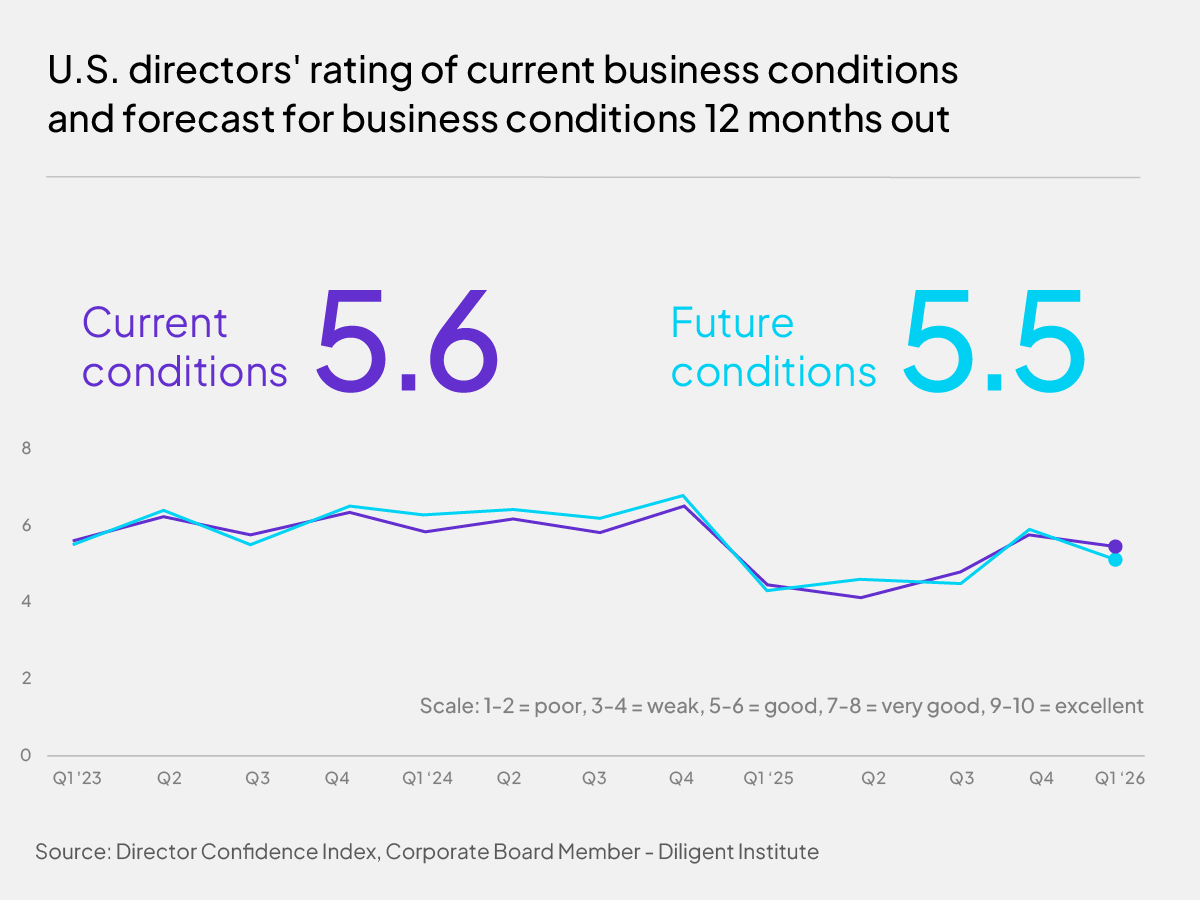
Still, the data suggests more stagnation than deterioration. Directors expect conditions 12 months from now to be within less than 2 percent of current levels, and 38 percent anticipate largely unchanged conditions over the coming year.
Even with the pullback, sentiment remains well above where it stood this time last year (4.6/10) and higher than levels seen through much of 2025. Notably, directors who express the most confidence in their board’s ability to oversee risk also report significantly more positive views of current and future business conditions.
The state of the U.S. economy remains central to most forecasts, though the lens varies. Among directors expecting conditions to worsen, tariffs and trade policy remain top concerns.
“Too many macro impediments (debt overhang, inflation, regulatory uncertainty with this administration) combined with too many micro additional risks (war in Iran, rising unemployment),” said a director on the board of a publicly traded utility company who rates current conditions a 5 out of 10 and expects them to drop to a 2 over the coming months.
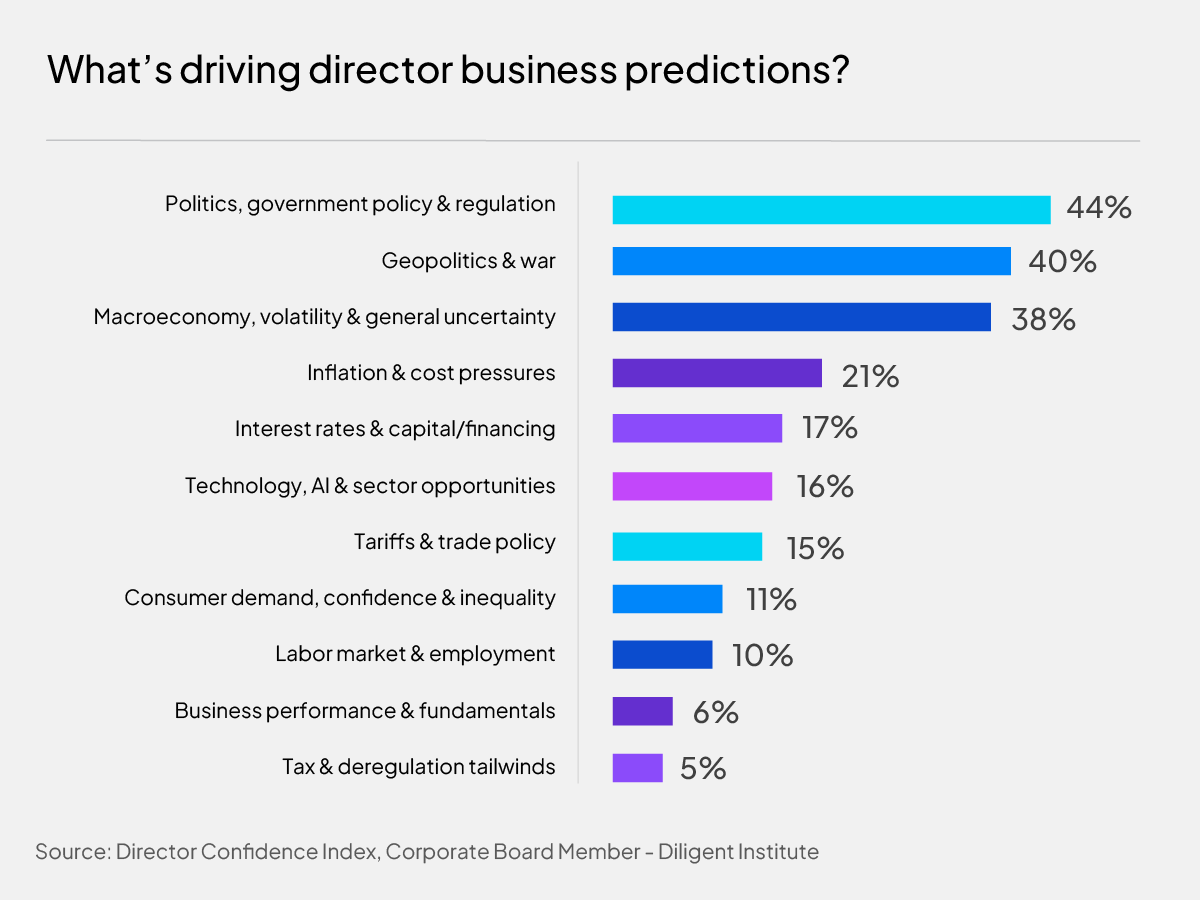
Meanwhile, those anticipating improvement point to easing pressures and resilient consumer spending.
Jim Donnelly, CEO and board member at Norwood Financial Corp. says, “tailwinds from the tax legislation” and an overall “good economy” are fueling his forecast for business, which he rates an 8 out of 10 and expects will remain at that level for the foreseeable future.
Politics and geopolitics also feature prominently among both groups, particularly with respect to the war in Iran.
“The U.S. is a consumer-driven economy. Inflation, war and general chaotic federal policy leads to less-than-optimal conditions,” said Entravision Board Chair Paul Zevni, adding this also reduces the probability of interest rate cuts this year.
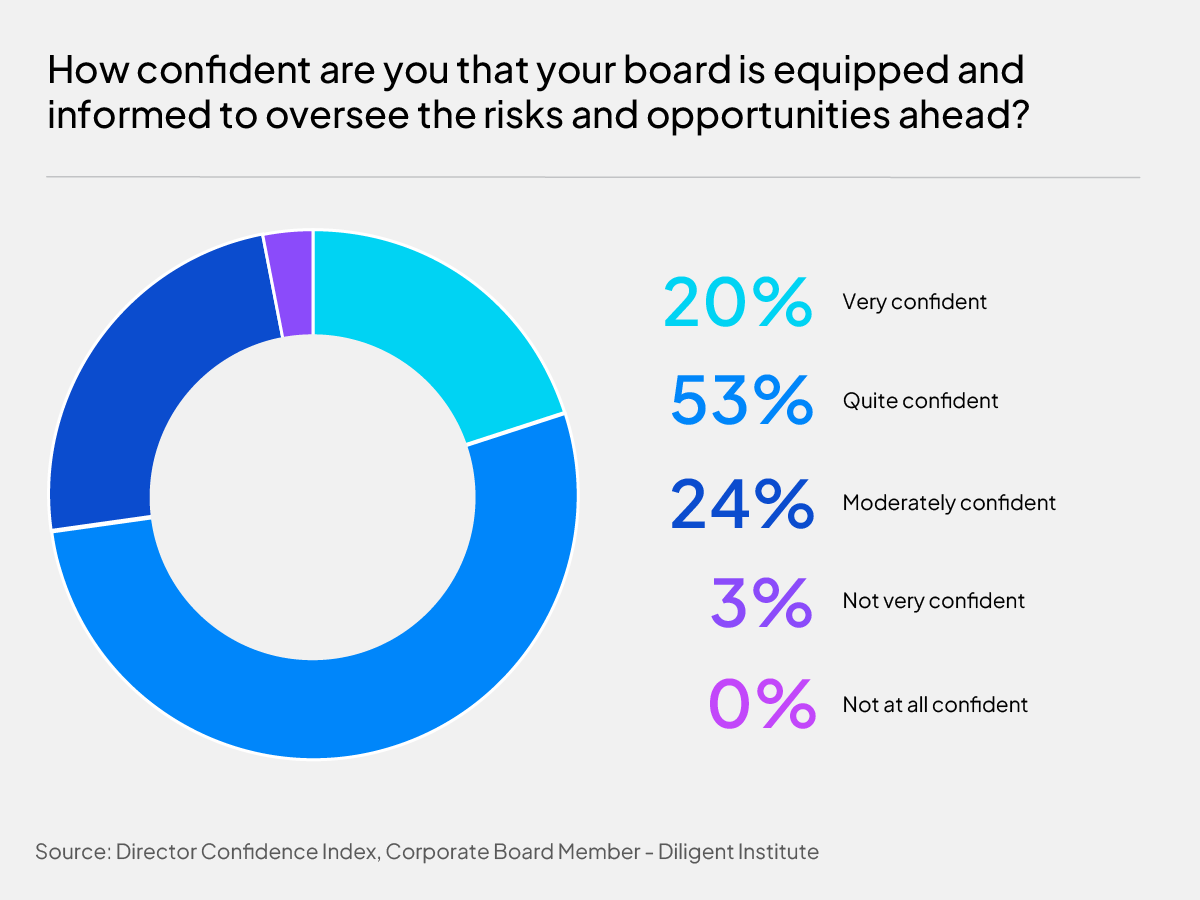
Boards appear confident in their ability to navigate the current environment. Seventy-three percent of directors say their board is either quite or very confident it is equipped and informed to oversee the risks and opportunities ahead.
But that confidence in their board’s preparedness also appears closely tied to directors’ broader economic outlook. Those who say they are very or quite confident their board is equipped to oversee the risks ahead rate current and future business conditions at 5.8 and 5.7, respectively, compared with 4.8 and 4.7 among those who say they are only moderately or not at all confident—a full one-point gap that helps explain the spread in overall sentiment.
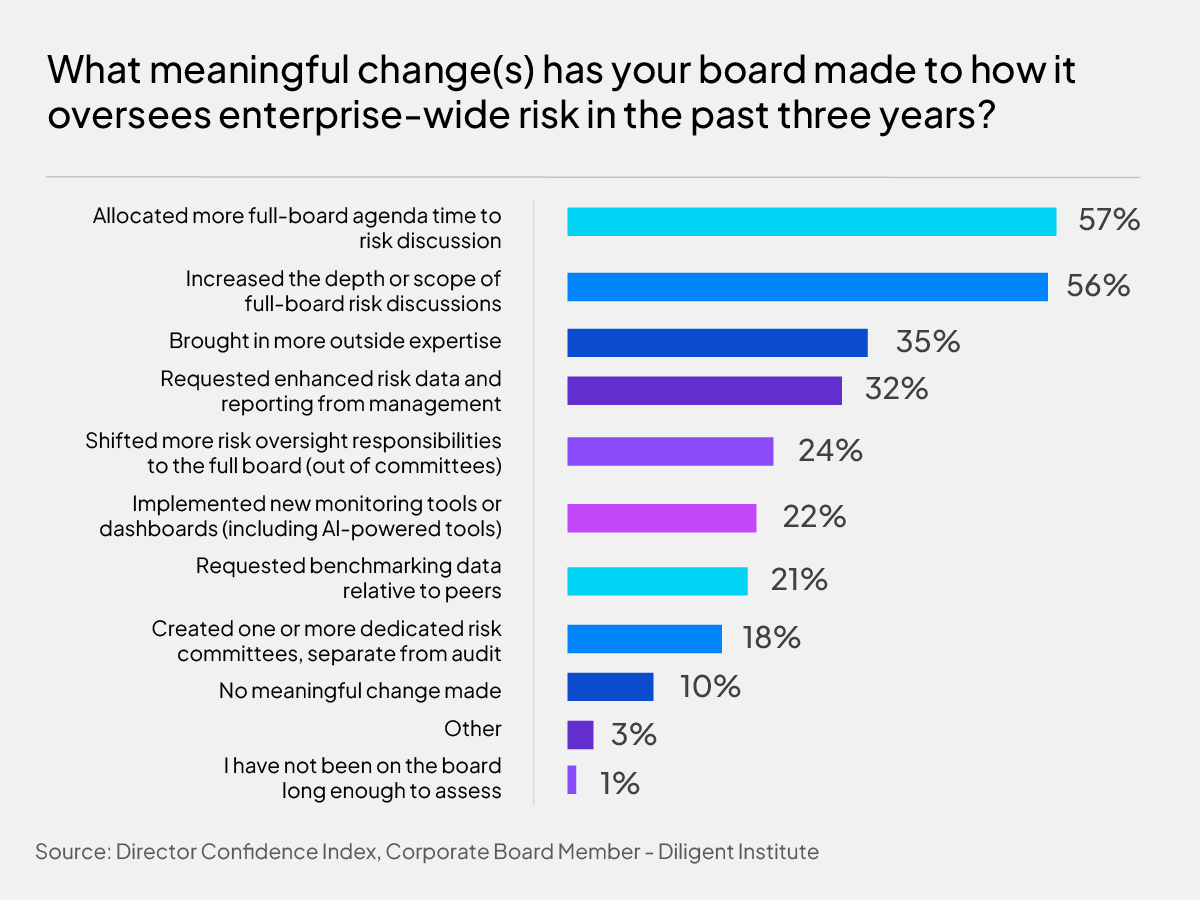
Many boards appear to be reinforcing that confidence with more rigorous risk oversight and information flows. About one-third say they have requested enhanced risk data and reporting from management, while 35 percent report having brought in outside expertise to help evaluate emerging risks.
“[We have] very strong inside views but benefit from more outside perspectives,” said one director whose board has called on external experts to speak on various matters, including AI and technology risks.
Other structural changes are occurring as well. Roughly one-quarter of those polled say their board has implemented new monitoring tools or dashboards, including AI-enabled tools, and a similar share report benchmarking risk oversight practices against peers.
Meanwhile, about 17 percent say their boards have created a dedicated risk committee separate from audit, while 24 percent say more risk oversight responsibilities have shifted from committees to the full board.
Only 10 percent of directors report that their board has made no meaningful changes to its risk oversight approach, suggesting most boards have actively adapted their governance processes to address a more volatile environment.
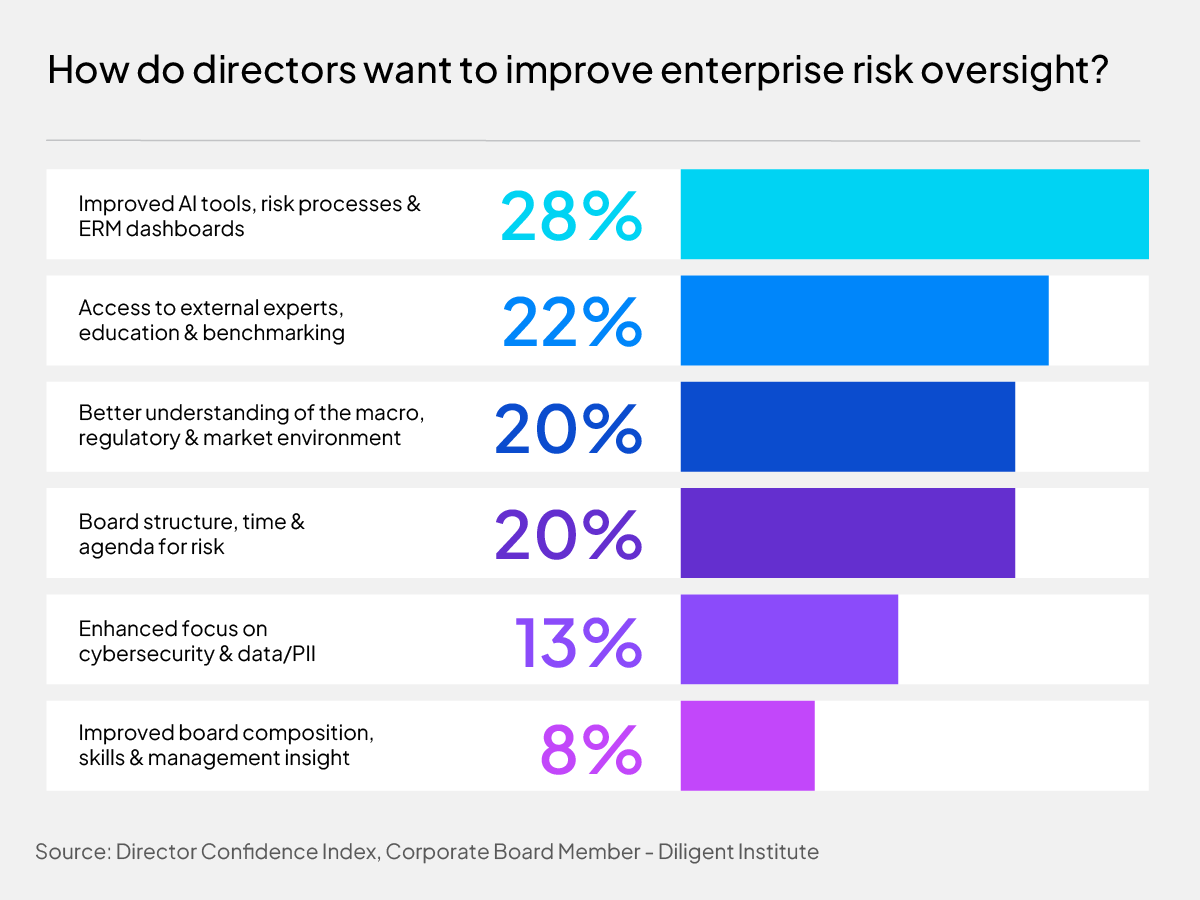
The data points to a few opportunities for improvement, the biggest in how boards monitor risk. When asked where they would focus first, directors point to improving the tools and information used to track the external environment.
Responses include better tools, dashboards and risk processes, as well as greater access to external expertise, education and benchmarking. Directors also cite the need for a deeper understanding of the macro, regulatory and market environment, along with improvements to board structure, time and agenda devoted to risk.
“Directors are telling us that enterprise risk management has to be a dynamic, enterprise-wide discipline that keeps pace with geopolitical shocks, policy volatility and rapid advances in AI,” says Kira Ciccarelli, manager of research at Diligent Institute. “The most effective boards are pairing stronger ERM dashboards with the right expertise in the room—particularly technology and transformation experience.”
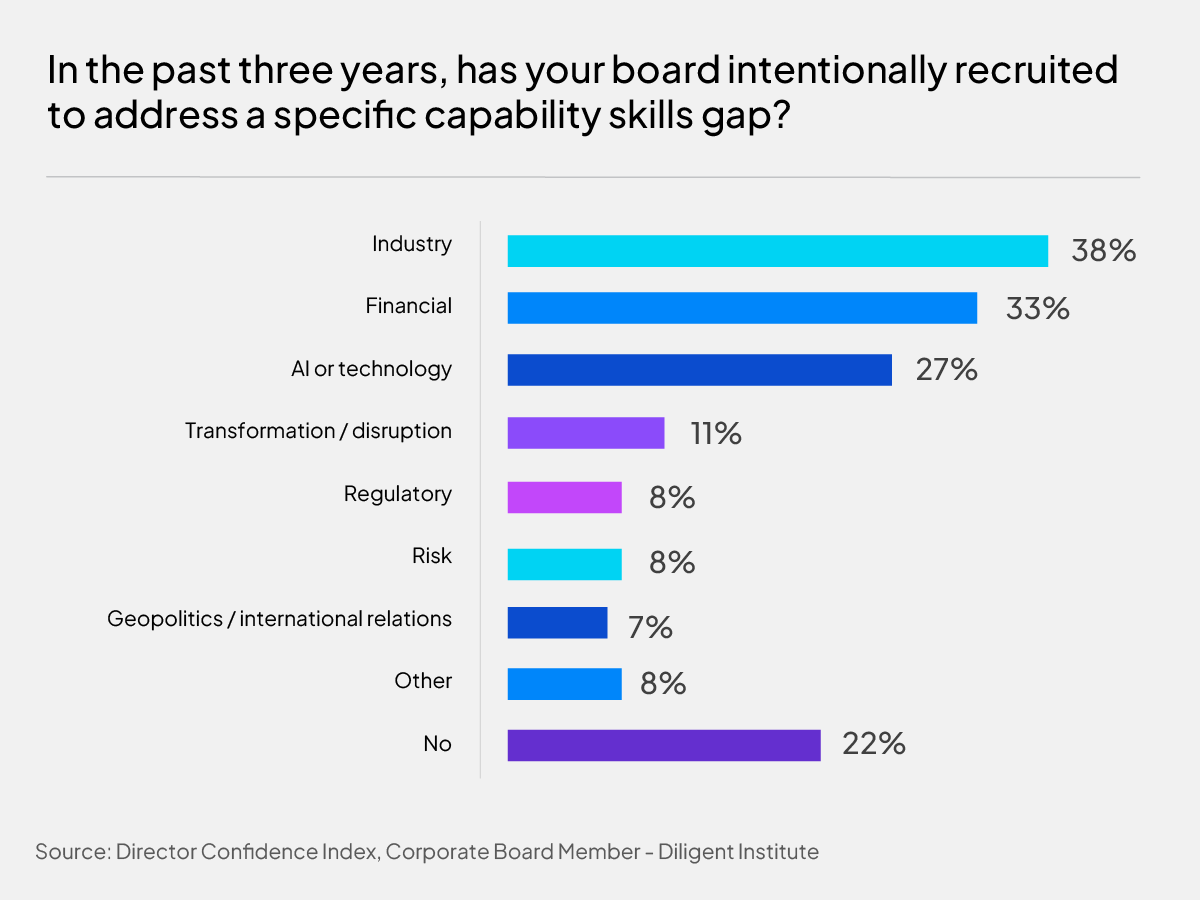
That shift is also shaping how boards think about composition. If they could add just one capability today, nearly half of directors say they would prioritize a technology/AI expert, perhaps an indication of the magnitude of risk boards see in disruptive technology.