
In this article

After intense speculation in the third quarter of 2024, many industry watchers predicted 2025 would usher in a wave of successful IPOs—finally reviving the public markets after a prolonged quiet period. Yet, as economic headwinds intensified and U.S. fiscal policy shifted unexpectedly, companies began to rethink even their most foundational transaction plans. Analysts, anticipating the typical pattern of M&A activity surging when the IPO market stalls, were met instead with a stalling deal environment—prompting a deeper question: are organizations truly “transaction ready?”
If companies ultimately choose not to proceed with IPOs or acquisitions due to wider economic or policy trends, does that signal robust maturity and readiness, or merely short-term adaptability? What qualifies as genuine preparedness for transformative transactions, and what are the structures, processes, and personnel that must be firmly in place before leaders can say with confidence that their organizations are ready to act?
This report—the result of a targeted survey and research collaboration between Diligent Institute, Wilson Sonsini, NetSuite, the CFO Alliance, and the CFO Leadership Council—seeks to uncover the defining elements that make an organization transaction-ready. As market volatility and uncertainty become the norm rather than the exception, our core objective is to distill what it takes for companies to have sufficiently mature governance and controls; to be equipped for complexity, agility, and accountability in every aspect of the deal-making process.
Our 10-question global survey was distributed to senior leaders including board directors, C-suite executives, corporate secretaries, and general counsels (GCs) from both public and private companies across a wide range of industries, geographies, and organizational sizes. A total of 233 executives participated, and the sample includes public (32%), private (64%), and pre-IPO (4%) organizations. A full demographic breakdown can be found in the appendix.
To set the stage, we asked our respondents to tell us more about what their organization’s current growth strategies look like, choosing from a selection of options. The most popular answer (35%) is that organizations are primarily pursuing organic growth over M&A activity, strategic partnerships, or other strategic transactions (like growing revenue or market share within existing markets).
“Steady increases in transaction activities in our market appear to be very productive and encouraging,” says one respondent. “However, our level of success within our existing market has served to discourage our board from pursuing other ventures following the COVID-19 pandemic. Internal expansion will take precedence over external M&A efforts.”
Pursuing organic growth is shortly followed by organizations saying they are prioritizing only targeted acquisitions (32%). Only 6% of respondents characterize their companies as “highly acquisitive.”
“While many organizations are still prioritizing growth through M&A and strategic partnerships, they’re taking much longer to evaluate deals and are being more selective about opportunities,” adds Ranga Bodla, Vice President of Field Engagement and Marketing at NetSuite. “What we’re seeing is that companies need to leverage technology and data analytics to manage this extended evaluation process more effectively—whether that’s through better financial modeling, enhanced due diligence tools, or integrated systems that can provide real-time insights. The organizations that invest in these technological capabilities now will be better positioned to move quickly and confidently when the right opportunities arise.”
“Most companies tend to be focused on their standalone plans, absent M&A or other strategic transactions – at least until they are not... This is in part because of limited resources and personnel, especially among private companies, which can lead to a lack of awareness of potential opportunities that could help enhance the business or an inability to execute on unique opportunities.”
— Rich Mullen, Partner at Wilson Sonsini
(Note: Totals may not sum to 100% due to rounding)
According to our results, private companies are less likely to pursue M&A activity in the current environment compared to public companies (with 36% pursuing organic growth over M&A compared to 31% for public companies). Nearly half of public companies (46%) are prioritizing M&A compared to 35% of private companies.
Regionally, companies based in North America are more likely to be prioritizing targeted acquisitions compared to companies headquartered elsewhere in the world (39% to 24%).
When asked how confident our respondents are in their organization’s readiness to support a major transaction, they rate confidence at a 5.7 / 10 on a ten-point scale, where “1” is not at all confident and “10” is extremely confident.
“We’re seeing a renewed focus on disciplined growth, with CFOs in our community being more selective about M&A than in previous cycles,” says Nick Araco, CEO of CFO Alliance. “Rather than chase volume, finance leaders are concentrating on the right-fit opportunities that align with a clear investment thesis and deliver sustainable value. This heightened intentionality reflects a shift toward quality over quantity in deal-making.”
How is economic uncertainty impacting organizations’ growth strategies? Nearly half of respondents (49%) cite increased caution in pursuing new transactions and delayed potential deals, followed by adjusted valuation models and financial projections (46%) and enhanced focus on due diligence and risk assessments (40%).
Says one respondent, “We need to strengthen our governance structures to suit the current VUCA environment.”
“Economic uncertainty makes it very difficult for business leaders to make decisions... It leads to a higher probability of diverging views on valuations and fears of making the wrong decision because of poor information. We regularly see boards of directors and management teams make tough decisions about deals when they have good information, even in poor economic climates, but if economic uncertainty is pervasive, then boards of directors and management teams face a much steeper challenge in planning for the future.”
— Rich Mullen, Partner at Wilson Sonsini
(Note: Respondents were asked to select all that apply)
Public companies are more likely to enhance focus on due diligence and risk assessments compared to private companies (49% to 37%) and shift focus to cost-cutting and operational efficiency (38% to 31%) because of economic turbulence. Private companies, meanwhile, are more likely to reduce hiring (27% to 17%).
Globally, North American companies cite adjusting financial models because of economic turbulence at higher rates compared to their non-North American counterparts (50% to 39%).
“Economic turbulence doesn’t just test strategy—it tests resiliency... The companies I see navigate uncertainty best are those with both the infrastructure, talent, and culture that allow them to adjust course rapidly and with confidence.”
— Jack McCullough, Founder and President of the CFO Leadership Council
How are companies getting and staying transaction-ready, particularly in this environment? The most common methods our respondents cite are engaging in advanced planning with external advisors or consultants and conducting due diligence reviews (at 51% and 50%, respectively) followed by developing internal transaction checklists and using secure data rooms for collaboration (41% and 39%, respectively).
One respondent cites, “Clear process, disciplined due diligence and analysis, detailed planning,” when asked about lessons learned from previous transactions.
Notably, less than a quarter (23%) are using advanced tools and technologies (such as AI-powered evaluations), suggesting potential gaps in transaction readiness.
“Adopting enhanced document management systems to help track a company’s contracts and terms can be leveraged as company’s run their business, but then can also be tapped into when it comes time to populate a data room or integrate a target business as part of a deal,” says Mullen.
“Companies can do a lot of things day-to-day to improve readiness for a potential transaction, many of which would probably make life easier running the company absent a deal.”
— Rich Mullen, Partner at Wilson Sonsini
(Note: Respondents were asked to select all that apply)
Public companies are more likely to conduct due diligence reviews compared to private companies (58% to 48%), engage in advance planning with external consultants (64% to 45%), increase resource allocation toward M&A (42% to 28%) and strengthen integration processes (37% to 24%).
Private companies, meanwhile, are slightly more likely to implement training programs (12% to 7%), develop internal transaction readiness checklists (43% to 37%), and utilize advanced tools like AI (27% to 21%).
Private vs. Public Companies Comparison:
Respondents also report gaps in integration across governance, risk and compliance (GRC) and finance systems to support transactions, with most (60%) saying their GRC and finance systems are either completely siloed or only partially integrated. A mere 4% are fully integrated into one platform.
Private companies were nearly three times more likely to have completely siloed GRC and finance systems compared to their public company counterparts (15% to 6%).
“One of the clearest gaps I notice is between governance and finance systems... Organizations that close this gap gain speed, credibility, and control in transactions - advantages that often determine whether a deal creates value or not.”
— Jack McCullough, Founder and President of the CFO Leadership Council
(Note: Totals may not sum to 100% due to rounding)
(Note: Respondents were asked to select all that apply)
What technologies are companies using to facilitate transaction readiness? Our survey finds level of technology adoption relatively low across the board in this area. One-fifth (20%) say they use secure data rooms, 16% use enterprise resource planning (ERP) software, and 10% use financial reporting software.
Notably, North American companies were almost twice as likely as their counterparts in other regions to use secure data rooms (24% to 15%).
Only 5% use AI-powered evaluations or data collection. As a follow-up, we asked respondents to describe what role AI plays in their company transactions. The vast majority of respondents report minimal or no AI usage in this realm, yet. But, many see AI taking on more of a role in transactions in the future: “Limited to date, but will become vital in future,” said one respondent.
“The data indicates that many organizations remain stuck in analog transaction processes, which means they are missing out on digital advantages... Modern tools like AI-integrated platforms could streamline deals significantly. Technology adoption directly addresses the operational risks companies frequently cite.”
— Nithya Das, General Manager and Chief Legal Officer at Diligent
Those using AI in their transaction processes are still in the early stages of doing so and are only using the technology for relatively basic tasks. “Not much [AI use] at the moment but working on AI assisting with governance, data management and integration,” said one.
“AI plays a supportive role only in our transactions,” said another. “It does not make binding decisions. We use AI to speed up document review, clause and risk flagging, entity extraction, etc. We use AI search and summarization to triage large data rooms and to prepare diligence notes. We use machine learning tools for sanctions and adverse media screening and for basic anomaly flags.”
“The most effective finance leaders are turning the discipline of transaction readiness into a year-round capability, integrating lessons learned into their planning cycles and building internal muscle for deal execution... We’re also seeing growing interest in how AI can accelerate diligence, flag risks earlier, and free teams from manual work so they can focus on value creation.”
— Nick Araco, CEO of CFO Alliance
Respondents face a variety of risks and challenges when it comes to being transaction ready – citing resources, board alignment, regulatory compliance, technology/data gaps, integration challenges, personnel shortages, and more.
Top of the list of concerns, by a wide margin, is lack of resources (with 56% citing this as a top challenge). Next on the list is economic and geopolitical uncertainty (35%) and lack of experienced personnel (28%).
Private companies are more likely than their public counterparts to cite lack of awareness of opportunities as a concern (24% compared to 11%) and lack of experienced personnel (30% to 22%). Public companies, on the other hand, are more likely to cite regulatory compliance (32% to 13%) and economic/geopolitical uncertainty (41% to 31%), and difficulty integrating acquired entities (20% to 13%).
Companies headquartered outside of North America are more likely to cite geopolitical/economic turbulence as a top concern (39% to 30%) compared to their North American counterparts.
“As a matter of good governance, boards of directors and management teams might consider having a regular assessment of the company’s long-term plan and strategic alternatives... This is especially true for companies with limited resources, as the idea of doing this kind of exercise year-round can be daunting. But with the help of savvy advisors, a more focused, targeted assessment can become much more manageable and likely more productive.”
— Rich Mullen, Partner at Wilson Sonsini
(Note: Respondents were asked to select the top three transaction readiness risks/challenges.)
Respondents also cite an array of areas for improvement when it comes to transaction readiness. Better defined roles, responsibilities and/or processes around transactions took the top spot at 42%, followed by developing personnel (40%), and enhancing data quality and availability (35%).
Public company respondents are more likely to say that they have nothing to improve when it comes to being transaction ready compared to their private company counterparts (11% to 5%). They are also more likely to want to upgrade their technology infrastructure (38% to 27%). Private company respondents, meanwhile, are more likely to want to better define roles, responsibilities and processes around transactions (44% to 36%) and enhance data quality and availability (38% to 27%).
Regionally, respondents outside of North America are more focused on enhancing data quality and availability (40% to 31%) compared to their North American counterparts.
“Transaction readiness requires integrated preparation across people, processes, and technology... Organizations must clarify workflows while simultaneously developing talent and data capabilities. In uncertain markets, comprehensive readiness separates successful deals from missed opportunities. Companies that truly want to be able to control their own destiny should go through a proactive process to build out and maintain a data room as well as create a transaction playbook with the right governance established.”
— Nithya Das, Manager and Chief Legal Officer at Diligent
(Note: Respondents were asked to select all that apply)
Another crucial component of being transaction ready is getting effective support from the board. Nearly one-third (31%) of respondents want to improve communication, oversight and support at the board level. Rather less than half of respondents (42%) say their board is actively engaged in shaping transaction strategy, highlighting a potential gap.
“Miscommunication and misalignment in the growth approach within the executive team negatively affects growth strategy,” says one respondent.
“Companies can better leverage boards by bringing them into strategy discussions early,” says Das. “Ongoing education about competitive and M&A landscapes keeps boards informed and engaged. Consider establishing transaction committees and standardized documentation to formalize board involvement.”
Most respondents say their CEO leads transactions (77%) followed by the CFO (28%) and a dedicated corporate development officer or team (20%).
“Economic turbulence has put CFOs at the center of the conversation, forcing them to be translators of risk and architects of optionality... In our signature CFO Alliance roundtables, CFOs tell us they are not just slowing deals but actively using this environment to strengthen governance, stress-test assumptions, and ensure their organizations will be ready to move quickly when conditions improve.”
— Nick Araco, CEO of CFO Alliance
(Note: Respondents were asked to select all that apply)
(Note: Respondents were asked to select no more than two personas)
Private company representative overwhelmingly choose the CEO to lead transaction efforts compared to public company counterparts (83% to 65%). Public companies report a wider array of leaders, like the CFO (32% to 26%) and dedicated corporate development officer/team (27% to 17%). In North American companies, representatives say the CEO leads transaction efforts more often than in companies outside North America (80% to 72%). Outside North America, respondents were more likely to choose the CFO (31% to 26%) and corporate development officer/team (24% to 17%).
Private vs. Public Companies:
North American vs. Companies outside North America:
Respondents highlight a diverse and practical range of best practices gleaned from prior transaction experiences. “Good judgment comes from experience; experience comes from bad judgment,” notes one respondent. “We strive to learn from our mistakes in prior situations.”
Major themes include:
Full demographic breakdown:
Is your company public or private?
What region is your company headquartered in?
What committees of the board do you sit on? (Please select all that apply.)
What is your primary job title?
What is your organization’s sector of operation? (Please note that we use the Global Industry Classification Standard)
What is your organization’s valuation / market capitalization in USD?
Diligent Institute Diligent Institute informs, educates and connects corporate leaders to elevate governance. By combining survey data, quantitative analysis, and insights from industry experts, we deliver a diverse array of high-quality, actionable resources, including reports, podcasts, webinars, blogs, and newsletters.
We further our mission through strategic partnerships with leading organizations in the governance space, hosting events and programs that bring together board members and C-suite executives. These initiatives not only enhance the knowledge and capabilities of our audience but also solidify Diligent’s position as the trusted authority in AI-driven GRC solutions. For more information, visit diligent.com/resources/category/diligent-institute
Wilson Sonsini For more than 60 years, Wilson Sonsini’s services and legal disciplines have focused on serving the principal challenges faced by the management and boards of directors of business enterprises. The firm is nationally recognized as a leading provider to growing and established clients seeking legal counsel to complete sophisticated corporate and technology transactions; manage governance and enterprise-scale matters; assist with intellectual property development, protection, and IP-driven transactions; represent them in contested disputes; and/or advise them on antitrust or other regulatory matters. With deep roots in Silicon Valley, Wilson Sonsini has more than 1,000 attorneys and 17 offices in 16 technology, business, and regulatory markets across the United States, Asia, and Europe. For more information, please visit wsgr.com
Oracle NetSuite NetSuite is the #1 AI Cloud ERP – we have everything you need to reach your goals faster and more efficiently, all in one place. We support over 43,000 customers in 219 countries and territories around the world. As the world’s first cloud company, we provide an integrated business system with embedded AI that delivers powerful financial management, supply chain, customer experience, HR capabilities, and more. For more information, please visit netsuite.com
The CFO Alliance The CFO Alliance is a peer-driven community of 9,000+ finance leaders from emerging and mid-market enterprises who are shaping the future of the finance function.
We connect CFOs, finance executives, and rising leaders through curated roundtables, research, and strategic programs that drive clarity, confidence, and execution. Our members collaborate to solve real-world challenges in a time defined by volatility, technological disruption, and shifting talent dynamics. At the CFO Alliance, we believe the power of today’s finance leader lies at the intersection of vision, discipline, and connection — and we exist to help leaders scale all three. For more information, visit cfoalliance.com
CFO Leadership Council The CFO Leadership Council is a community of 3,000 financial executives. Our mission is to empower CFOs and other senior financial leaders, which we do through our world-class professional development programs and unparalleled peer networking. For more information, visit cfoleadershipcouncil.com
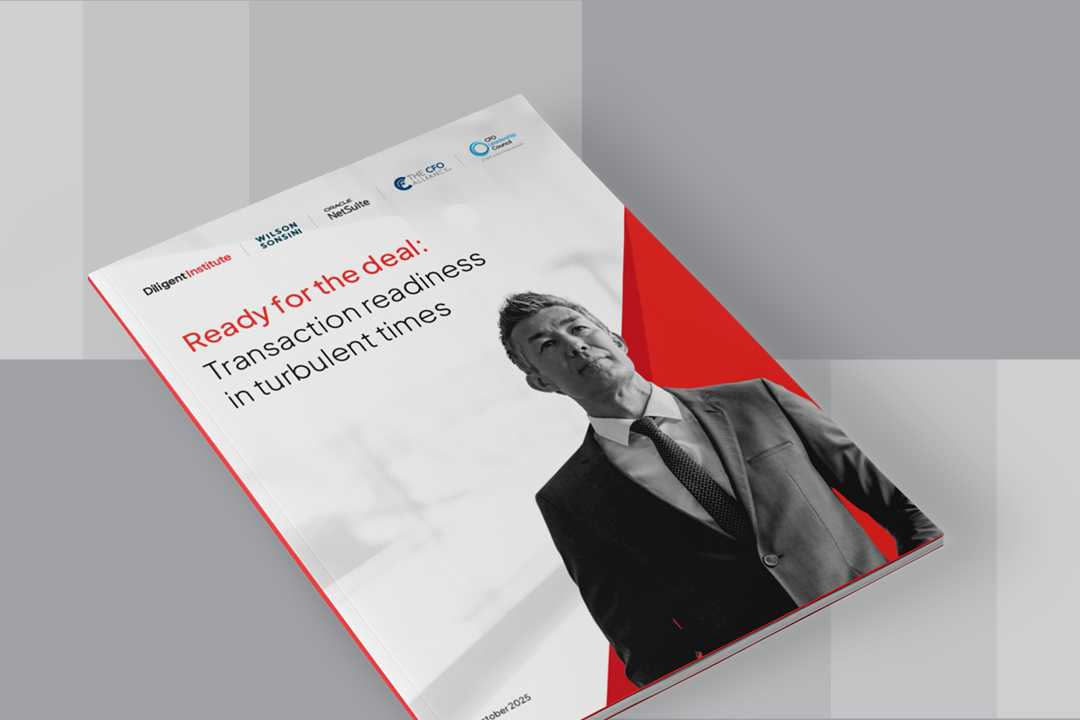
Equip your board and management teams for complex, volatile deal-making. Download the full 19-page "Ready for the deal: Transaction readiness in turbulent times" report to master these critical insights today.