Audit committees have traditionally focused on financial reporting, internal controls, and external audit. Today, their remit is much broader. In this episode of the Corporate Director Podcast, Christine Battist explores how audit committees can balance these foundational responsibilities with oversight of cybersecurity, AI, data governance, enterprise risk, regulatory change, and other emerging issues.
EP 194 - Christine Battist Transcript
Intro: Welcome to the Corporate Director Podcast, where we discuss the experiences and ideas behind what's working in corporate board governance in our digital tech-fueled world. Here, you'll discover new insights from corporate leaders and governance researchers with compelling stories about corporate governance, strategy, board culture, risk management, digital transformation, and more.
Dottie Schindlinger: Hi, everybody, and welcome back to the Corporate Director Podcast, the Voice of Modern Governance. My name is Dottie Schindlerger, executive director of the Diligent Institute, and I'm joined once again by my amazing co-host, Meghan Day, strategy leader here at Diligent. Meghan, how are you doing today?
Meghan Day: Dottie, I am great.
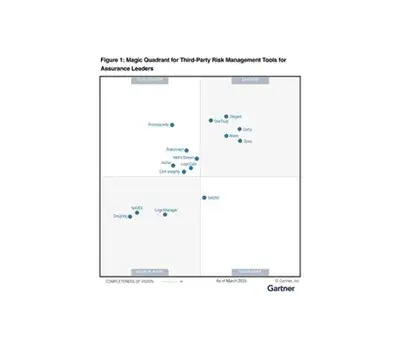
We have had an exciting couple of weeks here within the risk and audit business unit and team at Diligent. A couple of big signature events, um, the Gartner Enterprise Risk Audit and Compliance Conference happening in the US and in London. We were just named the market leader in the IDC MarketScape for third-party risk management.
So we are really excited, and that's coming on the heels of some really cool announcements regarding our agentic capabilities with inside of our solutions. So things are busy, and it's like I'm throwing around all of the big board buzzwords. I've got risk management. I've got audit. I've got AI. It's great.
It's all connected.
Dottie Schindlinger: Well, you know, Meghan, it, it is interesting, right? I, I think about this sometimes, and when I think about the folks that listen to this show, I know a lot of them are users of Diligent Boards platform, and they serve on boards of directors and may not really be all that aware of all the stuff that Diligent does outside of the Diligent Boards platform.
And so for those who are uninitiated, do you wanna just give a quick, like, five-second pitch on all the non-board stuff that we do?
Meghan Day: Absolutely. Absolutely, and this is actually really not meant to be a sales pitch. More, I think, an example of how what felt like many silos across an organization that are now really converging, and converging mainly because of the top-down responsibility of the board and leadership teams.
And so I'm talking specifically about things like enterprise risk management. How do you do that at the board level, and then how do you carry that in and down your organization to operational risk management? And what does that look like at a big-picture strategy level, and what does that look like at the, the micro day-to-day function level?
So solutions to help you manage that, help you manage, um, audit and comp- controls and the compliance headaches related to all of that. And again, all directly converging with so much of what the focus is on the board of directors.
Dottie Schindlinger: Well, Meghan, thanks so much for sharing that quick little pitch. I mean, you're right.
Look, it's not really meant to be a salesy conversation. It's much more about this is the way things are trending, this is the way things are changing. And boards do have a lot more exposure and oversight of risk these days than they did, you know, 10, 15 years ago. But I know you had flagged a really interesting study that I'd love for you to talk a little bit about because it, it resonated for me so strongly, 'cause we found some similar findings in our What Directors Think report.
So why don't you share what you found, and we'll talk about it? Yeah. A
Meghan Day: recent study from our friends
Dottie Schindlinger: over at
Meghan Day: Corporate Board Member and the EY Center for Board Matters just found that 60% of directors surveyed say their boards have increased the amount of time they spend on risk oversight over the past two years.
So great. That tracks, I think, with a lot of what we're seeing, a lot of how I'm spending my time at Diligent, and that certainly sounds encouraging given sort of the state of flux and risk in the world today. But it seems like the follow-through is much more mixed. Only 39% said risk discussions have become more closely integrated with strategy, and only 22% said their boards had increased their use of scenario planning.
So that, to me, is a very interesting disconnect.
Dottie Schindlinger: Well, here's what I found really fascinating about that because in last year's What Directors Think report, which came out in, I think January or February, we asked a, a similar question about scenario planning, and what we found was that 84% of our respondents told us they have changed their approach to scenario planning- Mm
in the past five years. Now, in fairness, maybe they're not doing more of it, but what they told us generally was that there were new risks, there were economic shocks, there were big regulatory and policy shifts that they now needed to explicitly model. They felt they needed to spend more time on this. We definitely learned that about half, like 47%, told us that what they most want are more frequent, structured, full board level risk discussions.
Mm. And they feel that that would most improve their ability to oversee this crazy wide world of risk that they're now being asked to oversee. I think that's a big change, Meghan, 'cause I cannot remember seeing that result on previous years of What Directors Think, and this report that you're citing I think is saying the same thing, which is, look, some of these issues are too big to punt to a committee, and we might need to have more full board conversations about the scenario.
We might need to do a bit more modeling, a bit more deep thinking on some of these really thorny issues. I mean, you know, spoiler alert, I think they're all talking about AI. Um, but truthfully, it- they're not wrong, right? These... A lot of the risks that are facing companies are so existential in nature and so complex in how to oversee them, it might not be appropriate to punt them to a committee.
There might be too much embedded with overall strategy. It might need to stay at the board level. What do you think about that?
Meghan Day: Yeah. Yeah, it's so interesting. So we've been talking about the risk piece of my day job, but we're also, um, forgetting the sort of important but also kind of legacy piece around audit and what's really happened and what I've seen is that they're kind of converging.
It's really risk and audit now. And, um, those are, are joint and working hand-in-hand, and I think as a result, so much is getting pushed to the what's still called the audit committee. It's not called the risk and audit committee.
Dottie Schindlinger: Well, that's such a good point, Meghan. And you know, when I, when I think about that convergence between risk and audit, I find it really fascinating because I, you know, traditionally I always sort of think of audit as backward-looking.
You know, we're kind of investigating something that already happened and trying to make sense of it and try to, you know, look at the evidence and what does the evidence tell us about this thing that already happened. Whereas risk I always think of as sort of forward-looking, like what's coming around the corner and how do we need to be ready for it, and if this thing should happen, then what, right?
And so it's a fascinating thing to apply that sort of audit discipline to risk conversations and sort of come up with almost like a pre-mortem or, you know, forensic understanding of something that hasn't yet happened. I find that to be a really interesting concept, and I do totally get the desire on the part of boards to do more of that work because I just think- I mean, good golly, we're in this time of such crazy uncertainty.
Having something that you can ground yourself in just feels good, and probably feels a lot more productive than just going, "Well, we'll just have to wait and see what happens, and hopefully we'll be okay." You know? I think, think that's not really a plan or a strategy, you know? It, it is really interesting.
Meghan Day: Yeah. It, it, it's again, like, the committee has to understand more than ever, but it still has to maintain this boundary between oversight and management. And so how can you do that without effectively running risk, without managing cybersecurity, but to know enough, to have enough insight to really understand whether the organization is prepared?
Dottie Schindlinger: Well, Meghan, that is a great segue to our interview with Christine Batiste. So we had the opportunity to speak to Christine Batiste, who is really interesting. She has had a fascinating career. She's been an external auditor at a Big Four accounting firm. She's been an internal auditor on the staff of, uh, companies, and now she's, you know, chairs of audit committees as she serves on boards.
And so she's sort of looked at this question of risk and audit from all those different perspectives, and I had the opportunity to speak with her about how do those three different legs of the stool work together? How does the audit committee of the board work with the internal audit team and work with external auditors to make sure the company's doing all the right things?
So let's give that interview a listen, and then we'll come back and talk a little bit more
Joining us on the Corporate Director Podcast today is Christine Battiste. Christine currently serves as the chair of the compensation committee and was previously the chair of the audit committee on the board of Capital Southwest. She also serves on the board of Highland Bank, where she sits on the compensation and audit committees.
Christine, welcome to the show. Thank you. Well, I'm excited to have you join me on the show. I know you and I have served together on some panel conversations at How Women Lead and other places, and so I wondered if you could maybe share with our audience a bit more about your career background and your current roles beyond the little short introduction I just gave.
Christine Battist: Sure, I'd be happy to do that. So today's conversation is gonna focus on the value an audit committee provides to corporate governance, and I feel well-equipped for this conversation as I've punched every seat around the audit committee table. First, while at PricewaterhouseCoopers for a decade, I reported to the audit committee on financial audits, and then made a short stop in internal audit, reporting back up to the audit committee, then as CFO leading an IPO, and in another case, driving significant growth through global M&A.
I've transitioned now into corporate boards, including leading as audit chair. I've worked in startup to Fortune 500 companies across industries. I know how to ask questions that connect growth and value creation while remaining focused on disciplined governance Well, being a financial leader or a QFE is my core competency.
I tend to think bigger and broader, and this was naturally nurtured through my liberal arts education. And this, along with those senior leadership roles I've had in these diverse industries, has broadened my viewpoints. And like most executives, I never planned for all these career moves and industry changes.
Rather, they found me. And I also like building and nurturing relationships, which was more fully developed during my tenure in investor relations, which truly tested my stamina during the great financial crisis. Collectively, all these experiences, many which were leading through transformational events, have enriched my views and prepared me well for board service.
Dottie Schindlinger: So Christine, you've been on kinda all sides of the audit committee table. So you've done, you've done it all. So thank you, by the way, for sharing that, that career trajectory and that history. It's really helpful for our audience to understand kinda the perspective you bring to the conversation. But, you know, one of the things that I've been observing over the last, I would really say 10 years, is how much the remit of the audit committee has expanded.
I mean, it has just really broadened. You know, now the audit committee is looking at things far beyond financials, right? They're looking at cyber risk. They're looking at AI governance, right? They're really looking at all these different disparate areas. And so, you know, you've had this experience as an audit committee chair.
You've been an auditor. You've, you know, worked on all these different sides. How do you see the role changing? Um, and what do you think are the most demanding issues right now facing audit committees?
Christine Battist: That's right, Dottie. Um, historically, the audit committee has been viewed primarily as a compliance function focused on financial reporting, the external audit, internal controls, and essentially what I like to describe as looking in a rear view mirror at what has already happened in an organization.
Today, that remit has, and the role has gotten much broader. Audit committees still have those fundamental financial reporting responsibilities, but they increasingly need to be looking through the front windshield, understanding what's ahead, identifying emerging risks, and helping the board anticipate issues before they become problematic.
That means spending more time on areas such as cybersecurity, artificial intelligence, including the data governance, um, which ties into enterprise risk, and truly understanding the quality of management's risk assessment and the response process. I also think the audit committee needs to understand how these issues could ultimately affect a company's performance, reputation, and long-term strategy.
The challenge is maintaining the appropriate boundaries. As we all know, the audit committee should not be managing any of these risks, but it needs to have enough visibility and understanding to provide effective oversight and challenge management when appropriate. So in summary, my view is the evolution went from simply did we report accurately and disclose what happened to today, do we understand what could happen next, and are we prepared for it?
Dottie Schindlinger: So Christine, uh, that's a, that's a big remit, right? That's a lot of stuff on the plate of the audit committee. I mean, every- like you mentioned, cybersecurity, data governance, AI, uh, you know, regulatory change. How does the audit committee do a good job of bringing in some of these emerging areas without losing sight of the core responsibility that they still have to perform?
Christine Battist: Well, the good news is that for those of us who have been in the profession for many years, we have lived this evolution firsthand. The fundamentals, financial reporting, Sarbanes-Oxley, and understanding the company's key risk exposures are really blocking and tackling in my view. They're table stakes for an effective audit committee.
Our responsibility today is to build on that foundation and stay current. That means continuing our education through training sessions, educational seminars, networking with other directors and executives, and even forums like this podcast where we can share perspectives and learn from each other. I believe the biggest risk for an audit committee today is complacency.
Believing that because we've seen a lot of things over the course of our careers, we know everything we need to know, but there's always something lurking around the corner. And often the risks that ultimately become significant don't start out that way. We read about it in the newspapers all the time.
Something that initially appears to be relatively innocuous can develop into a much larger operational, financial, regulatory, and even the big one, reputational risk. And that's why I believe the audit committee needs to maintain a healthy level of curiosity. We need to be looking around the corner, asking probing questions, staying current on emerging risks, and learning from what's happening in other companies.
One of the most important questions I believe we can ask and issue is simply, you know, when we see things out in the market, could this happen here at our present company? And if the answer is yes or even a maybe, we need to understand what controls, processes, and oversight are in place to address it.
And ultimately, effective audit committee oversight is about balancing all of those fundamentals from reporting to forward-looking perspectives to make sure we continue to get the basics right while remaining alert to what become the next significant risk for the organization
Dottie Schindlinger: So given your experience doing this, 'cause you've been doing this for a long time, what do you see are some of the common challenges or maybe some of the common missteps that happen for audit committees, you know, as they're trying to oversee this really complex patchwork of risk?
Christine Battist: Well, I believe one of the biggest challenges, um, that audit committees can face is g- given this, as you said, this daunting list of exposures that are out there, is avoiding tunnel vision or going down some rabbit holes on issues that may not ultimately matter, and in doing so, losing sight of what really matters to the organization.
At the end of the day, we need to understand the strategic direction of the company. That's more of the broad enterprise level. But I also think audit committees need to look at the organization from the outside in And what I mean by that is we need to continually ask ourself whether the company's disclosures and external reporting that we're sharing are an accurate picture of what's happening within the organization.
My deep experience in investor relations was invaluable, as it taught me how to look at a company from the outside in with only the information that the company provided. I learned every day from the sell side and buy side on how they were evaluating management's disclosures, reporting, and I would work internally with the management team to fine-tune our messaging to ensure it hit on point.
Analysts still have a heavy load of companies they monitor, and making it easy for them to understand our key messaging was important. There's so many examples of companies that believe they had adequate disclosures out there, only to find them, their significant emerging risk was not significantly disclosed or properly.
Now, that doesn't mean more disclosure is necessarily better. In fact, there, the risk section in an SEC filing is as large as a book, and I'm not a believer that simply adding more disclosure and content is better. What matters is whether the company is clearly identifying and communicating the key risks that investors actually need to understand the business.
And those risks can evolve over time, so that is daunting to audit committees to stay on top of things to make sure the ex- the disclosures evolve with them. And so for me, maintaining the right balance comes down to focus and judgment. We need enough depth to understand the significant risks, but we shouldn't try to become management team or get lost in every possible exposure.
Our job is to identify what matters most, challenge the management team, and make sure the board and investors are getting an accurate and meaningful picture of the organization.
Dottie Schindlinger: So one of the things that we think about here at Diligent quite often is the relationship between the audit committee at the board level and the internal audit team at the company.
It's one of those relationships that maybe doesn't get a whole lot of airtime often, right? But I think there has to be a very strong partnership in place or things can sort of break down. So can you talk about, from your perspective, what a strong working relationship between those two parties, the internal auditors and the audit committee, should really look like?
Christine Battist: Well, and again,
Dottie Schindlinger: I have a lot of
Christine Battist: experience in this since I've sat in every seat, and I learned that a strong working relationship between an audit committee and management and the board and the external auditors is all built on trust, just like any relationship. And it comes from consistently cultivating that relationship over a period of time.
And I'd like to, to think one of the things that helps me in that regard is having all this exposure in those different seats. Having a perspective that understands the different roles and the responsibilities, and importantly, how they should all be working together. A little healthy tension is good, but certainly it needs to be constructive.
And I think it's critical to build that trust through asking thoughtful questions and seeking to understand before making any judgments. So that means having an open dialogue with the chief audit executive or internal audit or even external audit before the formal meeting. Now, for example, if there's a disclosure, some accounting treatment, a control issue, or some technical matter that warrants some further discussion, I'm a big believer in taking the time outside of the meeting to meet with those audit executives or management instead of bringing it up for the first time in the meeting.
Now, certainly, sometimes things just happen in the meeting that prompts you to ask a question, but I think a lot of times those conversations outside the meeting, it can be more productive to make the meeting productive. Then I can come to the meeting as the chair to say, "Hey, audit committee, I've already talked with management, the audit executive or external audit about this particular issue.
Here's how they're thinking about it. Here's how some questions I asked, and here's what you need to know about it. But I feel comfortable that we've completely resolved it." And so I think that's that role, is kind of engaging and bringing everyone in. And ultimately, I see that relationship between the audit committee and internal audit as a har- partnership that's built on trust, transparency, and the appropriate level of challenge.
Clearly, the audit executive, external audit, internal audit, or even senior management, they need to feel comfortable bringing difficult issues forward, including issues that might be uncomfortable for management. And the audit committee needs to give internal audit some independence to support what they're doing.
So when the-- that relationship is working well, we'll have a clear alignment around the company's risk assessment and priorities, and that communication is something that just doesn't happen four times a year. It should be an ongoing dialogue to ensure that the appropriate issues are getting escalated to the committee's attention timely.
Dottie Schindlinger: So I feel like you've just done a great job of describing kind of from the board perspective the best way to, to build this strong relationship. I'd love to maybe have you shift hats for a moment and give a little guidance to any internal audit teams that are listening to this podcast. Is there anything that they can do to help strengthen that relationship with the board?
Christine Battist: I believe the greatest value audit committees can get from internal audit is the deep insight and knowledge that internal audit teams have about the business. They're on the ground, boots on the ground every day. They understand the talent within the organization, the processes, and importantly, how things actually function and operate inside a company.
And because internal audit is inside the organization, they should be working to develop that high degree of trust with management while still maintaining that professional skepticism that's so important to their role. That combination is what makes internal audit particularly valuable to an audit committee And one question I like to ask after we work through the agenda in a meeting of internal audit, and particularly if there's something that's a little more challenging going on in the organization, I would ask, you know, "If you were sitting in my seat, what would you be asking?"
'Cause I certainly know when I was in internal audit, I was often surprised that the board or the audit committee wasn't asking certain questions. And it wasn't that I was holding back. It was just like, well, maybe they've thought through this already. So that question of asking, "What should I be thinking about?"
Sometimes we, we don't want it to be controversial, but you want it to be so that the audit committee's focusing on the right things. And of course, preserving internal audit's independence is crucial. The chief audit executive needs to have the ability and the confidence to raise difficult issues, challenge management, and escalate any concerns to the audit committee when necessary.
Ultimately, I view the audit committee and internal au- audit as having a shared responsibility to protect the interest of the stakeholders, just like the board does. The best internal audit functions simply don't identify the problems. They provide insights that help the organization understand the risks, strengthen its processes, and take meaningful action.
The goal should never be to just simply ask, "What did you find?" It should be, "What are you seeing, and what do we need to understand and so that we know what we should be doing about it?"
Dottie Schindlinger: That's great. Well, Christine, you've given us some really helpful practical tips for both internal audit teams and audit committees.
But before we let you go, there are three questions that we like to ask every guest that joins us on the show. And the first question is, what do you believe will be the biggest difference between boardrooms today and 10 years from now?
Christine Battist: Well, I'm not sure I've honed any fortune-telling skills in my career-
to answer this question, yet I'm gonna try to do my best. Um, I believe one of the best, uh, the biggest differences we're gonna see in the boardroom over the next 10 years is the continued critical thinking skills. I'm grateful, as I said earlier, both for my liberal arts background, which I believe provides me with this wider lens and a curiosity that serves me well.
Certainly, and of course, industry knowledge is going to be imperative at the board level, but I think boards that are most effective will be those that bring directors together who can look at issues from different perspectives, challenge assumptions, and help management look around the corners. And I believe the pace of change is going to continue to accelerate, whether it's AI, the regulations, the geopolitical.
You know, pick what you want, the, you know, the du jour of the day, right? There's changes in the business environment is so fast that boards are going to need to think more broadly about what could affect the organization, not just what's happening today. There needs to be this focus on a through line, as I think about it, of the impact from current events and decisions that are made And then at the same time, I do believe some things are gonna remain the same.
There's gonna be the continue to be fundamental cadence of regulatory and governance compliance and requirements. And these are foundational, as I said earlier, for every director, and it's not gonna go away. But what's gonna change is the breadth and the speed of issues that boards need to understand.
Directors need to continually educate themselves and stay current. And so if I had to summarize the difference between the boardroom today and 10 years from now, I would say that it's, it's not that the fundamentals all are gonna disappear, it's that boards will need to be more diverse in perspective, more forward-looking, and more committed to continuous learning.
Dottie Schindlinger: Well, as a fellow liberal arts grad, everything you said just warmed my heart. So thank you for that. I totally agree. The next question I wanna ask: what is the last thing that you read or watched or listened to that made you think about governance in a new light?
Christine Battist: Well, a friend recommended me the book 1929 by Andrew Sorkin.
And for those that haven't read it yet, it's an, a historical account of the stock market crash in 1929 and the lessons surrounding it that shaped the financial markets. Yeah, I found it especially interesting through a governance lens, and it's very historical of course. But many of the contributing issues in that timeframe, risk, leverage, incentives, transparency, and human behavior still remain relevant today.
And while technology and financial systems have dramatically changed since 1929, some of the underlying governance challenges are remarkably similar. So it reinforced for me that history does have a way of repeating itself, and as directors, we can focus, um, so closely on today's risks that we might lose sight of the patterns from previous crises.
And looking back, I think it helps us ask better questions. So for me, that's one of the governance's most valuable roles, learning from the past to have better prepare for the future.
Dottie Schindlinger: Um, and finally Christine, what, what is your current passion project?
Christine Battist: Well, I have many interests outside the boardroom. Um, so I'm just gonna share one, uh, 'cause we'll be here too long otherwise.
I am always happiest when I'm outdoors, so my current passion project is a pretty natural extension of that. I was recently appointed to the board of directors of the Superior Hiking Trail. For those that don't know what the Superior Hiking Trail, it's a not-for-profit that oversees a master plan hiking trail that runs 300 miles from the North Shore of Minnesota from Duluth to nearly the Canadian border, and has many vistas of Lake Superior along the way.
And I've spent a lot of time hiking, enjoying the area, so it's a pretty special to now have a chance to give back to something that I personally enjoy for such a long period of time. And what I like about this board, I can bring my governance and audit and stakeholder interest experience to the table, and I'm also contributing to something that I care about, which is our natural resources.
I get to spend time outdoors at times, explore the North Shore, and help preserve and advocate for this incredible treasure of Minnesota. On this, um, board, I'm gonna serve on the finance committee, so akin to an audit committee, and then I'll also tap my real estate and investor relations experience on the trail protection committee, which closely works with the private landowners which the trail is going to pass through some of the private landowners' property.
So, the fresh Lake Superior is always clears my mind, um, so please consider visiting. Um, at the end of the day, it's, in this role I'll have a chance to give back, leverage my professional experience, and really get outside on a trail once in a while.
Dottie Schindlinger: I'm sure that nonprofit is thrilled to have you on their board.
Thank you so much for sharing that. We'll put a link to the, uh, organization on the podcast page. Well, Christine, I just wanna say thank you so much for joining us on the show. It's been great speaking with you today and getting some insight into the inner workings of audit committees. Thank you. We've been joined today by Christine Batiste, who currently serves as the chair of the compensation committee and the previous chair of the audit committee on the board of Capital Southwest, and also serves on the board of Highland Bank.
Christine, thanks so much for joining us on the show.
Meghan Day: Great stuff, Dotty. This is similar to one of my favorite sessions that I listened in to at the Governance Professionals of Canada conference a couple of weeks ago, and that was on the working relationship between internal audit, the audit committee, and the governance professional or the general counsel of the organization.
A lot of similar themes. A lot of, again, the, the importance of breaking down some of these silos and really tapping in to the audit resources to help you manage risk more effectively. And I think one of the, the most practical things that Christine suggests is asking internal audit, you know, "If you were sitting in my seat, what would you be asking?"
That really resonated with me, was very similar to some of the things that I have been hearing in the market as well. It's such a simple question, but it could really turn internal audit from this reporting function, as you said before, this, this, um, reflective group, into a much more valuable source of insight about what's really happening inside the organization.
They're in such a unique place to be able to see across so many aspects.
Dottie Schindlinger: Yeah. I- I'm glad you brought that up, Meghan, 'cause I, you know, I got the sense when I was talking to Christine that if we could find a better way of surfacing some of the insights that the internal audit team have up to the board, particularly to the audit committee, but also across the whole board, it would really add more strategic value to the kinda information that they're dealing with on a day-to-day basis.
Because I think you're exactly right. Like, they're not, they're not spending all their time looking in the rear-view mirror behind them. You know, they're really trying to figure out what might be coming next and making sure that there are strong controls in place, making sure that there's good risk mitigation in place, and they're, they're very much thinking about the future based on past experience.
And so I feel like that kind of information, getting it in a usable format to the board in such a way that it feeds into conversations about strategy, would be incredibly powerful. And so I think Christine had some really good recommendations for how internal audit teams can do a better job of surfacing that kind of insight to the board and just having a good open line of dialogue to the audit committee chair.
I think there were some really good practical tips that she shared
Meghan Day: Yeah, I, I love that, Dottie. And it comes back to what we were talking about before, that, you know, boards are talking about risk more, but talking about risk is not necessarily the same as using risk information- Right ... to make better strategic decisions.
Right. And I think there is a really, really interesting role that internal audit can play in that.
Dottie Schindlinger: Totally. I mean, this is a little bit of a, a, a segue, but I, I think about this all the time with AI, right? Like, I think I've mentioned this to you, that I've just kind of gotten completely sick to death of going to conferences where we all talk about AI, and everyone has the same like, "Wow.
Yeah, AI. Big risk. It's gonna, gonna be bad. Yeah. Wow." And like, nobody's coming forward with, "And what are we doing about this?" And I just, I think that's such a good analogy for the next level that boards need to reach, which is not just the, "Hey, I've spotted a risk, you know, how are we mitigating around it?"
But just like, "Hey, we spotted this risk, and what does this mean to our strategy? What does this mean to the, you know, how does this materially impact the business, and what are we gonna do about this?" I think that's, that's where things have to, have to head if they're not already going that direction. And I get that that's so, so difficult because risks are changing every millisecond, and it's hard to keep ahead of them.
Meghan Day: But it's such an, it's s- such an interesting exercise, and now I feel like I'm going down a totally other, uh, another rabbit hole. But, I mean, the board needs to know what would cause management to change course. So even just coming at it from that angle just prompts such an interesting strategy discussion to me.
Dottie Schindlinger: Yep.
Meghan Day: And
Dottie Schindlinger: I
Meghan Day: will,
Dottie Schindlinger: I'll just
Meghan Day: share, I
Dottie Schindlinger: can't
share
Dottie Schindlinger: much detail, but I can just sort of share from a very vague high-level perspective. I'm on a board right now that's going through some stuff, and, you know, we've got a big decision point facing us, and it's one of those things where y- you can never have enough information before you make a decision.
Mm. Right? You just n- you just never can, and, like, there's never certainty. You can never have certainty. And so at some point you just have to call it and figure out, like, okay, we don't have all the information that we wish we had, but we've got enough that we feel like if we make this decision, we can look back and look ourselves in the mirror and say, like, "Look, we made the best choice we could based on what was available at the time."
And boy, it's really hard to know exactly- Yeah ... when to do that, you know? 'Cause you could keep researching. You could keep researching, but it's like at some point it's diminishing returns, right? Like, the longer you wait to make the decision, the more risky the, risky the decision becomes, right? So it's this, it, it, it is a, um, a thankless task, I think, at times.
We need to get you on a for-profit board- Uh-oh ... Lottie. Good Lord.
Meghan Day: No, at least get some dollars flowing into your bank account.
Dottie Schindlinger: Ladies and gentlemen, not until I'm done with this podcast. Fair enough. Well, that wraps up another episode of The Corporate Director Podcast, The Voice of Modern Governance. Like to say a few special thank yous, first and foremost to our audit and risk maven, Christine Batiste, podcast producers Kira Ciccarelli, Terry Tyree, and Steve Clayton, our sponsors for the show, including KPMG, Wilson Sonsini, and Meridian Compensation Partners.
And most especially thank you to Diligent for continuing to sponsor this show. If you like our show, please be sure to give us a rating on your podcast player of choice. You can also listen to our episodes and see more from the Diligent Institute by going to diligent.com/resources. Thank you so much for listening.
Intro: You've been listening to The Corporate Director Podcast. To ensure that you never miss an episode, subscribe to the show in your favorite podcast player. If you'd like to learn more about corporate governance and tools to help directors do their job better, visit www.diligent.com. Thank you so much for listening.
Until next time.