In this article

Internal audit teams are being asked to do more than ever before.
Broader risk coverage. Faster audit cycles. Tighter alignment to enterprise risk and regulatory change. And all of it, more often than not, without additional headcount.
Yet for many organizations, audit execution is still slowed by one persistent bottleneck: manual evidence collection. Hours are lost drafting PBC requests, chasing responses, validating submissions and managing follow-ups; work that adds little insight but consumes enormous time.
This is where AI in internal audit is changing the equation. Organizations using AI in internal audit are moving beyond workflow management toward intelligent, risk-aware automation that reduces manual effort and accelerates assurance.
The role of AI in internal audit is evolving from basic task assistance to intelligent workflow execution.
Historically, audit technology helped teams document work more efficiently. Today, AI enables audit functions to:
Rather than replacing auditors, AI augments their expertise — shifting time away from administrative coordination and toward analysis, judgment and strategic advisory work.
While approaches vary, the benefits of AI in internal audit are becoming increasingly clear:
Reduced manual effort. AI automates time-consuming workflows such as request generation, follow-ups and documentation, freeing auditors to focus on insight.
Faster audit cycles. By reducing bottlenecks — especially in evidence collection — AI shortens planning and fieldwork timelines.
Improved audit quality and consistency. AI-generated, risk-aligned requests and documentation improve traceability and defensibility.
Better alignment to enterprise risk. AI systems connected to risk and control data ensure audits focus on the organization's highest-priority risks.
Increased coverage without increasing headcount. Automation allows teams to scale audit activity without adding staff.
Lower cost per audit. Reducing administrative labor decreases overall audit execution costs.
Together, these benefits position AI as a foundational capability for modern internal audit functions — and they're consistent with what audit leaders themselves are reporting. In a recent Chartered IIA roundtable with Diligent, audit teams already using AI described compressing multi-week reporting cycles into days, while keeping an auditor firmly in the loop on every output.
For many audit leaders, the most important question is practical: where does AI actually deliver value in internal audit?
Below are some of the most impactful use cases.
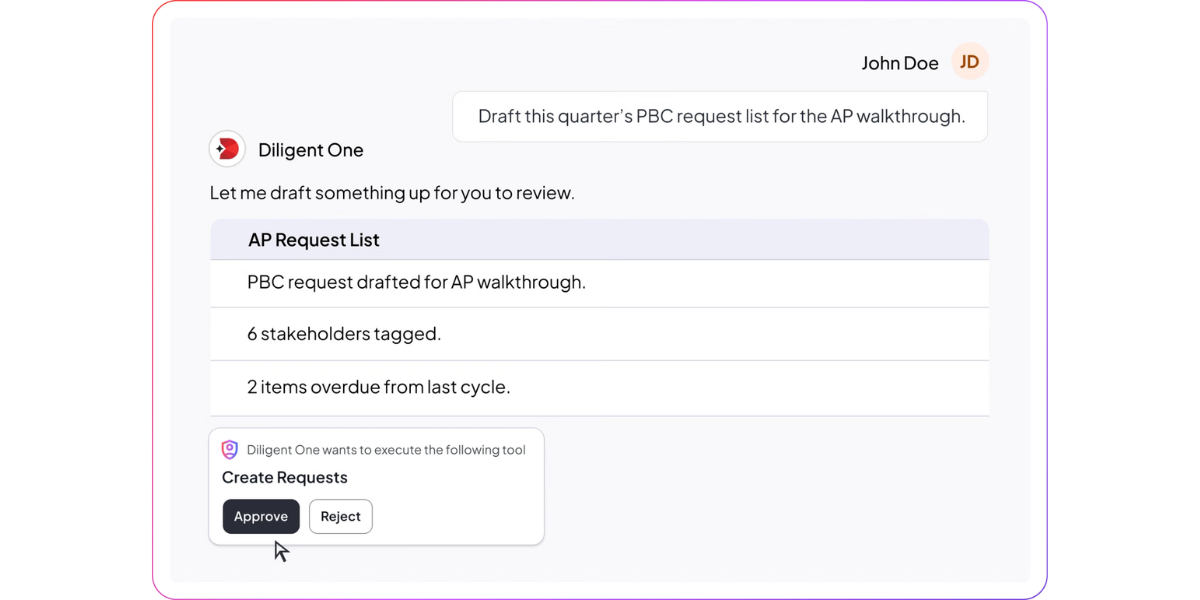
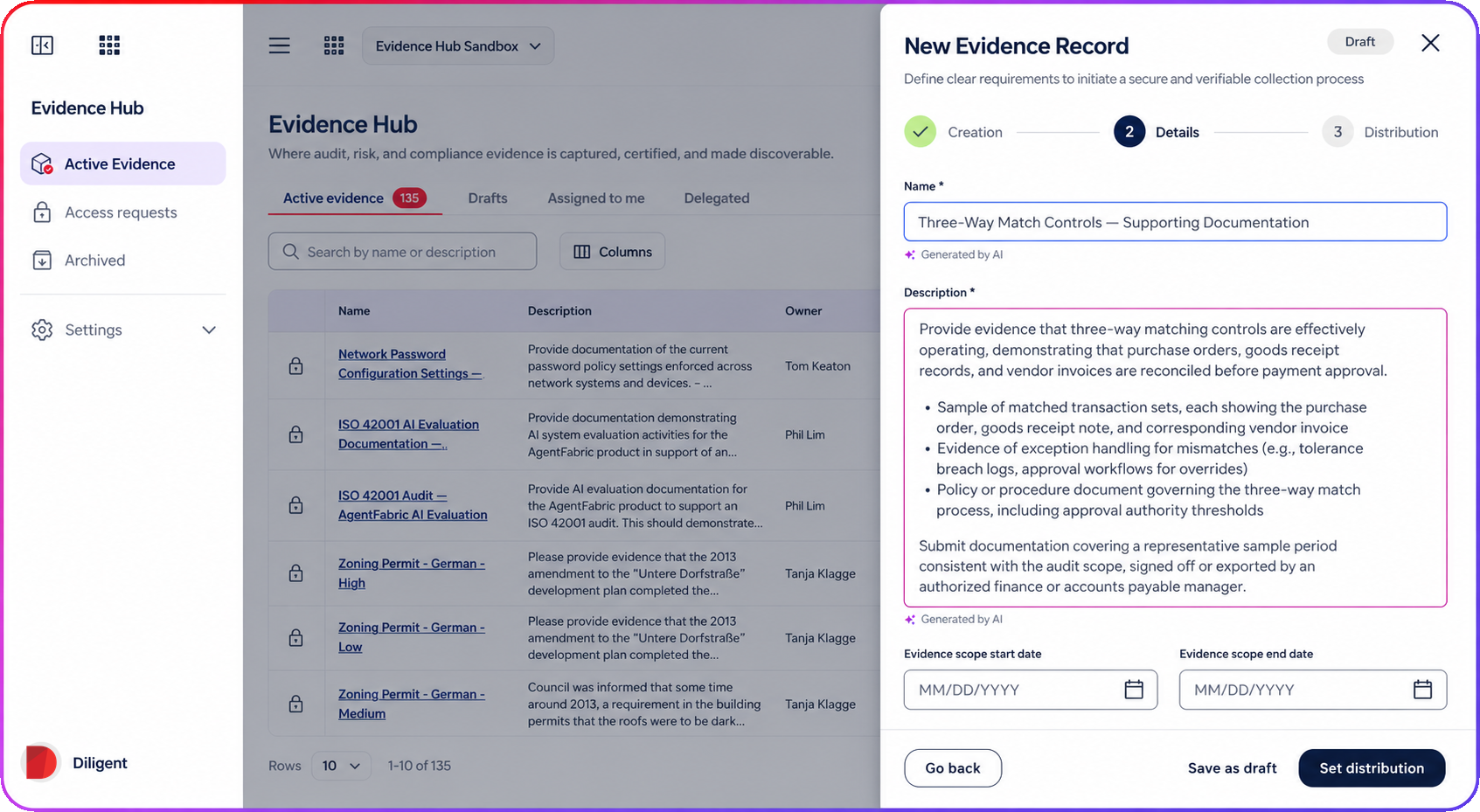
Evidence collection is one of the most resource-intensive activities in internal audit. AI can automatically:
In recurring audits such as SOX, AI can standardize request creation based on prior-year data and control objectives — reducing setup time dramatically. In Diligent's Early Adopter Program, risk and audit workflows have been completed 50–70% faster, with audit planning accelerated by up to 60%.
This is often the first and most transformative application of AI in internal audit.
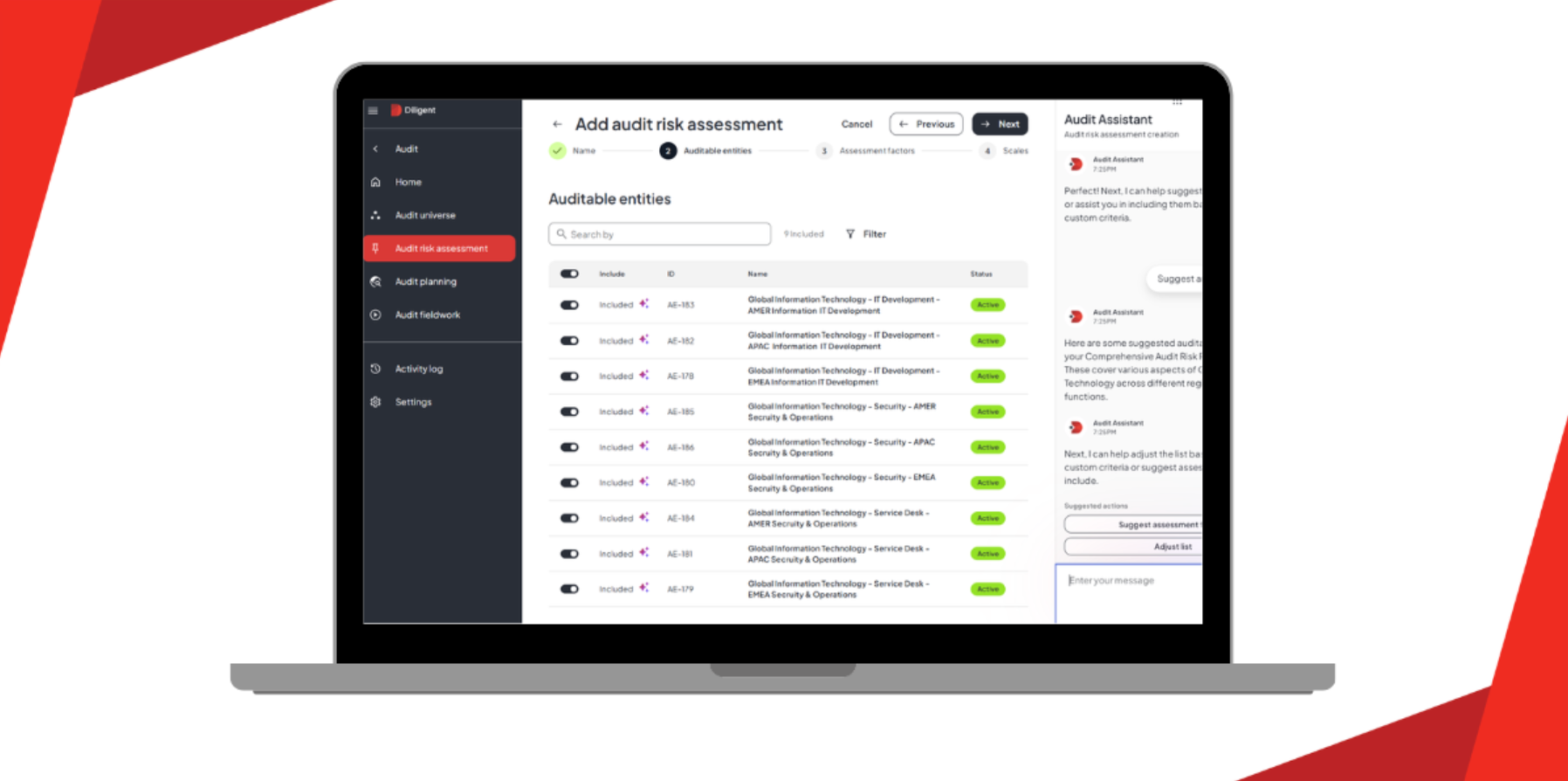
AI can accelerate Audit Risk Assessments (ARAs) by:
Instead of building risk assessments from scratch, audit teams start with intelligent, context-aware recommendations that improve both speed and coverage.
AI systems trained on risk-control relationships can:
This reduces reactive "fire drill" remediation and strengthens overall control frameworks.
As regulations evolve, AI can:
This allows audit and risk teams to proactively address regulatory shifts instead of scrambling after enforcement deadlines.
AI supports ongoing monitoring by:
This moves audit from periodic review to continuous, risk-aligned oversight.
Implementing AI in internal audit does not require replacing existing methodologies. Instead, organizations typically begin by identifying high-friction workflows and layering AI where it delivers immediate ROI.
Common steps include:
Many organizations using AI in internal audit begin with evidence collection, then extend automation across the broader lifecycle as confidence grows.
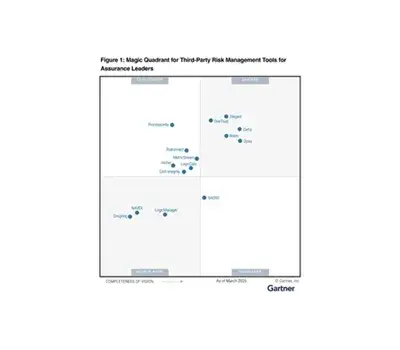
The market for AI tools in internal audit is evolving quickly.
Primarily focused on templates, workflows and documentation management, with limited embedded AI.
Strong in documentation and data linking, but not purpose-built for autonomous audit execution.
Designed to embed AI directly into audit workflows — automating execution, not just suggesting next steps. An example of this AI-native approach is Diligent Audit, a suite of agentic AI capabilities built to modernize audit execution from planning through remediation.
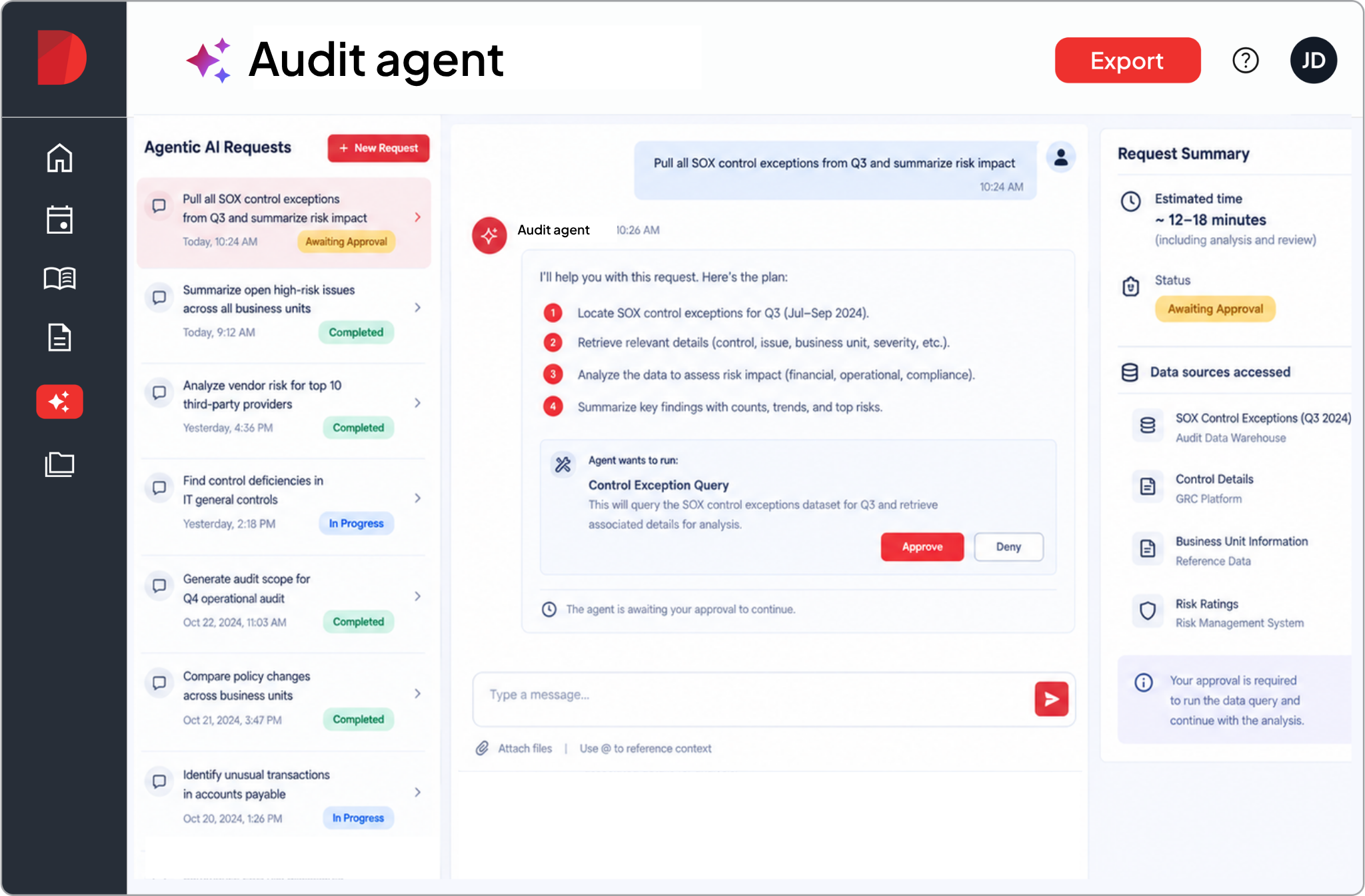
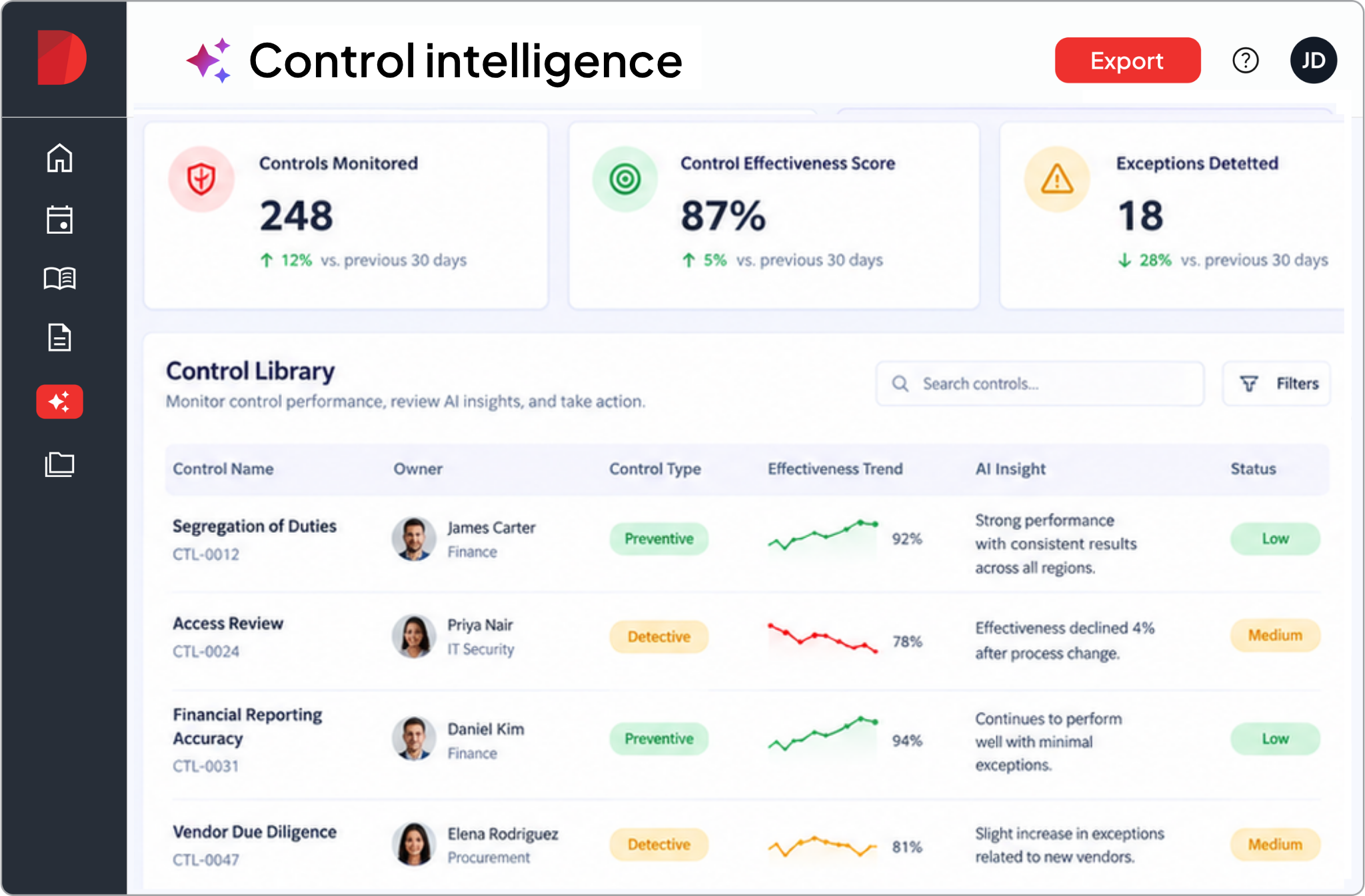
Diligent’s agentic AI gives audit teams one centralized, conversational way to execute across the entire audit lifecycle — planning, evidence, testing, documentation and findings.
Built on the Diligent One Platform, the audit agent connects audit execution directly to risk and compliance data — while keeping auditors firmly in control. It does not issue audit opinions or replace auditor judgment; every recommendation still requires auditor validation and alignment to existing methodology.
Most audit leaders don't say, "I need AI-powered audit orchestration." They say things like:
The most useful agentic AI use cases aren't the ones that showcase the technology — they're the ones that eliminate frustrations like these. Here are ten of the highest-impact jobs Diligent’s audit agent takes off auditors' plates, spanning audit planning and evidence, and audit execution and analysis.


Across all ten, the agent surfaces recommendations for auditor review rather than acting on its own. Auditors validate and decide — consistent with Diligent's human-in-the-loop approach to agentic GRC.
As risk accelerates and expectations rise, internal audit must evolve from manual execution to intelligent, semi-autonomous workflows.
AI in internal audit is no longer experimental; it is becoming essential for scaling coverage, improving quality and aligning assurance with enterprise risk. With agentic audit platform such as Diligent, audit teams can reduce administrative burden, accelerate execution and deliver higher-quality, risk-aligned assurance. The result is a shift from reactive oversight to proactive risk intelligence, with humans firmly in control of every consequential decision.
See how Diligent Audit bring agentic automation to your audit lifecycle — request a personalized demo.
Not ready for a demo yet? Get the IIA x Diligent whitepaper: Artificial intelligence in internal audit for a practitioner-led look at how peers are applying AI across the audit lifecycle.
Is AI in internal audit secure and compliant?
AI solutions designed for enterprise audit are built with governance, access controls and data security in mind. When embedded within established audit platforms, AI operates within defined guardrails.
Will AI replace internal auditors?
No. Agentic AI isn't designed to replace auditors or issue audit opinions. It automates the repetitive, administrative work surrounding audit planning, evidence collection, testing support and reporting — allowing auditors to spend more time applying the professional judgment, independence and risk interpretation that remain human responsibilities.
What audits benefit most from AI?
Recurring audits (such as SOX), operational audits across multiple entities, regulatory impact reviews and remediation monitoring often see immediate benefits.
How accurate is AI-generated audit content?
Accuracy depends on data quality and system design. AI embedded within structured audit platforms, connected to risk and control data, provides greater reliability than isolated tools.
How do you implement AI in an existing audit function?
Most organizations begin with high-friction processes like evidence collection, then expand to planning, testing and remediation as adoption matures.
What is the difference between AI assistance and agentic AI?
AI assistance offers suggestions that still need to be acted on manually. Agentic AI, like Diligent Audit, executes the defined workflow itself within guardrails — drafting requests, tracking submissions and surfacing gaps — while auditors remain in control of every consequential decision.
What is Diligent’s audit agent?
Audit agent is the agentic layer built on top of Diligent’s end-to-end internal audit management software. The agent gives teams one centralized, conversational way to execute across the full audit lifecycle: planning, evidence, testing, documentation and findings. It supports your existing methodology rather than replacing it, and every recommendation requires auditor validation.