
At Elevate 2026, Kathryn Henry and Dottie Schindlinger surfaced four signals of trusted board leadership, and an argument for what holds them together.
On the closing morning of Elevate 2026, lululemon independent director Kathryn Henry sat down with Dottie Schindlinger from the Diligent Institute. About four minutes in, Henry reframed something quietly important about how boards work.
“Leadership is not about having people report to you. That makes you a manager.”
— Kathryn Henry, independent director, lululemon
Her redefinition gave the conversation its spine: leadership is a role of service. When directors orient around service to shareholders, employees, customers, and the communities the organization serves, hard decisions become clearer. Four themes carried that argument through.
Connecting meaningfully in a boardroom, Henry argued, takes a willingness to drop the performance of competence.
“Sometimes we just have to let our guard down.”
— Kathryn Henry, Elevate 2026
That is not the same as oversharing. The work she’s pointing at is internal: knowing what makes you tick, how you see the world. The result is less fear, more courage, more of a sense of being able to say what you really think.
This matters in governance. Boards that get into trouble are not always the ones that received the wrong information. They are the ones where the right information was sitting in the room and nobody felt safe enough to say it.
“That becomes a really differentiating skill from a governance perspective, because it’s not about what’s brought in the boardroom or what’s said. It’s often about what doesn’t make it in and what is left unsaid.”
— Kathryn Henry, Elevate 2026
Directors thinking about what they will say next, or what they will defend, are not fully present. They miss the small hesitation in a CFO’s answer, the careful framing of a risk that should have been more direct, the data slide short on context. Those are the warning signals in retrospect.
The third signal is structural.
“Having an aperture that is much broader than more of a traditional lens helps me to show up differently because I see different perspectives. What are other people experiencing? What’s working for folks? What’s not working?”
— Kathryn Henry, Elevate 2026
Boards that seek multiple perspectives produce better decisions. Composition contributes to that, only in part. The real question is whether directors are oriented around defending what they think they know, or finding out what they don’t.
One framework Henry shared came from her own performance management cycle. She calls it the greatness equation. High performers, she argued, share three things: the right skills, a challenge they actually want, and an environment aligned enough with them that they can feel safe in it.
When those conditions are present, what shows up is more passion, more authenticity, more presence. Those qualities cannot be demanded. They can only be enabled.
That is an HR framework that works at board level too. Boards that understand what enables great work in their executives ask sharper questions about culture, succession, and performance at the top. The directors who help colleagues do their best thinking are the ones whose boards do their best work.
All four signals run back to one place. Authentic vulnerability, attentive listening, broader aperture, and the discipline of enabling great work: surfaces of the same orientation. Leadership in the boardroom is a form of service to shareholders, certainly, and to the wider set of stakeholders Henry named: employees, customers, the communities the organization serves.
“It is about what we’re here to do in service to shareholders and, frankly, from my perspective, a much broader set of stakeholders, the employees, the customers, the communities we serve. If you come to it from that perspective and can leave your own interests to the side, decisions are actually not that difficult.”
— Kathryn Henry, Elevate 2026
Boards face hard decisions; Henry isn’t denying that. Her argument is that when directors set their own interests aside and orient around what the organization exists to do, the right answer surfaces faster than expected.
Directors who lead from that position make hard calls clearer. Clarity is what separates governance that works from governance that runs out of road.
Explore more research, frameworks, and conversations on what trusted boards do differently. Visit the Diligent Institute hub
About the speakers
Kathryn Henry is an independent director at lululemon, serving on the Audit and Compensation Committees. Her career sits at the intersection of technology, operations, people development, and social impact, with roles spanning lululemon, LightBrite, How Women Invest, and How Women Lead.
Dottie Schindlinger is executive director of the Diligent Institute, the independent corporate governance think tank providing research, insights, and programs for boards and leaders worldwide. She conducted the fireside chat with Kathryn Henry on the closing morning of Diligent Elevate 2026 in Atlanta.
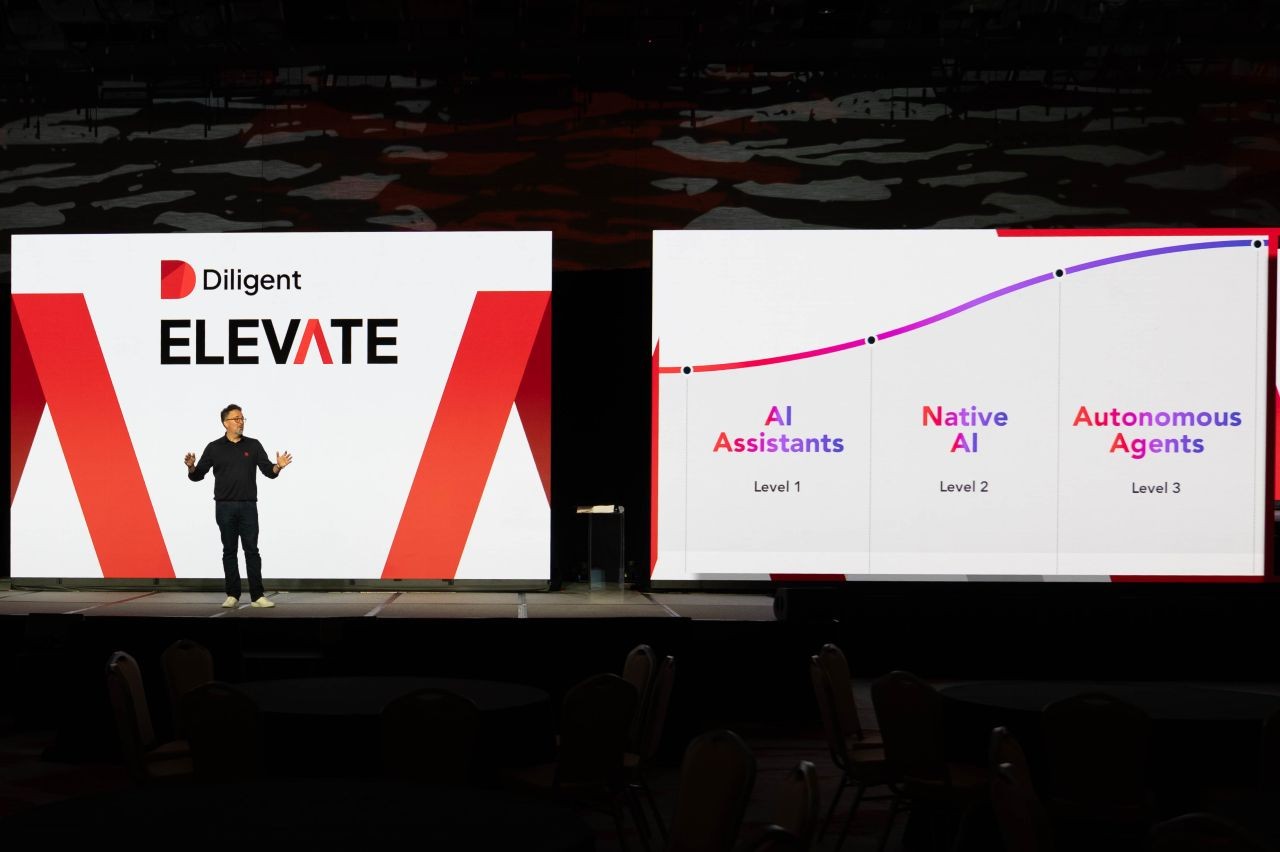
Elevate 2026 highlights: From responsible AI to authentic leadership

Elevate 2026 brought together over 600 governance and compliance professionals in Atlanta to explore the transformative impact of AI on risk management and leadership. Key discussions highlighted innovative solutions like AI Board Member, emphasizing the importance of connected data and responsible AI implementation for effective governance in a rapidly changing landscape.
From AI talk to real impact: How today’s leaders do more without adding headcount
Unlock the potential of AI in governance, risk, and compliance with our comprehensive guide. Learn how to streamline workflows, enhance reporting efficiency, and build a robust AI action plan while maintaining control and accountability. Download now to elevate your organization's AI oversight and drive measurable impact.
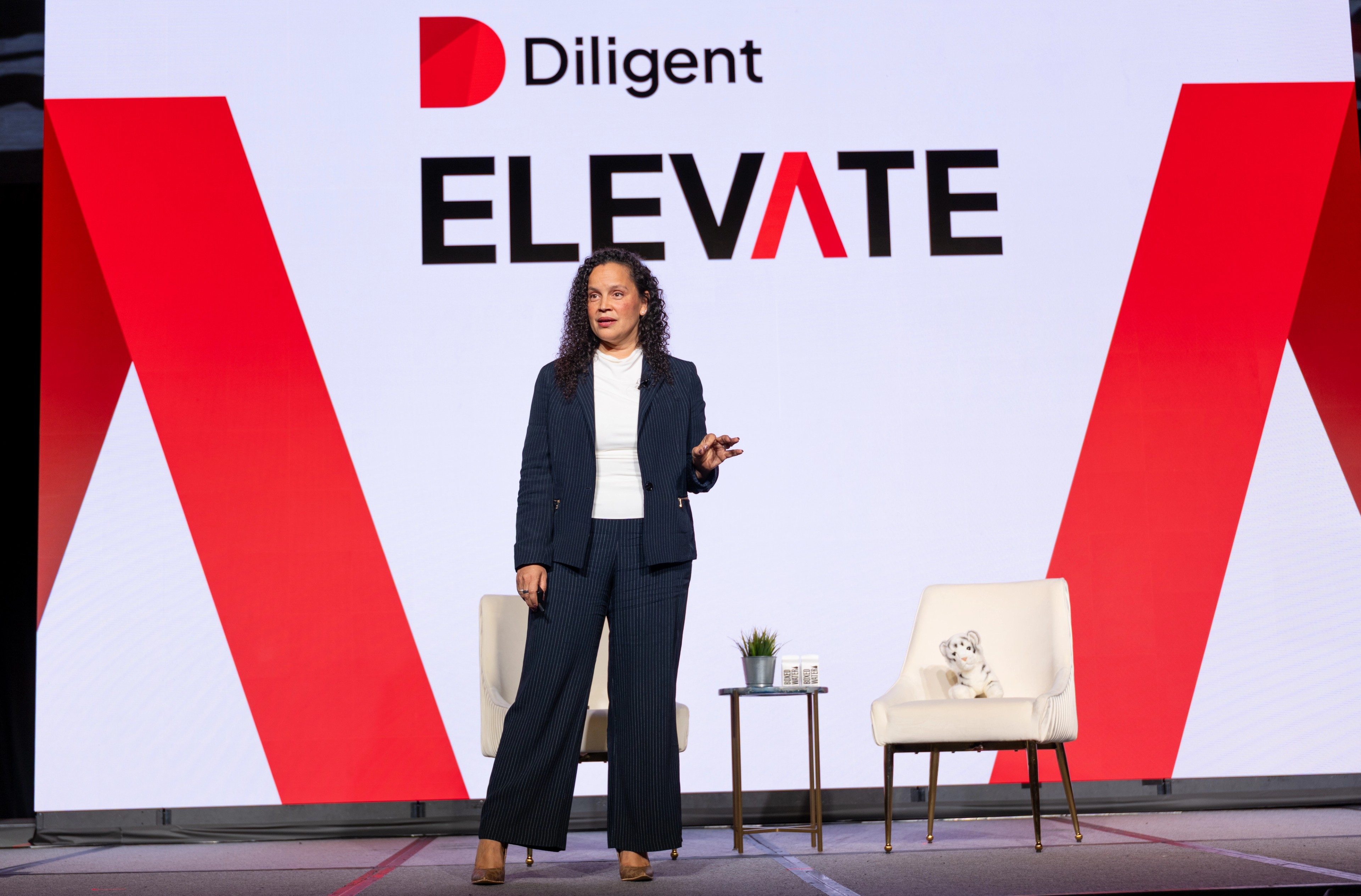
Responsible AI in the boardroom: From enthusiasm to execution

Discover how AI leader Noelle Russell emphasizes the critical role of governance in successful AI implementation, revealing why 95% of AI pilots fail and what boards must do to transition from enthusiasm to effective execution. Learn how accountability, connected data, and strategic oversight can ensure AI systems deliver real value for organizations.