
The board pack has 400 pages. The meeting is Monday morning. By Sunday evening, the questions are already landing on your desk: What did the board resolve on executive compensation last year? What came out of the last risk committee? Does the language on page 218 need context before the discussion begins?
Fielding those questions is part of the job. So is knowing that 82% of US public company directors are now using generative AI to get through their board prep, and that more than half are doing it with consumer tools that have no awareness of board permissions, no connection to the actual materials and no record that any of it happened.
When a director pastes a board pack into a consumer AI tool, the governance risk often lands with the GC or CoSec. You can't see it, can't govern it and can't stand behind it.
The latest updates across Diligent Boards and Diligent Entities cover both sides of the job. A governed, cited AI for your board — on your terms, with your access controls in place. And in Diligent Entities: Records that stay aligned with Companies House in near real time, KYC documents that stop needing to be rebuilt from scratch for every counterparty and entity data that’s ready when a transaction accelerates.
Here's what's new.
The overhead of board prep doesn't end when the book is built. Directors come back with questions, requests for context from old packs, searches through material that only you know how to navigate. Ask GovernAI changes that dynamic, giving your directors a secure way to find answers themselves while you stay in full control of what they can access.
Your board's materials never leave Diligent Boards. You control when and how ask GovernAI becomes available to your board, with admin settings for access, retention and deletion. Every answer is labeled as AI, cited to its source and limited to what each director is already permitted to see, with no configuration needed on your side.
For CoSecs, GCs and board administrators:
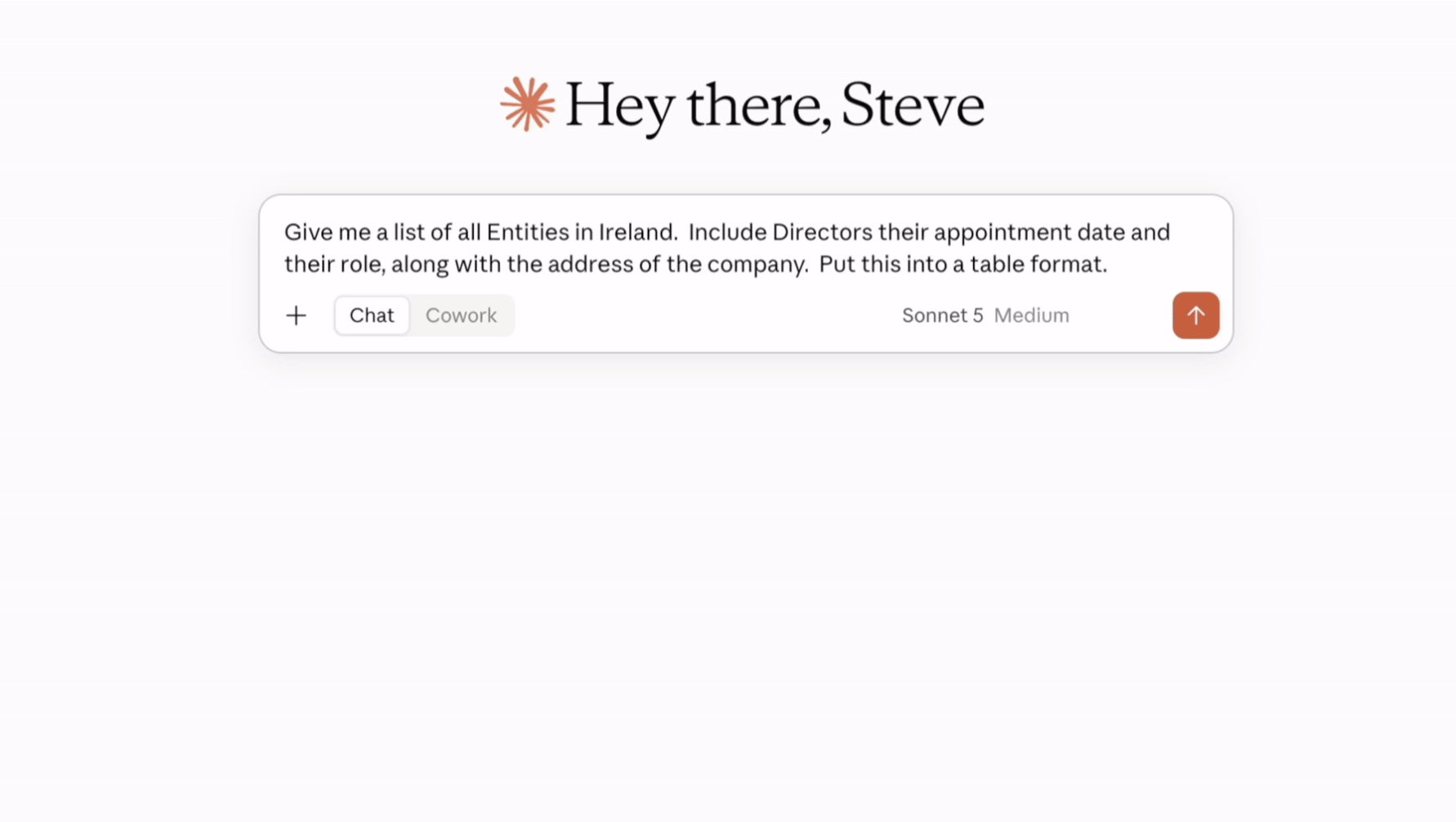
Once ask GovernAI is available to your board, directors can ask questions about their board materials in plain language and get cited answers in seconds, drawn only from what they're permitted to see, with the exact source page attached. The question that arrived on your desk at 9pm on a Sunday finds its own answer.
Ask GovernAI gives directors:
When complex topics land on the board agenda — cyber exposure, activist risk, executive compensation — directors often need context beyond what's in the pack. Ask GovernAI gives them on-demand access to curated expert lenses across Cyber, Activist Investor, ESG and M&A strategy, grounded in the board's own materials. With certain packages, directors can also pair their board materials with market and peer research, adding external context alongside internal content. One fewer category of question that ends up back with you before the meeting.
Ready to give your board a secure AI that works inside your governance framework? Explore ask GovernAI
CoSecs and legal ops teams carry the responsibility for keeping entity records accurate, and the exposure when they aren't. The trends shaping the GC and CoSec role in 2027 make clear how much that responsibility has grown. Too much of the work behind that responsibility is still administrative: Chasing discrepancies against official registries, reformatting the same data for different counterparties, coordinating document requests one entity at a time. Here's how Diligent Entities addresses each part of that overhead directly.
Internal company records can drift from official Companies House data as company details change: Officer appointments, addresses, registered status, company name. When that drift goes undetected, governance teams are working from information that no longer matches the official record, carrying the risk that comes with it.
Companies House Monitoring continuously compares selected UK company records in Diligent Entities against official Companies House information, alerting teams when it detects a discrepancy and giving users a side-by-side view of both values.
What's new:
KYC requests have become a routine responsibility for legal and governance teams, who are increasingly relied upon to support external stakeholder due diligence requirements. The information needed to respond is almost always already in the corporate record; what slows teams down is moving it into the right format for the right counterparty, field by field, for every request.
The same challenge extends to other recurring governance documents, from resolutions and written consents to appointment documents. Responding can mean manual copy and paste across forms, and entity records from disaggregated systems, costing valuable time. To help solve for this, AI Document Assembly is coming soon to Diligent Entities. Teams upload an existing Word template or a counterparty's form, and the capability identifies fields and maps them against the governed entity record: Company details, officer information, ownership structures, addresses.
The reviewer stays in control throughout. AI Document Assembly produces a thorough first draft, not a final document. Teams validate mappings and confirm content before anything is exported, signed or shared.
What it handles:
Learn how AI Document Assembly works for KYC workflows here.
Transaction activity puts pressure on legal, tax, finance and compliance teams to produce accurate entity information quickly. When records are fragmented or spread across systems, that pressure compounds.
Diligent Entities brings entity records, ownership structures, compliance information, appointments and governance documents together in one trusted system, so when a transaction accelerates, the groundwork is already done.
Teams can:
Already a Diligent customer? Log in to start using ask GovernAI inside Diligent Boards, or speak with your Customer Success Manager to confirm which capabilities are included in your package and how to activate them.
Not yet a customer? Request a demo or learn more about ask GovernAI to see connected governance in action.