
In this article

A compliance committee charter isn't just a formality; it's the document that defines accountability, scope and authority when regulators, auditors or activist shareholders start asking hard questions.
For general counsel at public companies, a weak or outdated charter creates documented governance gaps that plaintiffs and enforcement agencies will exploit. For CFOs steering a company toward IPO, not having one at all signals to underwriters and institutional investors that compliance oversight remains informal and unstructured.
The challenge is that many organizations either lack a formal charter entirely or operate under language that no longer reflects current regulatory expectations, creating ambiguity where there should be clarity. This guide is the definitive resource for what a compliance committee charter should include and why each element exists, whether you're strengthening an existing charter or building one for the first time.
This guide covers:
A compliance committee charter is the governing document that defines the committee's purpose, composition, authority and responsibilities within the broader board structure. It is a board-level governance instrument, distinct from a code of conduct, which establishes behavioral standards for all personnel, and distinct from compliance program policies, which detail operational procedures at the management level.
The charter sits at the top of a three-level governance hierarchy. It creates the oversight body. The code of conduct establishes what the organization expects of its people. Compliance program policies implement the specific controls and processes that management executes day-to-day.
As various governance resources suggest, effective board structure often involves distributing oversight responsibilities among specialized committees with clear charters that define scope, authority and responsibilities tailored to specific organizational risks.
Why does this distinction matter in concrete terms? The charter satisfies regulatory expectations by documenting that the board has established a deliberate compliance oversight mechanism.
"One important trend is continuous compliance. Not from the perspective of complying with a regulation. I mean security and regulatory policy compliance in one continuous loop. And that offers tremendous benefits for organizations. You're continuously identifying and remediating your risks. That helps reduce the time compliance teams take to do their work. For auditors, the data is already there. It accelerates the analysts' ability to do their job and do it more accurately."
— Philip D. Harris, CISSP, CCSK, Research Director, Governance, Risk, and Compliance Services and Software at IDC
The need for a formal charter arises from several triggering circumstances, and the right time to act depends on where your organization sits today.
Public companies face the most immediate imperative. While SEC rules and Sarbanes-Oxley technically require audit committees (not separate compliance committees) to oversee compliance functions, sophisticated governance structures increasingly establish dedicated compliance committees with formal charters.
This is particularly true for companies in regulated industries or complex compliance environments where the audit committee's agenda is already overloaded with financial reporting oversight.
Pre-IPO companies face a different but equally urgent trigger. The S-1 filing process and underwriter due diligence will surface the absence of formal compliance committee governance as a gap. According to Latham & Watkins' US IPO Guide, companies should begin charter development twelve to eighteen months before the anticipated IPO to allow time for board approval, independent director recruitment, and the establishment of a governance track record.
Highly regulated industries and government contractors often face additional (non-SEC) supervisory expectations and guidance that make it easier to demonstrate documented, board-level compliance oversight under examination. Examples include banking regulator expectations reflected in Fed SR 08-8, healthcare compliance program guidance from OIG guidance and compliance-related obligations embedded in FAR rules.
Organizations operating informally (where a compliance committee exists but no charter governs it) face the most insidious risk. Scope, authority and accountability remain undefined, creating exactly the kind of ambiguity that regulators and plaintiffs exploit when compliance failures materialize. If no document says what the committee is responsible for, no director can demonstrate they fulfilled their oversight obligations.
A strong charter is specific enough to be defensible under scrutiny. In practice, that means covering the following elements in clear, operational language.
Core structural elements:
Oversight responsibilities and authority:
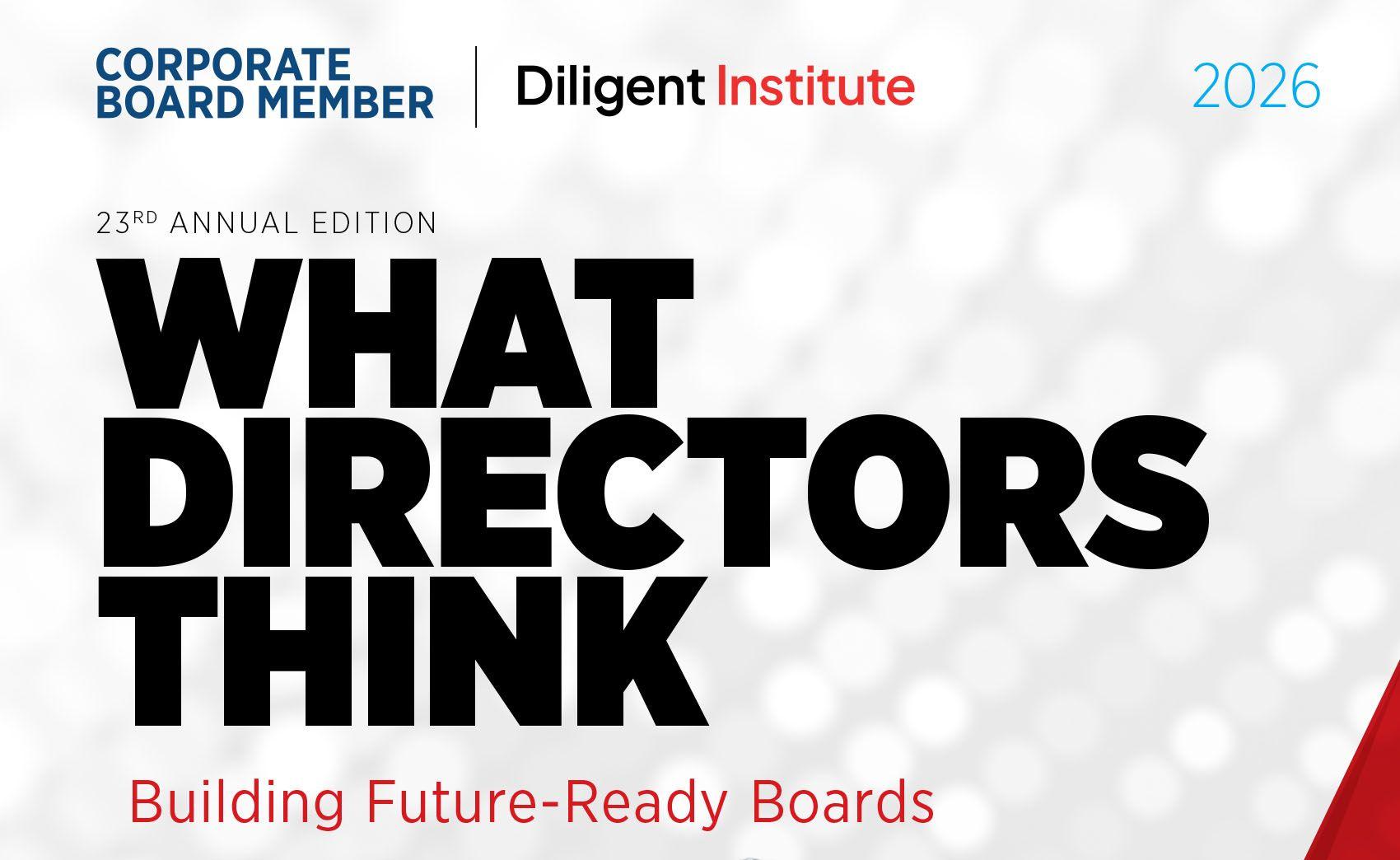
The pace of regulatory change makes this specificity non-negotiable: according to What Directors Think 2026 (a survey of 200+ U.S. public company directors) by Corporate Board Member and Diligent Institute, 50% of directors say AI and technology-related regulation is the compliance area demanding the greatest board attention.
In practice, that means your charter should explicitly empower the committee to oversee compliance with emerging technologies (e.g., AI governance, model risk, automated decisioning controls, and related disclosure and privacy obligations) rather than relying on generic “regulatory updates” language. The charter should also specify authority to require management presentations, interview any employee or officer and approve compliance-related expenditures.
Include provisions for joint meetings, committee chair coordination and information-sharing protocols to prevent gaps where no committee believes a particular risk falls within its mandate. External auditors have defined communications expectations with audit committees under PCAOB standards. The SEC's nominating rules provide disclosure context that often shapes committee architecture.
Reporting and accountability mechanisms:
These mechanics align with how prosecutors evaluate oversight in practice. The DOJ evaluation framework emphasizes autonomy, resourcing, and access to information in assessing the effectiveness of compliance programs.
Together, these elements create the documentation trail and operating structure directors need to demonstrate active, independent oversight.
While every charter must be tailored to the organization's specific risk profile and regulatory environment, the following framework illustrates what strong drafting looks like in practice across the four sections where quality matters most.
Purpose language:
"The purpose of the Compliance Committee is to assist the Board of Directors in overseeing the company's compliance with legal and regulatory requirements, internal policies and ethical standards. The Committee aims to ensure the effectiveness of the compliance program and promote a culture of integrity and accountability throughout the organization."
This language, adapted from NACD guidance, establishes four critical elements: oversight scope, program effectiveness monitoring, cultural mandate and clear positioning as an advisory body to the full board.
Composition requirements:
"The Committee shall consist of at least three directors appointed by the Board, each of whom shall be independent as defined by applicable SEC rules and stock exchange listing standards, be free from any relationship that would interfere with the exercise of independent judgment and possess relevant expertise in compliance, legal, regulatory or risk management matters."
This language references specific regulatory standards rather than leaving independence undefined. It also ties member qualifications to the committee's actual oversight function.
Authority provisions:
"The Committee has the authority to retain counsel, accountants or other advisors as it deems necessary to carry out its duties; have full access to all books, records, facilities and personnel of the company; conduct investigations into any matters within the scope of its responsibilities; and engage independent experts without seeking Board approval for such engagements."
The critical phrase here is the explicit right to engage advisors without seeking approval. This is the provision that demonstrates true independence from management. Similar authority constructs commonly appear in SEC-filed committee charter exhibits and align with DOJ guidance on autonomy and resourcing factors.
Reporting obligations:
"The Committee shall report regularly to the Board on its oversight activities; provide quarterly summaries of significant compliance issues identified and remediation actions taken; submit an annual report evaluating the effectiveness of the compliance program; and communicate significant compliance issues or violations to the Board promptly, without waiting for regularly scheduled meetings."
This structure reflects common public-company reporting expectations and aligns with the emphasis enforcement authorities place on timely escalation and board visibility.
Charter language should be reviewed by outside counsel before board adoption, particularly for public companies with specific regulatory obligations or for pre-IPO companies where underwriter due diligence will scrutinize governance documentation.
Discover how AI transforms board preparation and decision-making.

A charter defines the committee's mandate. Whether that mandate translates into genuine oversight depends on what happens between meetings: the monitoring, reporting and policy governance that makes compliance continuous rather than periodic.
"Diligent One is intriguing because we've been clamoring as board members to have more access to information. Where can I go to get that information a) swiftly, b) in a palatable, absorbable way? That's what we're looking for, and that's something unique. Risks are all integrated, they're not isolated."
— Edna Conway, Board Director, Executive Advisor, Author
Key Diligent capabilities that support compliance committee operations include:
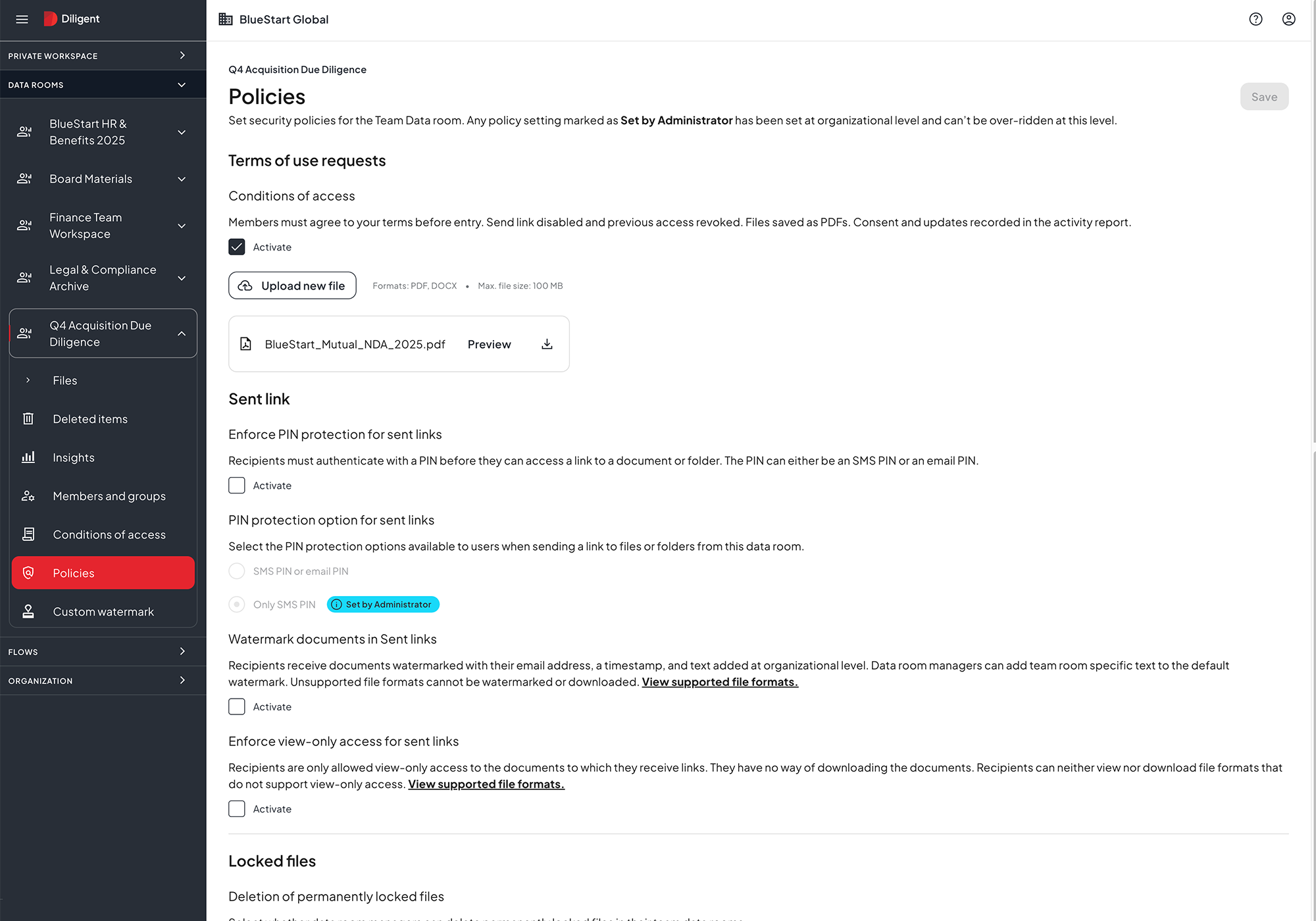
For companies preparing for IPO, these tools make a newly chartered compliance committee immediately operational. Rather than spending months building reporting processes, meeting preparation workflows and compliance tracking systems from scratch, the committee can begin fulfilling its charter obligations from its first meeting, demonstrating the governance maturity that underwriters and institutional investors evaluate during due diligence.
The charter defines what the board commits to oversee; these tools help ensure that commitment translates into continuous, credible governance rather than periodic check-ins.
Make your compliance committee charter operational from day one. See how leading boards turn charter commitments into credible, continuous oversight that satisfies regulators, auditors and institutional investors. Request a demo
No. Neither the SEC nor Sarbanes-Oxley mandates separate compliance committees; compliance oversight is a required function of audit committees with written charters. However, establishing a dedicated compliance committee with a formal charter is increasingly recognized as best practice, particularly for companies in regulated industries or complex compliance environments.
Best practice requires an annual review at minimum. The charter should be assessed against current regulatory requirements, emerging risk areas, and any changes to the company's structure or business model. Amendments should require full board approval and be accompanied by documented effective dates.
The explicit authority to retain independent outside counsel at company expense without management or board approval is consistently identified by leading governance authorities as the single most critical provision.
This right demonstrates that the committee can investigate management without management interference, the mechanism that courts and regulators evaluate when determining whether a board has established adequate independent oversight. The DOJ evaluation framework emphasizes the importance of independence, autonomy and resourcing in effective compliance programs.
A compliance committee charter is a board-level governance instrument that establishes the oversight body, defining who oversees compliance, what authority it has, and how it operates. A code of conduct is an organization-wide policy document that defines behavioral expectations for all personnel. The charter governs the committee that oversees the code. They operate at different levels of the governance hierarchy and serve fundamentally different functions.
See how Diligent helps boards build charter-ready oversight infrastructure that demonstrates credible compliance governance. Request a demo today