

In this article

Compliant cultures come up constantly in governance conversations, but what does it really mean to build a compliance culture? What does it entail? And more fundamentally, why has building a culture of compliance become even more critical as organizations face regulatory enforcement and distributed workforce challenges?
This comprehensive guide explains how to build sustainable compliance cultures that withstand regulatory scrutiny and workforce transformation:
A compliance culture is the shared values, behaviors and systems that make lawful, ethical action the default inside an organization. It shows up in how leaders decide, how employees raise concerns and how policies translate into daily choices. Strong cultures look consistent: leadership backs compliance with budget, employees speak up early, similar violations get similar responses and compliance runs inside workflows, not beside them.
Today's compliance situation presents extraordinary challenges that make cultural transformation essential for organizational survival. The SEC achieved record-setting $8.2 billion in financial remedies in fiscal year 2024, despite filing 26% fewer total enforcement actions compared to 2023. This dramatic shift toward higher-penalty enforcement means that compliance failures now carry substantially greater financial consequences.
This enforcement intensity reflects a broader trend across many major regulatory agencies. The total monetary penalties across all covered enforcement agencies reached $24.6 billion in 2024, representing a 22.2% increase from the previous year. This represents organizational failures that could have been prevented through effective compliance cultures.
Meanwhile, the regulatory environment itself is becoming increasingly complex. Recent SEC updates include mandatory cybersecurity disclosure standards under Item 408(b) of Regulation S-K. Organizations must now disclose insider trading policies or provide detailed explanations for non-adoption. Meeting obligations this expansive takes both technology and cultural change, not one or the other. https://www.diligent.com/resources/blog/what-is-regulatory-compliance
Adding to this complexity, public perception and corporate reputations now hinge on ethical performance. External legislation, industry-specific regulations and internal standards all keep moving, and many businesses struggle to keep up while managing distributed workforces.
According to the Q4 Business Risk Index by Diligent Institute and Corporate Board Member, business risk among general counsel, audit and compliance leaders sits at 7.9 out of 10, up 16% since the start of 2025.
Higher penalties, expanding regulations and heightened stakeholder expectations have tied compliance outcomes directly to the underlying business culture. An overlay of compliant activity cannot redeem a fundamentally flawed culture. An overlay of compliant activity cannot redeem a fundamentally flawed culture. We need to rethink our approach to put compliance front and center in business strategy. But among their numerous responsibilities, how can businesses achieve this and create a true culture of compliance?
Several challenges surface repeatedly when organizations try to build a compliance culture. The shift to remote and hybrid work has fundamentally changed how compliance teams engage with employees and maintain ethical standards.
The first challenge is visibility. Remote work makes it harder to spot compliance issues before they become problems. You can't rely on hallway conversations, visual cues, or the informal oversight that naturally occurs when people work in the same location. Compliance teams lose the early warning signals that help prevent small issues from becoming major violations.
Second, traditional training approaches fall short with distributed teams. Generic online modules feel disconnected from real work situations, and employees often treat them as boxes to check rather than meaningful learning experiences. The technology barriers that affect training accessibility compound this problem, as not everyone has the same comfort level or resources for digital learning.
Third, employee engagement has declined significantly. According to Gallup, U.S. employee engagement reached an 11-year low in 2024. Disengaged employees are less likely to internalize compliance principles or speak up about potential issues. They go through the motions but don't develop the judgment needed for ethical decision-making in ambiguous situations.
The harder problem is building cultures where people make sound compliance calls without direct oversight. This requires different approaches than the conference room training and policy distribution that worked in traditional office environments.
A framework for turning policy management from administrative burden into an audit-ready capability that lowers compliance exposure.

How is sustained commitment to compliance created? What can businesses do to foster genuine compliant cultures that withstand regulatory scrutiny and workforce transformation? We have identified ten key enablers that have proven effective:
The board and senior leaders aren't just responsible for compliance oversight and best practices; they must demonstrate active commitment through their actions and resource allocation. Leadership credibility becomes even more critical when managing distributed teams, where modeling behavior has less direct impact.
At the board level, commitment shows in behavior. Directors who treat compliance as a standing item, request whistleblower metrics each meeting and protect compliance budget during downturns signal genuine commitment. A CCO who never addresses the board directly signals the opposite. "Setting the tone at the top doesn't start with words. It starts with behavior," says Sophia Velastegui, board director at BlackLine.
Board members must model the behaviors they espouse while ensuring compensation reflects behaviors aligned with corporate values. They need to ask probing questions about compliance culture effectiveness, especially regarding remote work environments and technology adoption. The importance of "doing as I do" when it comes to leader actions cannot be underestimated, particularly when face-to-face interaction is limited.
Compliance culture requires embedding ethics, business integrity, and corporate values from the onboarding process through career development. However, traditional training approaches prove insufficient for distributed workforces and disengaged employees.
Effective compliance culture building requires moving beyond one-size-fits-all training approaches to create engaging, scenario-based experiences that help employees understand how compliance principles apply to their specific roles and daily decision-making processes. Distributed, multi-generational teams respond to compliance training in meaningfully different ways, and scenario-based content accommodates that variation better than a single module can.
Bring corporate ethics and values to life through authentic engagement and practical insights. Your employees can read policies and processes independently, but speaking about them and sharing real-life stories makes compliance relevant and approachable.
Make it easy for people to ask compliance questions before they make decisions, not after problems occur. Set up regular office hours, respond quickly to inquiries, and create simple ways for people to get guidance. When someone asks a question, treat it as an opportunity to build understanding rather than test knowledge.
"Process owner engagement is not just taking instructions and running with them. We listen, we engage, we get process owners involved so they feel like they're a part of it. And when we deliver 100% of what they want, they love it and they want more of it. Keeping your owners engaged and part of the process is super important," says Brad Karn, Manager of Financial Data Analytics at Mercy Health.
Use real examples from your organization when training or discussing compliance issues. Instead of generic case studies, explain how compliance principles apply to actual decisions your teams face. This helps people recognize similar situations and know when to seek guidance.
As employees develop within their roles, compliance must form a central part of the organizational learning strategy. Chief compliance officers should collaborate closely with human resources teams to integrate compliance-related issues into orientation and leadership programs.
Technology enables broader reach and more flexible engagement options. Virtual learning sessions can accommodate more participants than physical meeting rooms, and recorded content allows people to learn at times that work for their schedules. Technology has helped compliance teams reach distributed audiences while maintaining personal connections through interactive features and follow-up discussions.
However, employee engagement requires attention to well-being alongside compliance education. Digital fatigue and isolation can erode employees’ willingness to participate in a compliance culture. Consider implementing Zoom-free days, allowing camera-optional participation, and encouraging outdoor meetings when possible. Well-being initiatives support compliance culture effectiveness by maintaining employee connection to organizational values.
Compliance leaders must balance crisis response with strategic guidance, avoiding conflicts of interest while supporting business objectives. When unexpected situations arise, compliance teams naturally become go-to resources for solutions, but this creates potential complications.
The most effective approach involves asking strategic questions rather than providing operational answers. By asking the right questions, compliance leaders can ensure operational teams understand requirements while allowing them to determine implementation approaches. This maintains proper oversight boundaries while supporting effective decision-making.
Consider yourself a "translator" between legal requirements and business operations, helping teams figure out optimal solutions independently. Evaluate proposed approaches not just for legal compliance, which should be the minimum standard, but also for alignment with corporate values and ethical principles.
Regulation tells us what we must do, but not how to accomplish objectives effectively. Compliance leaders must bring structure and framework to processes while integrating with existing operational systems.
Process design matters significantly in today's environment. Compliance cannot function as a standalone activity; it must integrate with operations, audit, risk management and governance processes. Enterprise risk management strategies dovetail with governance, risk, and compliance approaches to form integrated frameworks for addressing organizational threats.
Make compliance an integral component of audit, risk, and governance processes. Position compliance inside corporate strategy, not alongside it as a separate function. Where compliance, audit, risk and governance run on separate tracks, distributed organizations end up with duplicated work and contradictory signals reaching the business.
Sustainable compliance cultures require ongoing assessment and refinement. Organizations must establish mechanisms for collecting feedback from employees, stakeholders, and external partners about compliance program effectiveness and cultural alignment.
"Everyone has a role to play in risk management. You don't have to be a risk professional; you can be on a school board, in a nonprofit, or in a large corporation. It's something everyone should be doing, looking at the risks and the future," says Amanda Carty, Managing Director of Strategic Market Solutions at Diligent.
Implement quarterly compliance culture assessments that measure both behavioral indicators and outcome metrics. Track employee participation in voluntary compliance activities, quality of compliance-related questions and discussions, and proactive risk identification by non-compliance staff members.
Effective compliance cultures transcend organizational silos. Compliance leaders must cultivate partnerships with human resources, legal, audit, risk management, and operations teams to create integrated approaches that reinforce compliance principles across all business functions.
Cross-functional partnerships enable compliance teams to leverage existing relationships and communication channels while avoiding duplicative efforts. HR partnerships ensure compliance considerations are integrated into performance management, compensation decisions, and career development planning.
Legal partnerships help distinguish between minimal legal requirements and ethical best practices, ensuring compliance culture addresses both regulatory mandates and values-based decision making. Operations partnerships ensure compliance requirements are built into workflow design rather than added as afterthoughts.
Compliance culture initiatives must demonstrate measurable business value to sustain organizational investment and leadership support. Connect compliance culture metrics to business outcomes such as operational efficiency, risk mitigation, stakeholder confidence, and competitive advantage.
Track metrics that matter to business leaders:
Present these metrics in business language that demonstrates return on investment.
Anchor those outcomes to baselines. Useful reference points include policy attestation inside 30 days of release (mature programs target above 95%), speak-up triage in days not weeks, and investigation closure inside 60 days for non-complex cases. Exact numbers vary by industry and size; what matters is tracking the same measures every quarter with trend lines.
The PwC Global Compliance Survey 2025 demonstrates measurable returns on compliance technology investments:
Technology enables compliance teams to maintain visibility, sustain engagement, and retain oversight of key issues while supporting team well-being through virtual connection methods. Online meetings have become alternatives to informal check-ins, helping ensure that teams manage stress and workload effectively.
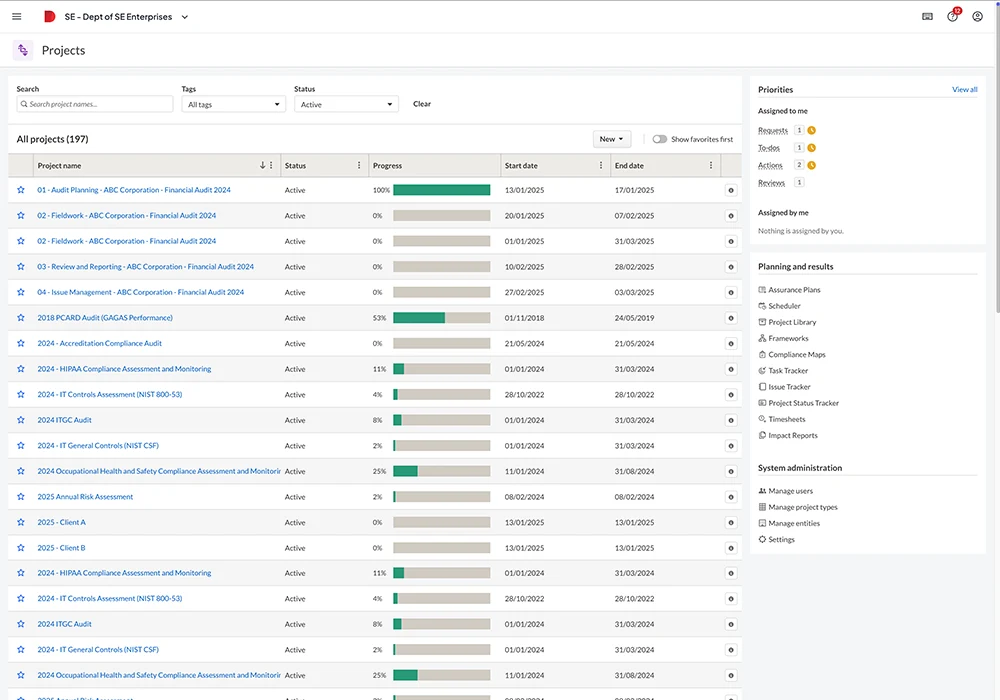
Choose technology solutions that help compliance teams become more efficient while ensuring compliance metrics are accurate and reliable. The right technology supports an embedded culture of compliance through comprehensive, actionable data.
Most compliance cultures fall along a predictable curve. Knowing where yours sits matters because each stage carries its own failure modes, and the move to the next requires a different investment at each level.
Ad hoc (stage 1): Reactive. Policies live on shared drives, training is annual and leadership addresses compliance when incidents force the issue. Programs at this stage often clear individual audits but fail under broader scrutiny from regulators, acquirers and plaintiffs. There is no system underneath, only a collection of artifacts, so violations tend to come as surprises and root-cause analysis is anecdotal.
Defined (stage 2): Core policies exist and a named owner runs the program, but training is generic and data stays inside compliance. The program is defensible on paper and disconnected in practice. Engagement metrics look acceptable because completion is mandatory, while the behaviors policies are meant to shape go unmeasured.
Integrated (stage 3): Compliance coordinates with HR, audit, legal and operations on a defined cadence, and the board sees a standing dashboard. Issues surface earlier because adjacent functions share signals, and directors get consistent visibility rather than episode-driven updates. Coordination is still mostly manual, which puts a ceiling on how fast the program can scale or respond when something breaks.
Measured (stage 4): Outcomes track against defined metrics and culture is assessed through surveys and behavioral indicators. At this stage, the program tracks outcomes alongside activity. Activity is training completed and policies attested. Outcomes are decisions changed, concerns raised earlier and repeat violations declining. This is also where compliance can defend its budget in business terms, because culture data starts correlating with operational and financial results.
Optimized (stage 5): Data flows across systems in near real time, predictive signals surface issues before violations and culture is benchmarked against peers. Compliance shifts from a control function to an early-warning system that informs business decisions in flight. Few programs reach this stage and sustain it. Those that do report shorter investigation cycles, lower remediation costs and stronger ratings from regulators and acquirers.
Most mid-market and enterprise programs sit between stages 2 and 3. The move to stage 4 is where most of the cultural change happens, because measuring outcomes forces honest conversations about what the program is actually shaping.
A compliance culture takes more than good intentions to sustain. What sustains one is the technology infrastructure underneath, which turns ethical principles into daily workflows. Organizations need solutions that automate routine compliance tasks, provide real-time insights, and enable teams to focus on culture building rather than administrative overhead.
With this objective in mind, Diligent provides:
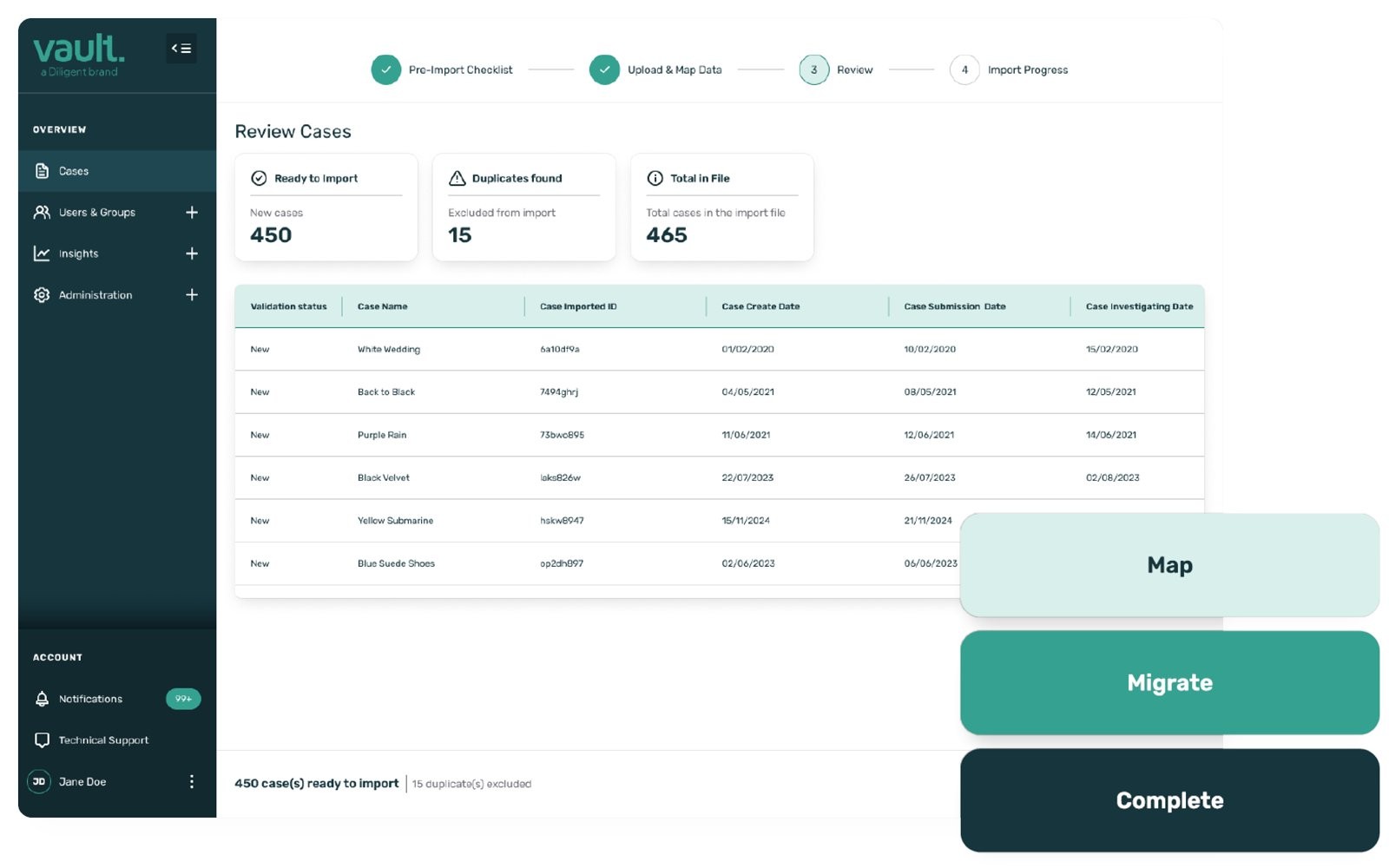
With these tools in place, compliance teams trade administrative overhead for time spent on the behavior regulators and stakeholders actually look for.
Chief compliance officers and general counsel know the 10 building blocks well. The harder work sits between knowing them and executing every day, with a distributed workforce, a widening regulatory perimeter and a lean team. Higher penalties and deeper disclosure obligations have pushed culture from aspiration into operational mandate.
Policies, training, speak-up channels, third-party diligence and board reporting are the raw materials. A defensible culture depends on whether those materials run inside a system your team can operate, your board can review and regulators can trust.
See Diligent in action and find out how compliance leaders operationalize culture end-to-end.
A compliance culture is the shared values, behaviors and systems that make lawful, ethical action the default inside an organization. Unlike a compliance program on paper, it shows up in how leaders decide, how employees raise concerns and how policies translate to daily work.
Setting the tone from the top remains the foundational element, but it must be combined with measurable accountability and data-driven insights. Leadership commitment must be demonstrated through resource allocation, visible behavior modeling, and consistent messaging across all organizational levels, especially in distributed work environments.
Remote work creates unique challenges, including reduced oversight, difficulty building culture without in-person reinforcement, and technology barriers. Successful organizations combine scenario-based training, policy management designed for hybrid environments, multi-modal content delivery, and technology that maintains engagement and visibility.
Technology has evolved from a supporting tool to an essential enabler of compliance culture. AI-powered solutions free compliance teams for strategic culture-building work while oversight runs continuously in the background. The key is choosing solutions that enhance human engagement rather than replacing it.
Effective measurement combines quantitative metrics (training completion, incident reporting, audit results) with qualitative indicators (employee survey responses, leadership feedback, stakeholder confidence). Data-driven approaches help compliance leaders understand culture gaps and demonstrate ROI from culture investments.
Request a demo to discover how Diligent's governance platform can help you create sustainable compliance excellence.




